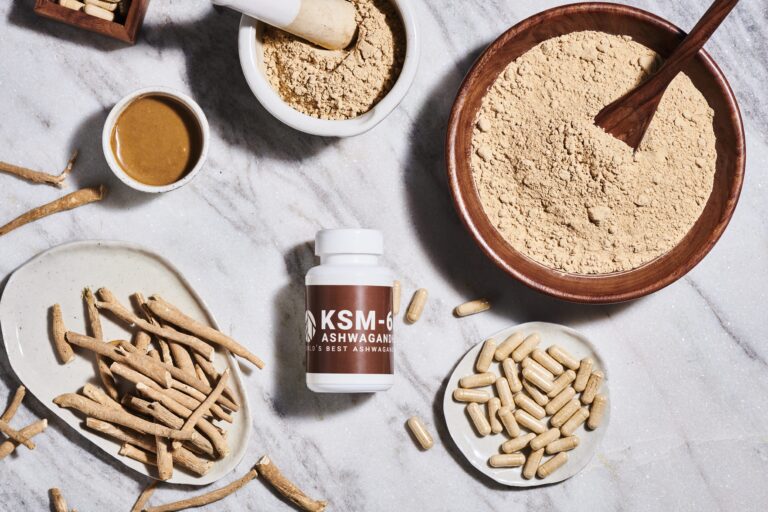
The market today offers wide variability in the quality of cultivated ashwagandha. This article explains why organic-certified ashwagandha stands out and offers significant environmental and health benefits.
From centuries of agricultural traditions to today’s growing emphasis on sustainability and wellness, the organic movement continues to gain momentum worldwide. Organically certified ingredients are becoming increasingly popular as consumers seek clean, non-GMO, and pesticide-free products.
Ashwagandha is a revered botanical in Ayurvedic practice, the traditional system of medicine, and has gained global recognition for its adaptogenic properties. It helps reduce stress, enhance energy, and improve the overall balance of body and mind. But not all ashwagandha is the same. We can find significant differences in purity, efficacy, and safety among the varieties available in the market today.
Among the several key indicators of quality, organically certified ashwagandha consistently outperforms conventionally grown varieties. In addition to its obvious sustainability advantages, organic cultivation also enhances the herb’s potency and purity, providing consumers with a higher-quality, superior product. Here are six strong reasons for choosing organic-certified ashwagandha:
Safety and Purity come First
For consumers who incorporate supplements into their daily regimen, the safety and purity of the ingredients are extremely crucial. This is where Organic Certification plays a major role. Organic certification ensures that ashwagandha is cultivated without the use of toxic chemicals, synthetic fertilizers, or hazardous pesticides. Thus, certified organic ashwagandha is a safer option for regular, long-term use because organic farming processes reduce the hazards posed by chemical residues frequently left behind by some traditional cultivation methods.
Supporting Sustainability at the Source
As environmental issues rise, agricultural methods must evolve to address them. Crop rotation, composting, and the use of natural fertilizers are among the methods organic farming emphasizes to improve soil health and reduce pollution. Thus, by choosing organic ashwagandha, consumers, along with their formulators, actively support agricultural methods that preserve and protect the natural ecosystems and support biodiversity.
Enhanced Nutrient Profile and Potency
As organic ashwagandha is cultivated in rich, uncontaminated soils, it tends to yield higher concentrations of active compounds, particularly the beneficial withanolides. These compounds are key to the herb’s adaptogenic effects. As a result, organic extracts of Ashwagandha might therefore provide consumers stronger support for energy balance, cognitive function, and stress alleviation.
Non-GMO and Ethical Sourcing
Certified organic ashwagandha is entirely non-GMO, satisfying the growing customer demand for naturally derived, clean-label ingredients. When fair-trade policies and organic farming align, farmers are fairly compensated, and farming communities are uplifted. This supports the principles of ethical and sustainable sourcing.
Building Trust through Verified Quality
Certified organic ashwagandha must meet rigorous cultivation and processing standards, as verified by respected bodies. This transparency reassures consumers that product labels accurately reflect what is inside, promoting trust and peace of mind that the product meets their ethical and health standards criteria.
Maintaining Ashwagandha’s Adaptogenic Power
Organic farming techniques reduce environmental pressure on the ashwagandha plant, thereby enabling it to fully reveal its adaptogenic qualities. Avoiding synthetic treatments helps best preserve ashwagandha’s natural strength, which supports stress reduction, lessens fatigue, and promotes emotional equilibrium.
Therefore, selecting an organic-certified ashwagandha isn’t just about meeting a label claim — it’s about choosing a pure, more potent, ethically produced, and environmentally responsible route to wellness.
These statements have not been evaluated by the Food and Drug Administration. This product is not intended to diagnose, treat, cure or prevent any disease.
Any information provided or opinions made in email advertisements are not necessarily those of VRM Media or its owners. Publisher is not liable for advertiser product claims or representations. Advertisers assume total responsibility for the contents of their advertisements.
![[Sponsored Video] Award-Winning Ashwa.30<sup>™</sup>: Next Gen Ashwagandha](https://niemagazine.com/wp-content/uploads/2026/05/nie-2026-06-advertiser-video-natural-remedy-300x169.jpg)


![[Extra! Extra!] The Impact American Tariffs Have on Imports of Indian Nutraceuticals](https://niemagazine.com/wp-content/uploads/2026/02/LeadershipForum-280x300-1771953306.jpg)
![[Sponsored Content] India Honors Ashwagandha With Commemorative Postal Stamp](https://niemagazine.com/wp-content/uploads/2025/12/Ashwagandha-Postal-Stamp-1000w-300x273-1766502623.jpg)