Ashwagandha (Withania Somnifera) a revered herb in Ayurvedic medicine, has been used for centuries to promote overall well-being and support a wide range of health benefits. KSM-66 Ashwagandha stands out due to its extensive clinical backing and sustainability practices, offering a natural solution for modern health challenges.
The 7 Superstar Qualities of KSM-66 Ashwagandha
- Reduces Stress and Improved Sleep
Ashwagandha is one of the most revered adaptogens, used for over five millennia to help support the body’s natural balance. Ashwagandha has been long known and relied upon for its sleep-inducing effects. In Latin, the species name Somnifera means “sleep inducer,” referring to the use of Ashwagandha as a sedative and nervine.
KSM-66 Ashwagandha root extract has been clinically proven to reduce stress and anxiety and improve sleep.1-3
- Enhances Physical Performance
As an adaptogen, ashwagandha root helps the body manage its cortisol-release timing. Due to the stress-modulating effects, ashwagandha root encourages the body to be more energy-efficient. Ashwagandha not only reduces the breakdown of ATP but also increases cellular energy by boosting levels of succinate dehydrogenase (SDH), an enzyme found in mitochondria. Ashwagandha also increases creatine levels, which in turn generates ATP, providing rapid energy.
Several studies have demonstrated that KSM-66 increases muscle strength, endurance, and muscle recovery in athletes and active individuals.4-6
- Boost Cognitive Function
Ashwagandha is the most recognized natural nootropic herb ‘medhya rasayana’ known to promote cognition, concentration, memory, and attention in individuals. Ashwagandha promotes memory and cognition in two ways: by impacting cognitive function directly, and by lowering stress and improving sleep and mental alertness.
KSM-66 Ashwagandha root extract has been clinically proven to improve executive function, immediate memory, information processing speed, and concentration.7,8
- Supports Healthy Weight Management
Chronic stress is closely linked to many adverse health problems including weight gain. A 2017 study of more than 2500 individuals found those with higher levels of cortisol in their hair samples had greater weight, high BMI, and larger waist circumference.9
Studies have shown that KSM-66 helps in reducing stress and stress-related food cravings, thus supporting healthy weight management.10
- Maintains Normal Thyroid
As an adaptogen, ashwagandha helps the body maintain homeostasis. It can often help normalize the thyroid hormones. Several studies have highlighted that KSM-66 Ashwagandha can normalize thyroid indices.11,12
- Promotes Sexual Health
In traditional Ayurvedic medicine, Ashwagandha is known for its aphrodisiac properties. Several clinical studies have demonstrated that KSM-66 Ashwagandha has been shown to improve sexual desire, libido in both men and women and testosterone levels in men.13-16
- Contributes to a sustainable world
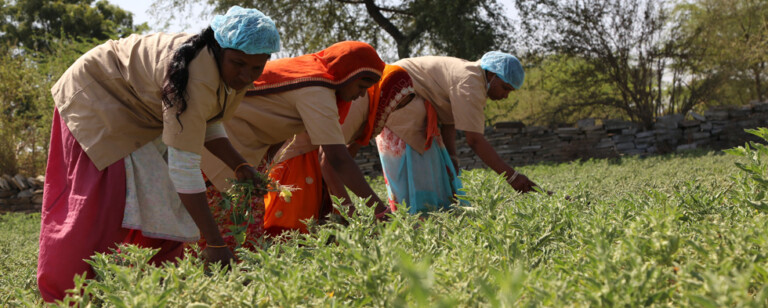
KSM-66 Ashwagandha is not just beneficial for human health, but its sustainable farming practices are beneficial for the environment. The cultivation of KSM-66 is designed to minimize environmental impact, utilizing organic practices that preserve soil health and biodiversity.
Conclusion:
KSM-66 Ashwagandha is a leading example of how traditional herbal remedies can be integrated into modern health regimens while maintaining a commitment to sustainability. Its comprehensive health benefits and eco-friendly production practices make it a valuable addition to a holistic approach to well-being.
References:
- Chandrasekhar, K., Kapoor, J., & Anishetty, S. (2012). Indian journal of psychological medicine, 34(3), 255–262.
- Salve, J., Pate, S., Debnath, K., & Langade, D. (2019). Cureus, 11(12), e6466.
- Langade, D., Thakare, V., Kanchi, S., & Kelgane, S. (2020). Journal of Ethnopharmacology: 264:113276
- Wankhede, S., Langade, D., Joshi, K., Sinha, S. R., & Bhattacharyya, S. (2015). Journal of the International Society of Sports Nutrition, 12, 43.
- Choudhary, B., Shetty, A., & Langade, D. G. (2015). Ayu, 36(1), 63–68.
- Tiwari, S., Gupta, S. K., & Pathak, A. K. (2021). Journal of ethnopharmacology, 272, 113929.
- Choudhary, D., Bhattacharyya, S., & Bose, S. (2017). Journal of dietary supplements, 14(6), 599–612.
- Efficacy and Safety of Ashwagandha root extract on Cognition, Energy, and Mood in Adults with Cognitive and Energy Problems (Under Peer Review)
- Jackson, S. E., Kirschbaum, C., & Steptoe, A. (2017).Obesity (Silver Spring, Md.), 25(3), 539–544.
- Choudhary, D., Bhattacharyya, S., & Joshi, K. (2017). Journal of evidence-based complementary & alternative medicine, 22(1), 96–106.
- Sharma, A. K., Basu, I., & Singh, S. (2018). Journal of alternative and complementary medicine (New York, N.Y.), 24(3), 243–248.
- Verma, N., Gupta, S. K., Tiwari, S., & Mishra, A. K. (2020).Complementary therapies in medicine, 57, 102642.
- Ambiye, V. R., Langade, D., Dongre, S., Aptikar, P., Kulkarni, M., & Dongre, A. (2013). Evidence-based complementary and alternative medicine : eCAM, 2013, 571420.
- Dongre, S., Langade, D., & Bhattacharyya, S. (2015). BioMed research international, 2015, 284154.
- Chauhan, S., Srivastava, M. K., & Pathak, A. K. (2022). Health science reports, 5(4), e741.
- Ajgaonkar A, Jain M, Debnath K (2022) Cureus 14(10): e30787.
These statements have not been evaluated by the Food and Drug Administration. This product is not intended to diagnose, treat, cure or prevent any disease.
Any information provided or opinions made in email advertisements are not necessarily those of VRM Media or its owners. Publisher is not liable for advertiser product claims or representations. Advertisers assume total responsibility for the contents of their advertisements.
![[Sponsored Video] Award-Winning Ashwa.30<sup>™</sup>: Next Gen Ashwagandha](https://niemagazine.com/wp-content/uploads/2026/05/nie-2026-06-advertiser-video-natural-remedy-300x169.jpg)


![[Extra! Extra!] The Impact American Tariffs Have on Imports of Indian Nutraceuticals](https://niemagazine.com/wp-content/uploads/2026/02/LeadershipForum-280x300-1771953306.jpg)
![[Sponsored Content] India Honors Ashwagandha With Commemorative Postal Stamp](https://niemagazine.com/wp-content/uploads/2025/12/Ashwagandha-Postal-Stamp-1000w-300x273-1766502623.jpg)