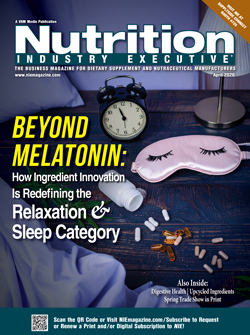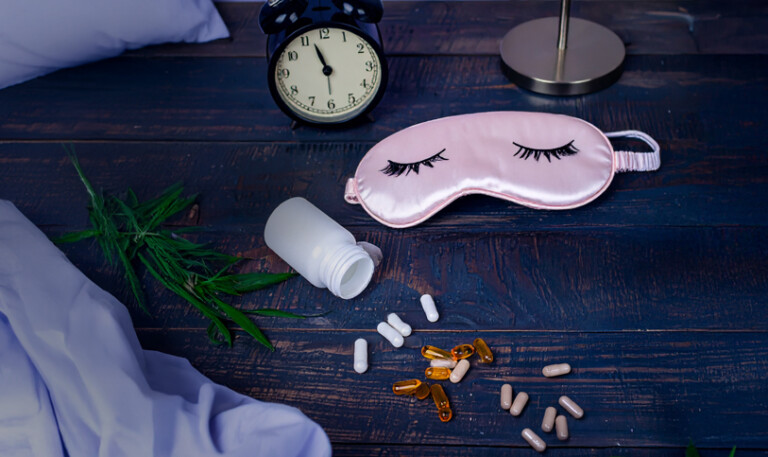
How ingredient innovation is redefining the relaxation and sleep category.
As our understanding of sleep biology continues to evolve, ingredient innovation is changing how manufacturers approach relaxation and sleep products, shifting away from simple sedation toward solutions that support stress biology, circadian rhythms and overall sleep quality.
Sleep Is No Longer a Bedtime Problem
For years, the sleep supplement category was built around a straightforward idea: help people fall asleep faster.
Melatonin, magnesium, valerian and other calming botanicals became staples, offering consumers a relatively simple path to sleepy time. And for many people, those solutions worked (at least some of the time). But the science of sleep has evolved, and with it, our understanding of what drives healthy sleep.
Sleep is now widely understood as a complex biological process shaped by multiple systems working together much like an orchestra. Stress hormones, circadian rhythm signaling, metabolic health and nervous system activity all play their part, and when one section falls out of rhythm, the entire performance can suffer (Chaput et al., 2018; Morselli et al., 2012). When sleep problems emerge, they rarely come from a single cause.
In many cases, sleep disturbances are driven by a combination of factors, such as stress, circadian rhythm disruption, inflammation and the overstimulation that often comes with modern lifestyles.
As consumers learn more about how sleep works, their expectations around sleep products have started to shift.
Many consumers today are no longer looking for products that simply “knock them out.” Instead, they want support that helps them unwind naturally, improve sleep quality and wake up feeling clear-headed the next day. As a result, the category is beginning to move beyond simple sedative solutions and toward products that support the body’s underlying sleep biology.
For manufacturers, this shift presents both a challenge and a major opportunity. Ingredient innovation has become one of the most important ways brands can differentiate their products while also addressing consumers’ growing interest in evidence-backed solutions.
Dr. Nora Khaldi, founder and chief executive officer of Nuritas, New Canaan, CT, said the next wave of sleep innovation will focus on improving the overall sleep cycle rather than simply inducing drowsiness.
“Melatonin might make us sleepy, but if cortisol is also high it is preventing good, restful sleep from taking place,” Khaldi said. “We see the biggest breakthroughs coming from formulations that support the full sleep cycle without leaving consumers with the ‘sleep hangover’ associated with traditional sleep supplements.”
The Evolution of Sleep Science
Historically, most sleep products were designed with one goal in mind: helping people fall asleep faster. Melatonin quickly became the category’s cornerstone because of its role in regulating circadian rhythms. Magnesium followed as a calming mineral that supports muscle relaxation and nervous system balance, while sedative botanicals, such as valerian and passionflower, were often added to round out formulations.
Those ingredients are still widely used today, but the scientific understanding of sleep has broadened considerably.
Researchers increasingly describe sleep as the result of several biological systems working together. Hormonal signaling, circadian rhythm timing, metabolic regulation and nervous system balance all influence how easily people fall asleep and how deeply they sleep once they do (Morselli et al., 2012; Wilckens et al., 2014).
At the same time, modern lifestyles have introduced new challenges for sleep health. Chronic stress, irregular schedules and prolonged exposure to artificial light have all been linked to sleep disruption in otherwise healthy adults (Blume et al., 2019).
The rise of wearable sleep trackers has also changed how consumers think about sleep. As more people gain access to sleep metrics, such as sleep stages and sleep efficiency, awareness around sleep quality has grown.
Rather than focusing solely on falling asleep quickly, many consumers are now looking for products that support deeper, more restorative sleep.
Emerging Mechanisms of Action
One of the biggest changes happening in the category is the shift away from single-ingredient solutions toward formulations that address multiple biological pathways at once.
Instead of targeting a single mechanism, many newer products aim to support several systems involved in sleep.
Stress Physiology and the HPA Axis
Chronic stress is widely considered one of the most significant contributors to poor sleep. Persistent activation of the hypothalamic–pituitary–adrenal (HPA) axis can elevate evening cortisol levels, delay sleep onset and increase nighttime awakenings (Han et al., 2012).
For this reason, many newer sleep-support ingredients are designed to help regulate the body’s stress response rather than simply pushing the brain toward sedation.
Khaldi said cortisol regulation is becoming an increasingly important focus in sleep innovation. “Consumers are following the science on cortisol. High cortisol levels impact overall health, including sleep quality,” she explained. “We are also seeing a shift from focusing only on falling asleep to improving the quality of sleep itself, especially slow-wave sleep.”
Ingredients that help reduce stress reactivity or promote autonomic nervous system balance may allow the body to transition into sleep more naturally (Lopresti et al., 2021).
Brien Quirk, director of R&D at Draco Natural Products, San Jose, CA, said stress physiology often sits at the center of sleep disturbances.
“Anti-stress and cortisol-lowering effects appear to be one of the most important mechanisms for sleep support,” Quirk said. “Elevated stress hormones can disrupt circadian rhythm signaling and neurotransmitter balance, making it harder for the body to transition into restorative sleep.”
Neurotransmitter and GABAergic Pathways
Gamma-aminobutyric acid (GABA) is the body’s primary inhibitory neurotransmitter and plays an important role in calming neural activity and promoting relaxation. Research suggests that GABA signaling is closely tied to both sleep initiation and anxiety regulation (Zhu et al., 2024). As a result, many modern sleep ingredients focus on supporting the body’s natural GABA activity rather than relying solely on sedative compounds.
Dr. Gene Bruno, chief scientific officer of Nutraland USA, Irvine, CA, said several biological pathways are already well established in sleep-support formulations.
“These mechanisms include melatonin receptor activation, GABAergic modulation, serotonergic pathways and relaxation of the HPA axis,” Bruno said. “Each of these biological pathways can influence sleep quality through different physiological mechanisms.”
Ingredients such as L-theanine, valerian root and L-tryptophan have all been studied for their potential effects on stress signaling and sleep regulation (Hidese et al., 2019; Fernández-San-Martín et al., 2010).
Manufacturers are also drawing inspiration from traditional herbal systems. Many of these botanicals have been used for centuries to promote relaxation and sleep but are only now gaining traction in the modern supplement market.
“One ingredient that has enormous sleeper potential is wild jujube seed,” Quirk said. “It has thousands of years of traditional use for improving sleep quality and calming restlessness, and modern research suggests it works through multiple pathways, including neurotransmitter balance and GABA signaling.”
Wild jujube seed (Ziziphus jujuba var. spinosa) has been studied for its potential influence on sleep quality and anxiety-related pathways, with clinical research suggesting improvements in sleep efficiency, sleep latency and total sleep time in individuals experiencing insomnia (Shergis et al., 2021).
Circadian Rhythm Alignment
Sleep isn’t only about how quickly someone falls asleep; it’s also about whether the body’s internal clock is properly aligned.
The body’s internal clock plays a central role in regulating when we feel alert and when we begin to wind down. In modern lifestyles, however, that rhythm is often disrupted. Artificial light exposure, travel schedules and irregular sleep patterns can all interfere with circadian signaling, making it harder for the body to transition into sleep at the appropriate time (Blume et al., 2019; Vetter, 2020).
Some ingredients that support circadian rhythm work by influencing melatonin signaling, light-response pathways or the clock genes that help regulate the body’s internal timing. At the same time, innovation in this space is expanding to include naturally derived alternatives to synthetic compounds.
Bruno pointed to phytomelatonin as one emerging example.
“Somato tomato fruit extract provides naturally occurring phytomelatonin along with complementary compounds such as GABA and lycopene,” Bruno explained. “In a human pilot study, the ingredient helped subjects fall asleep thirty-three percent faster while improving sleep efficiency and emotional well-being.”
Plant-based alternatives may also appeal to consumers who prefer naturally sourced ingredients.
Sleep Architecture and Deep Sleep
Beyond sleep duration, sleep architecture (the amount of light sleep, deep sleep and REM sleep) has become an increasingly important area of sleep research.
Deep sleep, also known as slow-wave sleep, plays a critical role in cognitive recovery, immune function and metabolic regulation (Wilckens et al., 2014).
Khaldi said improving sleep quality has become a key goal for newer sleep-support ingredients. “There is a shifting focus from simply reducing sleep latency to enhancing the quality of sleep, particularly slow-wave sleep,” she said. “Slow-wave sleep is critical for brain restoration and overall recovery.”
When ingredients help support more continuous sleep or increase time spent in deep sleep, the benefits can often carry into the next day, showing up as clearer thinking and more stable energy levels.
Ingredient Innovation Is Accelerating
Advances in ingredient discovery are helping suppliers pinpoint compounds that influence sleep-related biological pathways. In some cases, artificial intelligence and computational screening tools are helping identify promising bioactive compounds (Westmark et al., 2022; Chen et al., 2023).
Khaldi said this technology is opening the door to entirely new classes of sleep-support ingredients.
“Bioactive peptides are a growing category meeting the need for sleep support that does not rely on sedation,” she explained. “These ingredients can work by lowering peripheral cortisol levels, which allows restorative sleep to occur naturally.”
Meanwhile, improvements in botanical standardization are helping address long-standing concerns around variability and inconsistent efficacy. By identifying and standardizing key active compounds, suppliers are making these ingredients more consistent and easier for manufacturers to work with.
Formulation Challenges Remain
Although ingredient science has advanced significantly, creating effective sleep products is still a tall order. Manufacturers must balance efficacy, safety and consumer expectations, all while ensuring products support sleep without causing next-day grogginess or a sleep hangover. Khaldi said excessive dosing remains a common issue.
“A high dose in a quick-release formulation can lead to grogginess in the morning,” she said. “This ‘too much, too soon’ issue is common in traditional melatonin formulations.”
Consumer preferences also influence formulation decisions. Many consumers now prefer naturally sourced ingredients over synthetic alternatives, which is shaping how brands approach ingredient sourcing.
Quirk noted that regulatory considerations and ingredient solubility can also influence formulation strategies.
“One of the primary formulation challenges is creating ingredients that can work in food or beverage formats while maintaining regulatory compliance,” Quirk said. “Ingredients that already have a food-based history or GRAS (generally recognized as safe) status are often easier for manufacturers to incorporate into functional beverages, powders or other delivery systems.”
As brands move beyond capsules into drink mixes and other functional formats, water-soluble botanical extracts are becoming especially valuable.
Ingredient Selection as Strategy
Given the complexity of sleep biology, ingredient selection has become increasingly important, especially as manufacturers move beyond relying on traditional hero ingredients like melatonin. Bruno emphasized the importance of clinical evidence.
“First and foremost, there should always be human clinical research supporting the nutraceutical ingredients used in a sleep formulation,” he said. “It also makes sense to combine multiple nutraceuticals with different mechanisms of action to increase the likelihood of efficacy.”
Delivery format can also be a point of differentiation. Oral strips, fast melts, effervescent tablets and functional foods offer new ways to incorporate sleep-support ingredients into nighttime routines.
The Future of Sleep Innovation
Looking ahead, the relaxation and sleep category is gradually moving beyond sedative solutions and toward products designed to support the body’s natural sleep systems.
Bruno predicts that new ingredients with unique mechanisms of action will play a central role. “We will likely see more ingredients entering the market with novel mechanisms that emulate some pharmaceutical pathways but originate from natural sources,” he said. “Quick onset of action combined with human clinical research will be critical for brands that want to remain competitive.”
Khaldi added that sleep innovation is increasingly intersecting with other wellness categories. “We are seeing sleep and mood benefits becoming increasingly intertwined,” she said. “Multipurpose formulations such as sleep plus immunity or sleep plus muscle recovery are gaining traction.”
Consumer-friendly formats are also gaining attention and becoming more important as brands look for ways to weave sleep support into nighttime routines.
Final Thoughts
Sleep supplements occupy a unique space in the wellness market, sitting at the intersection of science, daily habits and consumer trust. As our understanding of sleep continues to grow, ingredient innovation is opening the door to new approaches that go beyond simple sedation.
Products that address stress biology, circadian rhythm balance and sleep quality (not just how quickly you can fall asleep) are likely to define the next generation of the category. NIE
For More Information:
Draco Natural Products, www.draconatural.com
Nuritas, www.nuritas.com
Nutraland USA, www.nutralandusa.com


![[Extra! Extra!] Want to Relieve Stress? Pet a Dog!](https://niemagazine.com/wp-content/uploads/2025/03/RelaxationSleep-300x291-1743182523.jpg)