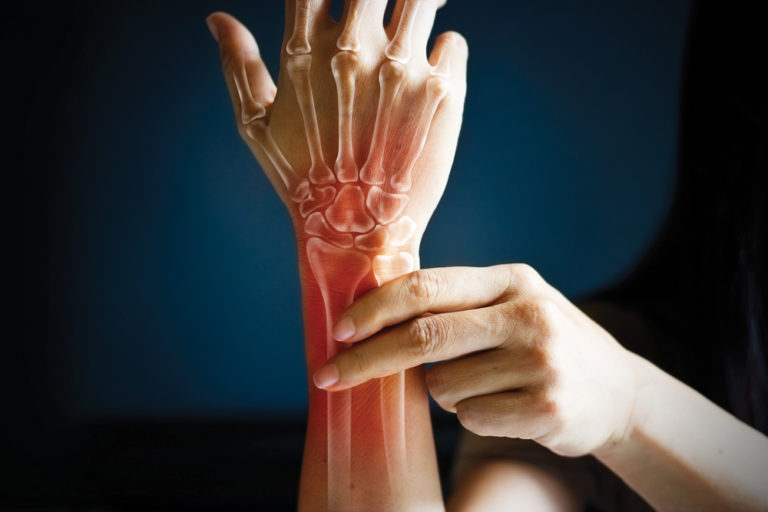
A new study, whose results were presented on March 18, 2018 at the ENDO 2018 conference of the Endocrine Society, showed that post-menopausal women who ate a Mediterranean diet had better bone and muscle mass than did peers who did not follow the Mediterranean diet.
Brazilian researchers led by Thais Rasia Silva, PhD, conducted their study in 103 healthy women average age of 55 and who had gone through menopause 5.5 years earlier, on average. The participants had bone scans to measure bone mineral density, and also had measurements of total body fat and appendicular lean mass, which were used to estimate skeletal muscle mass. The women also completed a food questionnaire describing their diet in the previous month.
A higher Mediterranean diet score (MDS), meaning better adherence to the Mediterranean diet—high intake of fruits and vegetables, grains, potatoes, olive oil and seeds; moderately high fish intake; low saturated fat, dairy and red meat consumption; and regular but moderate drinking of red wine—was significantly associated with higher bone mineral density measured at the lumbar spine and with greater muscle mass, Silva reported.
Further the association was independent of other factors such as use of hormone therapy, smoking behavior and current level of physical activity. “We found that the Mediterranean diet could be a useful nonmedical strategy for the prevention of osteoporosis and fractures in postmenopausal women,” commented Silva.
The data yielded from this study has merit to women, she added, because menopause, with its decline in estrogen, speeds a woman’s loss of bone mass, increasing her risk of osteoporosis and broken bones. In addition, menopause and aging reduce muscle mass. Silva said declines in skeletal muscle mass and strength in older people are major contributors to increased illness, reduced quality of life and higher death rates.
Given the many health benefits of the Mediterranean diet, Silva added, “Postmenopausal women, especially those with low bone mass, should ask their doctor whether they might benefit from consuming this dietary pattern.”