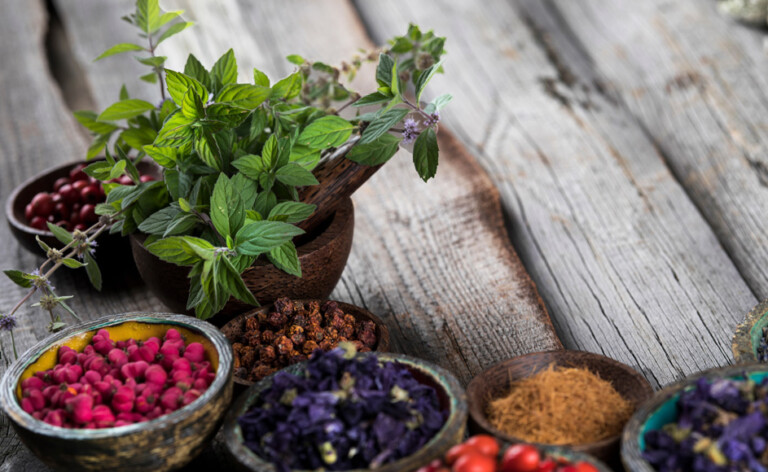
Here’s how the herbs and botanicals market is evolving this year.
The panel:
Cosimo Palumbo, Chief Operating Officer, Indena USA, Seattle, WA, https://indena.com
Julianne Gardner, Marketing & Communications Coordinator, Stratum Nutrition, Carthage, MO, https://stratumnutrition.com
Liki von Oppen-Bezalel, PhD, Business Development Director, TriNutra, Harrison, NY, https://trinutra.com
Randy Kreienbrink, Director of Food/Beverage/Specialty, Artemis International, Fort Wayne, IN, https://artemis-nutraceuticals.com
Sevanti Mehta, President, Unibar Corporation, Houston, TX, https://unibarcorp.com
Steve Fink, Vice President of Marketing, PLT Health Solutions, Morristown, NJ, https://plthealth.com
The herbs and botanicals sector is a critical one for supplement manufacturers. This niche comprises nearly 20 percent of the dietary supplement sector in the United States,1 making it essential for supplement brands and ingredient suppliers to understand the trends influencing this core market. Nutrition Industry Executive (NIE) has invited a panel of experts to provide their insights into this market’s major trends in 2024.
NIE: What is the current state of the market for herbs and botanicals?
Kreienbrink: The herbs and botanicals market is currently on an upward trajectory, thanks to growing consumer awareness of natural health remedies and an overall societal preference for more personalized health care options. Consumers are seeking out herbs and botanicals for several reasons. First, many people prefer natural remedies over synthetic pharmaceuticals, and herbs and botanicals are often associated with specific health benefits. For instance, peppermint may improve digestive function, elderberry has a lengthy association with boosting immunity, and cinnamon may help lower blood sugar levels. Also, flavonoids in chocolate have an antioxidant effect. These examples and many others are in keeping with consumers seeking a more holistic approach that addresses both physical and mental well-being.
Palumbo: The market for herbs and botanicals remains strong and growing. Globally consumers are seeking plant-based health alternatives and taking more control of their health. These market dynamics serve as a foundation of continued market growth estimated at 5-10 percent through 2030. Indena has been grateful to serve this market for over 100 years and our commitment remains true to our founding values in producing the highest-quality, research supported botanicals to improve human health.
Fink: The growth of the market for herbs and botanicals is robust. They are becoming an increasing part of consumers’ lives. This growth is particularly evident in Gen Z consumers. Where herbs and botanicals were once the province of older people, a younger demographic interested in self-care is attracted to what our industry offers.
Gardner: The market for herbs and botanicals is experiencing growth globally, driven by increasing consumer demand for natural and plant-based solutions. North America and Europe are currently the largest markets because of their high consumer awareness and demand, while the Asia-Pacific region is emerging as a key player thanks to their rich traditions in herbal medicine and growing interest in wellness products.
Key drivers of this market growth include a rising preference for natural wellness remedies, the integration of herbs and botanicals into functional foods and beverages, and the ever-expanding dietary supplement industry. However, the market faces challenges such as regulatory hurdles, quality and standardization issues, and increasing competition.
Looking forward, the market is expected to continue evolving with trends like innovations in product development, a focus on sustainability and ethical sourcing, and the shift toward personalized nutrition. Companies that prioritize scientific validation, transparency and ethical practices are going to be more likely to gain a competitive edge.
Von Oppen-Bezalel: Consumers continue to show interest in herbs and botanicals for various health reasons. As research continues to show their potent and desirable health effects, the market will only get larger. In fact, Global Market Insights reported that the botanical supplement market is expected to grow at a CAGR of 8.7 percent from 2024 to 2032, reaching $61.8 billion by 2032. Understanding that many of the existing drugs available in the market originated from molecules found in nature in various traditional medicines, there is also a “back to nature/natural” trend. These original molecules work best in synergy within other components existing in their plant source as well as with others. This trend is growing the market of herbs and botanicals among the health and wellness seekers too.
Mehta: While growing slower than pre-pandemic levels, the herbs and botanicals market is still one of the fastest-growing categories in the overall dietary supplement market. The market has rebounded from a 2 percent decline in 2022 and is expected to grow over 5 percent in sales in 2024. Direct sales channels such as Amazon, Walmart Marketplace and others make up over 50 percent of sales within the herbs and botanicals market. Consumer demand for curcumin, beetroot, psyllium, ashwagandha, cranberry and berberine is fueling the category. According to Amazon market intelligence data, some of the top-selling products with ingredients noted above generate upward of $400-$500K monthly on a single SKU.
NIE: What are the health concerns that consumers are most aware of when looking for herbs & botanicals?
Kreienbrink: I am finding that while consumers are becoming increasingly aware of the potential health benefits of herbs and botanicals, they are also mindful of some key concerns. For instance, herbs and botanicals can interact with prescription medications, so experts advise talking with a doctor or pharmacist before taking to avoid adverse effects. Also, consumers are worried about quality and purity, because certain herbs and botanicals have reportedly been contaminated with heavy metals, pesticides or other harmful substances. Researching vetted, trustworthy sources and brands is a must.
Palumbo: Health conditions gaining recent market interest are brain health—that includes stress, anxiety and sleep—digestive health and metabolic support. Also, personalization of nutritional products is becoming significant as diagnostics and manufacturing technologies become more cost effective. Ideally, consumers want the products that are best suited to their individual health needs.
Fink: Consumers are looking to herbs and botanicals to address health and quality of life issues in just about any area that you can imagine—from cardiovascular and metabolic health to weight management and skin health and beyond. At PLT Health Solutions, we are seeing significant growth in using botanicals for cognitive support—from mood and sleep to enhanced cognitive performance across a broad range including memory, learning, focus, multi-tasking and more. Another area of dramatic growth is the sports/active nutrition area. Once the province of bodybuilders and athletes, sports/active nutrition is going mainstream with more people looking to improve the efficiency of their workouts and to recover faster.
Gardner: When consumers look for herbs and botanicals, they are often motivated by a wide array of specific health concerns such as immune support, stress management, digestive health and inflammation relief. Cognitive health, heart health and energy support are also significant concerns. In addition, sleep support, skin health, weight management and hormonal balance are prevalent issues as well. Consumers also focus on liver health, blood sugar management and anti-aging benefits. As global awareness of natural remedies grows, consumers are looking for the highest quality, safe and effective herbs and botanicals that align with their personal health goals, whether for prevention or managing specific conditions.
Von Oppen-Bezalel: Herbs and botanicals span across sectors in the natural products industry and have proven effective to support immune health, metabolic health, cognitive function, mental health and mood, sleep, sports nutrition, gut health, beauty and overall wellness. Generally speaking—everything that involves health and healthy lifestyle.
Mehta: According to consumer behavior insights from the Natural Marketing Institute (NMI), one in five consumers has used an herbal supplement within the past month. Some of the leading concerns for herbal supplement usage include stress and mood health, immune health, energy and weight management.
NIE: How are suppliers addressing sustainability in the herbs & botanicals niche?
Kreienbrink: Sustainability is becoming a significant concern for both consumers and suppliers in the herbs and botanicals industry. Suppliers are taking several steps to address sustainability issues, starting with sourcing herbs and botanicals from sustainable sources, such as organic farms and wild-harvested populations. Suppliers are also devoting staff to due diligence research to ensure that their sourcing practices are ethical and do not harm the environment or local communities. Last but not least, I’m seeing suppliers make the effort to reduce packaging waste by using recyclable or biodegradable materials, reducing the size of their physical packaging and offering refillable solutions whenever possible.
Palumbo: Sustainability has been a dedicated part of Indena’s efforts for over a decade. The Indena sustainability program focuses on three pillars: Nature, Technology and People. We care about where plants are grown, about how they are handled and for the people who are responsible for them along the supply chains. In fact, Indena has continuous quality checks, allowing full traceability and reliability and to monitor and ensure biodiversity of botanical species in the countries Indena has operations. Moreover, technology is our greatest ally in innovating our business, optimizing the use of natural resources and turning our footprint into positive environmental impact. That’s why Indena’s facilities have always invested in state-of-the-art equipment, not only for best-in-class production but also for improved efficiency and energy self-production.
Fink: Sustainability in the natural products industry has gone from a “nice to have” to a “must have” over the last five or so years. Increasingly, we are seeing our customers ask very pointed questions about the sustainability of the ingredients we supply them. An example of our work in Sustainability can be seen in the work that has been conducted on Rhodiolife Rhodiola rosea ingredient that we market in North America. In September of 2022, PLT announced Nektium’s cultivation program for Rhodiola rosea. This was a groundbreaking project that was the result of over a decade of work on Nektium’s part, where we were able to achieve a physical and phytochemical profile identical to wildcrafted rhodiola sources. Cultivation of Rhodiola rosea has been attempted around the world for some time, but few if any have achieved success on anything approaching a commercial scale. That material is available to customers at commercial scale today.
Gardner: Suppliers in the herbs and botanicals niche have been adopting sustainable sourcing practices to protect natural resources and ecosystems. This includes ethical wild harvesting, cultivating rare species to reduce pressure on wild populations, and adopting organic and regenerative agricultural methods to enhance soil health and biodiversity. Suppliers are also becoming more open with their supply chain transparency and seeking certifications like fair trade and organic to assure consumers of their commitment to sustainability.
Reducing environmental impact is another area of focus. Suppliers are working to lower their carbon footprints through local sourcing and energy-efficient processing. Waste reduction initiatives, like upcycling, include using every part of the plant and innovative packaging solutions, such as biodegradable or recyclable materials, to minimize plastic waste. Community engagement and fair-trade practices guarantee that local communities benefit from sustainable harvesting, promoting social sustainability alongside environmental efforts.
Von Oppen-Bezalel: Many brands are becoming more open about their supply chain and sustainability initiatives and are using this information in their go-to marketing strategy. For example, we’ve developed a Nigella sativa breeding in optimal growing conditions to produce black seed oil (BSO) with naturally high concentrations of thymoquinone, BSO’s main bioactive. Because of this, we only work with local farmers, which gives us full traceability from cultivation to the finished product and, in turn, supports the local economy in a region that suffers from economic, climatic and political disadvantages. Furthermore, we regularly test the soil for contamination, and samples from each batch are tested to ensure their quality, potency and free fatty acid content. Once verified, our black seed oil is produced using a proprietary cold press method free of harsh solvents, gentle on the extract, and helps preserve the oil’s inherent benefits while minimizing potential environmental damage.
When it comes to “leftover” waste, TriNutra repurposes its black seed oil “waste” to develop new, upcycled raw materials and active ingredients. Any additional waste is then safe to use as fertilizer or animal feed. TriNutra also incorporates its spent water used to clean the facility’s equipment for irrigation, further helping the local economy and agriculture.
Mehta: Wildfires, extreme weather and other climate changes are catapulting sustainability discussions to the forefront for many brands, contract manufacturers and consumers in the herbs and botanicals market.
Due to this very reason, at Unibar, we’re implementing agroecological farming principles (sustainable farming that works with nature) when growing herbs for our ingredients. Take, for example, the process of cultivating marigold flowers for our branded lutein (UniGold). The origin of marigolds can be traced back to the African continent. We work with local farmers in the African region to provide them with high-quality seeds and train them on farming methods that prioritize preventing pest issues without the reliance on insecticides. In addition, the farmers we work with follow precise irrigation techniques to reduce water usage and increase water usage efficiency. We recognize that sustainability efforts are an ongoing endeavor and are excited about our latest efforts in this space, which is moving towards the usage of renewable energy. Our marigold production facility is powered by a biofuel-powered hybrid furnace, helping us limit dependence on traditional non-renewable energy sources.
Be it fair wages for farmers or improved soil health that leads to increased production of high-quality ingredients, our goal is to implement sustainable initiatives from farm to the finished product that help prioritize the health of the people and the planet.
NIE: How are suppliers addressing adulteration?
Kreienbrink: Adulteration poses a significant challenge within the herbs and botanicals industry. Suppliers are reacting in real time, including investing in rigorous quality testing to confidently guarantee the absence of adulterants in their products and implementing traceability protocols to monitor their products from source to consumer. I am also seeing suppliers pursue partnerships and collaborations with reputable suppliers who enforce stringent quality control measures, with audits covering the entire process, from seed to finished supplement. All these efforts are crucial in fostering consumer trust and ensuring the long-term viability of the herbs and botanicals market.
Palumbo: Indena has been at the forefront in creating awareness of the adulteration issue. The industry needs to take a firm stance on adulteration, ensuring to the consumer that the product is what’s claimed. Indena’s efforts have established partnerships with industry associations where initiatives and actions have been taken to reduce adulteration and self-police the industry. Enforcement is key and industry and government regulatory agencies need to severely penalize companies that sell or use adulterated botanicals.
Fink: Natura cannot simply respond to dramatically increased demand. Adulteration becomes a serious problem when we’re talking about ingredients supported by clinical science. We need to make sure that the ingredient we’re supplying is the same one that we conducted our clinical studies on.
We address adulteration of raw materials for ingredients through traceability and transparency initiatives. We rely on trusted raw material suppliers with whom we’ve developed relationships over the years. Many of our ingredient innovation partners have moved to cultivation to source raw materials, which helps control the botanicals supply.
All of our innovation partners have strict protocols to assess the identity of the raw materials they use. An example of this is what our innovation partner Laila Nutra does with its Boswellia serrata extracts. The harvest of boswellia oleo gum resin from trees in India occurs through artificial “wounding” of the tree, termed “tapping,” shallow debarking the tree to expose resin glands and stimulate resin production. Harvest is stopped from May through October or November to allow a period for tree recovery. Every batch of the boswellia harvest is assigned a specific batch number and each batch of finished product is traceable to a specific region and set of trees. It is tested and must comply with predefined specifications for different parameters at different stages of product manufacturing—from raw materials to finished product. Quality is monitored by a multi-disciplinary organization with dedicated departments for taxonomy (botanical Identification), raw material analysis, chemical analysis, microbiology and more.
Gardner: To address adulteration in the herbs and botanicals niche, suppliers are implementing rigorous quality control measures, such as advanced testing methods like HPLC, GC-MS and DNA barcoding. These tests are conducted at multiple stages of the supply chain to detect adulterants early. Companies have also been working on using good manufacturing practices (GMPs) and aligning with global regulatory standards to ensure consistent quality and safety.
Transparency and traceability are crucial strategies in combating adulteration. Suppliers are using blockchain technology to create an immutable record of the supply chain, providing transparency from farm to consumer. Companies are also forming strong relationships with trusted suppliers, conducting regular audits, and establishing stringent contractual agreements that specify quality and testing requirements.
Collaboration and innovation are also key components in addressing adulteration. Companies are investing in new technologies, like spectroscopy and AI, to stay ahead of adulteration tactics. Industry collaboration, such as partnerships with associations and regulatory bodies, helps share knowledge and develop best practices. By combining these efforts with consumer education and public disclosure of testing results, suppliers aim to build trust and ensure the integrity of their products.
Von Oppen-Bezalel: As the market continues to grow, so does the possibility of adulteration, but leading agencies are taking charge and testing various products to see if the item is what it claims to be. Additionally, programs such as The Botanical Adulterants Prevention Program (BAPP) led by the American Botanical Council, American Herbal Pharmacopeia and the National Center for Natural Products Research at the University of Mississippi have been launched to address adulteration in the supply chain. Another avenue some companies can take is the United States Pharmacopeia (USP). The USP monograph, a highly regarded and rigorous program, is a significant achievement for any product. It serves as a testament to the product’s quality, standardization and the company’s commitment to ensuring consumer safety.
Mehta: Increased demand, inflationary price pressures and supply shortages make adulteration all too common in the herbs and botanicals market. Take, for example, the case study of fraudulent Capsicum annuum in 2016. The paprika sold by the company in question was adulterated with artificial dyes to enhance the color of the spice. As a supplier of premium-quality plant-based ingredients, we go to significant lengths to ensure our products are free from adulterants, including artificial dyes. This includes producing our branded ingredients at manufacturing facilities that follow cGMPs and are ISO 9001 and ISO 22000 certified. In addition to adhering to stringent quality management systems, the botanicals in each one of our branded ingredients are tested frequently by an ISO 17025 third-party laboratory using a combination of analytical testing methods such as UV spectrophotometry to confirm the identity of source material, HPLC to confirm composition, activity and adulteration, and various additional contaminant tests to ensure that our ingredients don’t contain harmful levels of contaminants. NIE
Reference:
1 Polito, R. “The correction comeback.” Nutrition Business Journal (Market Overview issue). Published online May 1, 2024.
![[Extra! Extra!] CSI: Botanicals—The Botanical Authentication Toolbox](https://niemagazine.com/wp-content/uploads/2026/10/HerbsBotanicals-featuredimage-300x164.jpg)