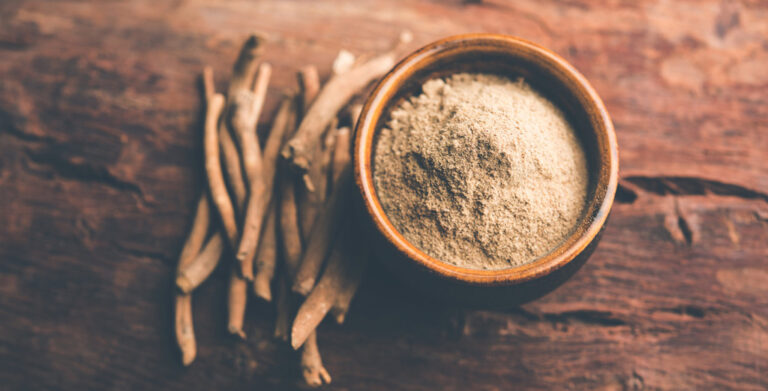
Ashwagandha, a flagship herb of Ayurveda, known as the “King of Herbs,” is now a globally favored adaptogen, especially in key markets such as the United States. In recent years, the sector has seen substantial growth, attributed to extensive scientific research, marketing, and investment efforts surrounding the best-selling ashwagandha root extract, KSM-66.
The increasing consumer interest in Ashwagandha has led to a rise in the global demand. Unfortunately, this has opened the door to unethical practices. Some scrupulous manufacturers and suppliers dilute their formulations with inferior leaf material and aerial parts of the plant. These parts cost significantly less, up to 100 times cheaper than the roots, making the financial incentive obvious.
The disparity in safety and efficacy of these extracts raises more concern than the price difference. The Government of India issued an advisory in 2021, limiting the internal use of ashwagandha to the roots only, citing a lack of evidence on the safety and efficacy of the leaves. The American Botanical Council also released a monograph on the adulteration of ashwagandha roots by aerial components.
Eliminating adulterants through identification:
A published research study demonstrated that an alarming number of Ashwagandha root samples contained aerial components. HPLC-UV analysis was performed on verified samples of ashwagandha leaves (n = 5), aerial parts (n = 3), and roots (n = 17) from India and Egypt. Also, 10 commercial extracts labeled ‘derived from the roots’ were tested for flavonol glycosides, markers for aerial component adulteration. Surprisingly, only two of these samples lacked marker chemicals, indicating that most commercial ashwagandha root extracts are adulterated with aerial parts.1
Another study employed HPTLC to analyze 584 batches of commercial root extract raw materials. In 84 samples (14.0%), sample rejection was due to leaf debris, whereas 119 samples (20.4%) contained incomplete root material.2
Recent data from a center (one of several across India) that facilitates the exchange of ashwagandha raw material among farmers, traders, and manufacturers reveals shocking figures. It reported that more than 2,500 tons of ashwagandha leaves were sold in just three months. Yet, these transactions and sales are not reflected in publicly available export records. Additionally, there is a notable discrepancy in ashwagandha products on the global market, with most branded as ‘ashwagandha root.’
Where are all the leaves going?
On the condition of anonymity, several contract manufacturers in India revealed that most extract suppliers and manufacturers purchase large quantities of ashwagandha leaf extracts at lower prices. They then mix aerial parts with roots, label them as roots, and export them at higher prices.
This illegal practice not only constitutes fraud but also poses health risks, as Ayurvedic doctors emphasize that aerial parts were never recommended for internal use due to potential side effects. The Government of India advisory states that there is no substantial evidence of health benefits from ashwagandha leaves and aerial parts.
Unfortunately, such blatant fraud likely leads to the consumption of inferior leaf material, resulting in toxicity, adverse effects, and undermining the genuine market for ashwagandha root extracts.
A representative of the world’s best and leading brand said, “We at KSM-66 strongly believe this is all happening because of rampant adulteration in the ashwagandha sector.” Since its inception, Ixoreal Biomed has remained committed to using only high-quality roots in its organic formula, extracted through a proprietary green chemistry process.
The solution is: more testing, again and again.
Rigorously testing is the most straightforward and effective way to solve this ongoing issue. Manufacturers and other stakeholders must test every batch of raw materials to verify their identity. Techniques such as high-performance thin-layer chromatography (HPTLC) and high-performance liquid chromatography (HPLC) are effective for identifying plant parts, as demonstrated in previous studies. Such testing can discourage makers and suppliers from contaminating their products or components.
Another desirable solution, and something currently missing from the scene, according to KSM-66, would be for the Government of India to establish clear rules for labeling exported goods from India (country of origin) through plant part identification.
References:
- Mundkinajeddu D, Sawant LP, Koshy R, et al. ‘Development and validation of high-performance liquid chromatography method for simultaneous estimation of flavonoid glycosides in Withania somnifera aerial parts’. ISRN Analytical Chemistry. March 10, 2014;2014:351547. Doi: 10.1155/2014/351547
- Singh VK, Mundkinajeddu D, Agarwal A, Nguyen J, Sudberg S, Gafner S, Blumenthal M. Adulteration of ashwagandha (Withania somnifera) roots and extracts. Botanical Adulterants Prevention Bulletin. Austin, TX: ABC-AHP-NCNPR Botanical Adulterants Prevention Program; 2018.https://www.researchgate.net/publication/343862896_Adulteration_of_Ashwagandha_Withania_somnifera_Roots_and_Extracts
These statements have not been evaluated by the Food and Drug Administration. This product is not intended to diagnose, treat, cure or prevent any disease.
Any information provided or opinions made in email advertisements are not necessarily those of VRM Media or its owners. Publisher is not liable for advertiser product claims or representations. Advertisers assume total responsibility for the contents of their advertisements.
![[Extra! Extra!] CSI: Botanicals—The Botanical Authentication Toolbox](https://niemagazine.com/wp-content/uploads/2026/10/HerbsBotanicals-featuredimage-300x164.jpg)
![[Sponsored Video] Award-Winning Ashwa.30<sup>™</sup>: Next Gen Ashwagandha](https://niemagazine.com/wp-content/uploads/2026/05/nie-2026-06-advertiser-video-natural-remedy-300x169.jpg)