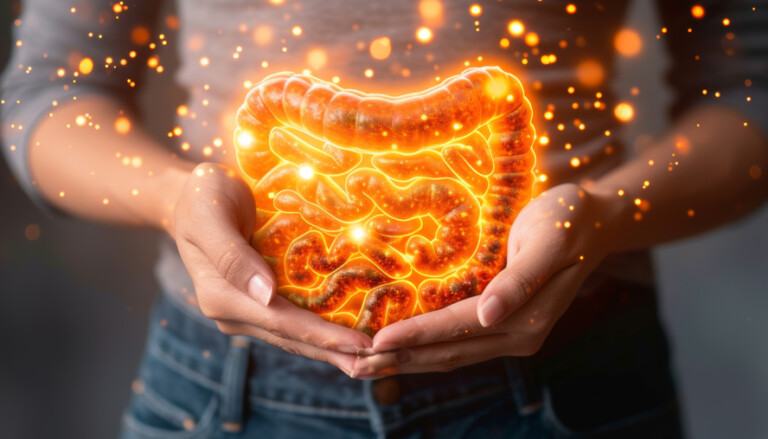
Sixty to 70 million Americans are affected by digestive concerns, and despite the prevalence, one in three people reported that they would only discuss their gastrointestinal (GI) symptoms if their doctor brought it up first.1 These GI issues have a cost that exceeds $100 billion in direct medical expenses each year.2 So why are people staying quiet? Americans believe that stomach issues, such as bloating, gas and GI discomfort are the standard. In addition, a recent survey conducted by Censuswide in March 2025 stated that 27 percent of the 2,000 surveyed indicated feeling dismissed when discussing gut health symptoms with their doctor.
The gut microbiome is a distinct ecosystem populated by trillions of microscopic organisms. These microorganisms include thousands of species of bacteria, viruses, fungi and parasites. As many of us know, our gut microbiome is connected to various aspects of health, including metabolism, digestive health, immune function, heart health, brain health, mental well-being and more. This “organ,” as some refer to it, is a vital element of a person’s physical and psychological health. Educating and encouraging people to speak up about their gut health and arming them with proper information can help build their confidence and seek additional help. This is where natural products come into play.
The global dietary supplements market was valued at $177.50 billion in 2023 and is projected to grow at a CAGR of 9.1 percent, reaching 327.42 billion by 2030. North America accounted for a revenue share of 33 percent in 2023, or about $53.6 billion.3 General interest continues to grow in dietary supplements, with nearly three-quarters of adults taking them and 55 percent qualifying themselves as “regular users.”4 This growth is also seen in the gut health aisle. According to Grand View Research, the U.S. digestive health products market accounted for 26.21 percent of the market in 2023 and is expected to reach $23.53 billion by 2030.5
Research, Education and Awareness
The gut health market is expanding rapidly due to consumer demand and scientific advances.
More consumers understand the importance of gut, digestive and microbiome health for overall well-being, and in January of this year, one survey ranked gut health among the top three health trends for 2025.6 Some of the most popular ingredients consumers turn to are probiotics, and because of this, the global market is expected to reach $105.7 billion by 2029, growing at a CAGR of 8.2 percent from 2024.7
Probiotic strains, including Akkermansia muciniphila, Lactobacillus and bifidobacterium, are leading the pathway. Akkermansia muciniphila, commonly A. muciniphila or AKK, is essential in maintaining the intestinal barrier that benefits metabolism and immunity8 and supports a healthy inflammatory response and healthy blood glucose levels.9 Lactobacillus is a bacterium naturally found in the body. It is used to break down food and absorb nutrients. This “good” bacteria support the digestive and immune system and creates an acidic environment to help protect against “bad” bacteria.10 Lactobacillus has also been shown to positively affect heart health, promote a healthy inflammatory response, and support lactose digestion.11
The bifidobacterium genus currently includes numerous species and has been shown to support a healthy immune system,12 produce or synthesize vitamins,13 support mood14 and more. This powerful bacterial genus can also produce short-chain fatty acids (SCFAs). SCFAs have been demonstrated to support healthy blood sugar levels, blood pressure, lipid metabolism and a healthy inflammatory response.15
In addition to probiotics, prebiotic fibers such as fructooligosaccharide (FOS) are another key nutrient that supports gut health. FOS naturally occurs in some fruits and vegetables, including garlic, asparagus, banana, artichoke and more.16 One branded ingredient, GOFOs, provides a soluble prebiotic fiber produced from non-GMO (genetically modified organism) beet sugar by a proprietary enzymatic process. This creates a more potent, highly soluble, sweet, clean taste. FOS supports gut health and immunity17 at just 2.5 g/day. It is primarily used as a low-calorie, alternative sweetener in bars, shakes and gummies.
Psyllium is another prebiotic to aid in proper digestion. There are two types of psyllium: the husk and the seed. Both are derived from the Plantago ovata plant, but psyllium husk is the seed’s outer shell, while psyllium seed includes the entire seed. The husk is richer in soluble fiber and has a higher swelling index, meaning it absorbs more water and can be more effective for digestive health.18 Other research has shown that psyllium aids heart health19 and weight management.20
Lastly, polyphenols, or flavonoids, are a key nutrient supporting gut health. These naturally occurring plant compounds promote the growth of beneficial microbes in the gut microbiome, such as lactobacillus and bifidobacterium.21 Among flavonoids, eriocitrin, derived from lemons and limes, is particularly noteworthy for its beneficial effects on health, especially on metabolic health, blood glucose support and heart health. A recent microbiome model with fecal inoculum of prediabetic patients showed that the treatment of Eriomin plus metformin increased the production of acetate and butyrate and stimulated the growth of the bacteroides and subdoligranulum genera. Bacteroides, which constitute a large fraction of the intestinal microbiota, are potential colonizers of the colon, and some species produce acetic and propionic fatty acids. Additionally, subdoligranulum species are associated with improved host glycemic metabolism. Therefore, the combination of Eriomin and metformin enhanced the composition and metabolism of the intestinal microbiota, suggesting its potential use in blood sugar management.22-25
As companies continue to invest in clinical research and build awareness of how the gut is connected to various aspects of health, consumers will continue to turn to natural supplementation for proactive health care. Personalized Nutrition’s BFF: A.I.
One major way consumers are staying connected to their health is by technology. This includes wearable devices, personalized microbial analysis and advanced imaging techniques.
For example, Imec is developing an ingestible technology that measures the gut’s mechanical, chemical and electrical processes. It’s designed to gather information as it travels throughout the digestive system and transmits it to a receiver outside the body. These sensors can be complemented with smart toilets that measure health parameters and biomarkers in stool and urine.26
Other technologies include microbiome analysis, where companies like Viome, Thorne, Jona and others request blood, saliva, and/or stool samples to get an advanced study of the person’s unique microbiome. The results help consumers take control of their GI, skin, oral, brain and physical performance and can even alert them to dietary allergens. This type of testing is gaining popularity and is expected to grow, reaching $300 million by 2028.27
Finally, wearable technology is becoming more sophisticated. Not only can these track sleep, steps/activity, heart rate, blood pressure, body temperature, menstrual cycles, breathing rate and even “readiness,” one new tech is helping people understand when it is safe to eat after surgery, a common and practical question in a medical center. Eating too soon after surgery can lead to complications, and eating too late post-surgery can lead to longer hospital stays. AbStats is a small device attached to the stomach to “listen” to the intestines. The growls and gurgles in the gut can help measure how quickly the intestines are working. This provides nurses and doctors with data to determine when patients can safely resume eating after surgery.28
For the millions of Americans affected by digestive issues, combining evidence-based supplementation with cutting-edge technology provides not only symptomatic relief but also a pathway to comprehensive wellness, holding incredible opportunity for both consumers and the industry. NIE
References:
1 American Gastroenterological Association. (2022, September 14). New survey finds forty percent of Americans’ daily lives are disrupted by digestive troubles. https://gastro.org/press-releases/new-survey-finds-forty-percent-of-americans-daily-lives-are-disrupted-by-digestive-troubles/.
2 National Institute of Diabetes and Digestive and Kidney Diseases. (n.d.). Opportunities & challenges in digestive diseases research. U.S. Department of Health and Human Services. www.niddk.nih.gov/about-niddk/strategic-plans-reports/opportunities-challenges-digestive-diseases-research-recommendations-national-commission.
3 Grand View Research. (2024). Dietary supplements market size, share & trends analysis report. www.grandviewresearch.com/industry-analysis/dietary-supplements-market-report.
4 Council for Responsible Nutrition. (n.d.). Three-quarters of Americans take dietary supplements; most users agree they are essential. www.crnusa.org/newsroom/three-quarters-americans-take-dietary-supplements-most-users-agree-they-are-essential.
5 Grand View Research. (2024). U.S. digestive health products market size report. www.grandviewresearch.com/industry-analysis/us-digestive-health-products-market.
6 Talker News. (2025, January 13). What are the top health trends to look out for in 2025? https://talker.news/2025/01/13/what-are-the-top-health-trends-to-look-out-for-in-2025/.
7 GlobeNewswire. (2025, March 30). Probiotics market growth accelerates: Opportunities, key players, and future trends. www.globenewswire.com/news-release/2025/03/30/3051916/0/en/Probiotics-Market-Growth-Accelerates-Opportunities-Key-Players-and-Future-Trends.html.
8 Plovier, H., & Everard, A. (2023). The impact of Akkermansia muciniphila on host metabolism. Microorganisms, 11(4), Article 4178. https://pmc.ncbi.nlm.nih.gov/articles/PMC10142178/.
9 Rinninella, E., Raoul, P., Cintoni, M., Franceschi, F., & Gasbarrini, A. (2021). Akkermansia muciniphila and its role in regulating host functions. Microorganisms, 9(5), 1098. www.mdpi.com/2076-2607/9/5/1098.
10 Cleveland Clinic. (n.d.). Acidophilus (Lactobacillus acidophilus). https://my.clevelandclinic.org/health/drugs/22650-acidophilus.
11 Somasundaram, R., & Balakrishnan, R. (2022). Effects of Lactobacillus on cardiovascular health and inflammation. Microorganisms, 10(12), 2348. https://pmc.ncbi.nlm.nih.gov/articles/PMC9668099/.
12 Ruas-Madiedo, P., Gueimonde, M., & de los Reyes-Gavilán, C. G. (2023). Immunomodulatory properties of Bifidobacterium strains. Microorganisms, 11(2), 314. https://pmc.ncbi.nlm.nih.gov/articles/PMC10730214/.
13 LeBlanc, J. G., Chain, F., Martín, R., et al. (2013). Bacteria as vitamin suppliers to their host: A gut microbiota perspective. Trends in Food Science & Technology, 30(1), 43–52. www.sciencedirect.com/science/article/abs/pii/S095816691200119X.
14 Morita, H., Toh, H., Oshima, K., et al. (2023). Mood-related benefits of Bifidobacterium species: A microbiome–neurotransmitter axis. Microorganisms, 11(5), Article 9982. https://pmc.ncbi.nlm.nih.gov/articles/PMC10205982/.
15 Verywell Health. (2022). The health benefits of Bifidobacterium. www.verywellhealth.com/the-health-benefits-of-bifobacterium-4684233.
16 Roberfroid, M. B. (2007). Prebiotic effects: Metabolic and health benefits. The Journal of Nutrition, 137(11 Suppl), 2493S–2502S. https://pubmed.ncbi.nlm.nih.gov/20119826/.
17 Roberfroid, M. B. (2007). Prebiotic effects: Metabolic and health benefits. The Journal of Nutrition, 137(11 Suppl), 2493S–2502S. https://pubmed.ncbi.nlm.nih.gov/20119826/.
18 Farmvale Psyllium. (n.d.). Difference between psyllium seeds and psyllium husk. https://farmvalepsyllium.com/difference-between-psyllium-seeds-and-psyllium-husk/.
19 Anderson, J. W., Allgood, L. D., Turner, J., Oeltgen, P. R., & Daggy, B. P. (2000). Effects of psyllium on glucose and serum lipid responses in men with type 2 diabetes and hypercholesterolemia. The American Journal of Clinical Nutrition, 71(2), 472–479. https://pubmed.ncbi.nlm.nih.gov/10837282/.
20 Li, Z., Liao, S., Zhang, Y., et al. (2023). The role of psyllium in weight management: A randomized controlled trial. Microorganisms, 11(3), Article 89520. https://pmc.ncbi.nlm.nih.gov/articles/PMC10389520/.
21 Serra, A., Macià, A., Romero, M. P., & Motilva, M. J. (2022). Polyphenols and gut microbiota: An updated view. Nutrients, 14(24), 5373. www.mdpi.com/2072-6643/14/24/5373.
22 Ribeiro, D., Fernandes, E., & Freitas, M. (2023). Flavonoid-mediated modulation of gut microbiota: Insights for metabolic health. Pharmaceuticals, 16(5), 650. www.mdpi.com/1424-8247/16/5/650.
23 Costa, G. N., et al. (2020). Effects of polyphenol supplementation on glycemic control in prediabetic patients: A microbiome perspective. Journal of Nutritional Science, 9, e52. https://doi.org/10.1017/jns.2020.52.
24 da Silva, J. K., et al. (2022). Polyphenol-rich citrus extract improves microbial activity and SCFA production. Food Science & Nutrition, 10(4), 1442–1452. https://onlinelibrary.wiley.com/doi/10.1002/fsn3.3654.
25 Garcia-Mediavilla, M. V., et al. (2023). Synergistic effect of Eriomin® and metformin on intestinal microbiota in prediabetes. Phytotherapy Research, 37(5), 2052–2064. https://onlinelibrary.wiley.com/doi/full/10.1002/ptr.6386.
26 Imec. (n.d.). Technology to capture your gut feeling. www.imec-int.com/en/articles/technology-capture-your-gut-feeling.
27 MarketsandMarkets. (n.d.). Microbiome diagnostics market – Global forecast to 2028. www.marketsandmarkets.com/Market-Reports/microbiome-diagnostics-market-132581140.html.
28 Cedars-Sinai. (n.d.). Wearable tech offers a gut check for patients after surgery. www.cedars-sinai.org/blog/wearable-tech-gut-check.html.
Rob Brewster is the president of California-based Ingredients by Nature. As a third-generation ingredient manufacturer for the natural products industry, Brewster is proud to be part of the health and wellness world. He followed in his grandfather’s and father’s footsteps, helping their company Brewster Foods grow since he joined in the 1990s and then partnering with Syntech to form Ingredients by Nature, a world leader in citrus bioflavonoids and extracts. As president, Brewster invests heavily in citrus flavonoid science for condition-specific applications and holistic wellness. For more information, visit IngredientsbyNature.com.



![[Extra! Extra!] New Study Finds Link Between Gut Microbiome and Heart Health](https://niemagazine.com/wp-content/uploads/2026/01/HeartHealth-300x298-1768582147.jpg)