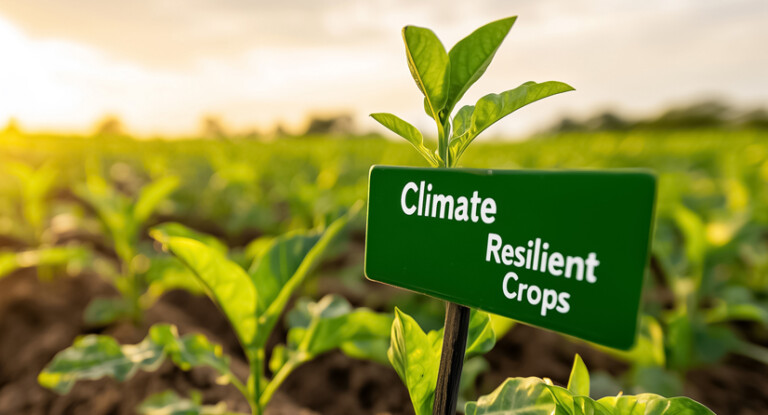
Climate change is no longer a theoretical sustainability issue for the nutraceutical and dietary supplement industry; it is an operational reality that is already reshaping how ingredients are sourced, qualified and brought to market.1 Extreme weather events, prolonged droughts, flooding, soil degradation and shifting growing regions are disrupting agricultural systems that have historically been considered reliable. For an industry built on plant-based and biologically derived raw materials, these disruptions are not isolated events but part of a broader, accelerating pattern that demands a strategic response.
As global supply chains grow more complex and consumer expectations around transparency, quality and reliability continue to rise, ingredient resilience is emerging as a defining factor in long-term business continuity. Climate resilience is no longer solely about environmental responsibility or corporate sustainability reporting; it is about protecting product integrity, maintaining consistent quality, managing risk and ensuring that brands can deliver on their promises despite increasing environmental volatility.2
Safeguarding supply chains for the future requires the nutraceutical industry to rethink how ingredients are sourced, how risk is distributed, and how resilience is embedded across agriculture, formulation, manufacturing and regulatory compliance.
Climate Volatility and Ingredient Vulnerability
Many of the nutraceutical industry’s most widely used ingredients originate in regions that are increasingly exposed to climate stress. Botanicals, herbal extracts, vitamins, minerals and specialty crops often rely on specific environmental conditions to achieve consistent yields and stable active profiles.3 Rising temperatures, erratic rainfall patterns and extreme weather events are altering these conditions with growing frequency.
The implications extend well beyond reduced yields. Variability in climate conditions can influence phytochemical composition, alter active compound concentrations, and increase the risk of contamination from mold, mycotoxins, heavy metals or pesticide residues.4 These changes introduce new challenges for quality control, formulation performance and regulatory compliance, particularly when natural variability pushes ingredients closer to specification limits.
When climate-driven agricultural challenges intersect with geopolitical instability, transportation bottlenecks, labor shortages, and evolving regulatory scrutiny, the result is a supply chain environment that is more fragile and less predictable than in the past.5 Traditional sourcing models, which were designed around consistency and scale, are increasingly ill-suited for a world defined by variability.
Redefining Climate Resilience in Ingredient Sourcing
Climate resilience in ingredient sourcing is not a box to be checked through certifications or claims; it is built through systems thinking that integrates agricultural practices, supplier strategy and long-term risk management. A climate-resilient ingredient strategy reflects how sourcing decisions, agricultural practices, supplier relationships, manufacturing capabilities, and quality systems work together to reduce exposure to disruption.2
At its core, resilience is built through diversification, adaptability and long-term investment. This includes sourcing ingredients from multiple geographic regions, supporting agricultural practices that improve ecosystem health, and designing supply networks with sufficient flexibility to respond to environmental variability. Importantly, resilience does not mean eliminating risk entirely; it means building the capacity to absorb disruption without compromising quality, compliance or supply continuity.
This shift requires the nutraceutical industry to move beyond short-term procurement decisions and toward a more strategic view of ingredient stewardship, one that recognizes climate exposure as a material business risk.
Geographic Diversification as a Strategic Imperative
Geographic diversification has become one of the most effective tools for mitigating climate-related supply risk. Overreliance on a single growing region exposes brands and manufacturers to significant disruption when that region experiences drought, flooding or extreme temperature events.5
Increasingly, manufacturers are qualifying multiple sources for critical ingredients across different climate zones; while this approach requires additional investment in supplier validation, quality alignment, and regulatory documentation, it provides a meaningful safeguard against supply interruptions.6 Diversification also allows manufacturers to respond more quickly to localized disruptions, shifting sourcing without delaying production or compromising product specifications.
In this context, redundancy should no longer be viewed as inefficiency. In a climate-volatile world, redundancy is a strategic asset that supports continuity, flexibility and long-term planning.
Regenerative and Climate-smart Agriculture as Supply Chain Strategy
Agricultural practices themselves play a central role in determining ingredient resilience. Regenerative and climate-smart farming methods are increasingly recognized for their ability to stabilize yields while improving environmental outcomes.7
Practices such as crop rotation, cover cropping, reduced tillage and responsible water management improve soil structure, enhance water retention and support biodiversity. These improvements increase a crop’s ability to withstand drought, heavy rainfall and temperature extremes. Healthier soils are more resilient soils, and resilient soils are more likely to deliver consistent agricultural outputs over time.
For the nutraceutical industry, supporting climate-smart agriculture is not simply an ethical or marketing-driven decision; it is a practical supply chain investment. Ingredients produced under these conditions are better positioned to meet quality specifications consistently, reducing variability that can disrupt formulation performance and finished product stability. Innovation Beyond Traditional Agriculture
Climate resilience is also being shaped by innovation beyond conventional farming systems. Fermentation-derived ingredients, precision fermentation, and biotechnology-enabled production methods offer alternatives for certain nutrients and bioactives that are particularly vulnerable to climate variability.8
These technologies allow ingredients to be produced in controlled environments, reducing dependence on land availability, seasonal cycles and weather conditions. While not applicable to every ingredient category, they provide valuable options for high-demand or climate-sensitive actives and introduce new pathways to improve consistency, scalability and supply security. As these technologies mature, hybrid sourcing models that combine agricultural and non-agricultural production are likely to become an increasingly important component of resilient ingredient portfolios.
Quality Consistency in a Changing Climate
Climate variability presents challenges not only for ingredient availability but also for quality consistency. Changes in growing conditions can affect active compound levels, moisture content and stability; without robust quality systems in place, these variations can cascade through manufacturing processes and impact finished product performance.4
Climate-resilient ingredient strategies must therefore be supported by advanced testing, traceability and specification controls. Manufacturers that invest in strong quality frameworks are better equipped to manage natural variability while maintaining regulatory compliance and consumer trust.
In practice, quality resilience and climate resilience are closely linked. A supply chain that can adapt to environmental variability without compromising standards is one that has been designed with resilience at its foundation.
The Business Case for Climate-resilient Ingredients
While climate-resilient sourcing strategies often require greater upfront investment, the long-term business implications of inaction are far more costly. Supply disruptions can delay product launches, force emergency reformulations, or lead to inconsistent quality that erodes consumer confidence. In an industry where trust is closely tied to safety, efficacy and transparency, these risks extend well beyond procurement and into brand equity and retail relationships.5
Climate volatility also complicates forecasting and pricing models. Ingredient shortages driven by weather events can create sudden cost spikes, while variability in crop quality may increase rejection rates, testing burdens, and operational inefficiencies. Over time, these pressures strain margins and undermine long-term planning.
By contrast, climate-resilient strategies support greater predictability, reduce volatility and enable more informed decision-making. Resilience, in this sense, becomes a source of competitive advantage rather than simply a defensive measure.
Regulatory and Compliance Considerations
Climate-driven variability is also reshaping the regulatory environment for dietary supplements. As environmental conditions influence ingredient composition, contamination risk and consistency, regulators are placing greater emphasis on traceability, documentation and proactive quality oversight.4 Variability that was once considered acceptable within agricultural systems is increasingly scrutinized when it introduces risk to product safety, labeling accuracy or specification compliance.
Manufacturers must now be prepared to demonstrate not only where ingredients originate, but how they are monitored, tested and controlled across changing environmental conditions. This includes documenting shifts in raw material quality, adjusting specifications when appropriate, and maintaining robust change management processes that account for climate-related variability. In practice, climate resilience is becoming closely linked to a company’s ability to defend its quality decisions during audits and inspections.
For companies operating across multiple regions, this challenge is amplified by differing regulatory frameworks, environmental standards and enforcement expectations. Ingredients sourced from regions affected by climate stress may require additional due diligence, testing, or supplier oversight to meet global compliance requirements. As a result, regulatory strategy can no longer be separated from sourcing strategy.
Climate resilience, therefore, must be integrated into global compliance systems rather than addressed through isolated regional solutions. Companies that proactively align sourcing, quality, and regulatory functions around climate risk will be better positioned to maintain compliance, protect market access and respond confidently to increasing regulatory scrutiny as environmental conditions continue to evolve.
Collaboration Across the Nutraceutical Ecosystem
Safeguarding supply chains for the future cannot be achieved by individual organizations acting alone. Climate resilience requires collaboration across growers, ingredient suppliers, manufacturers, brand owners, retailers and regulators.
Long-term partnerships enable shared investment in sustainable agriculture, infrastructure improvements and risk mitigation strategies; they also improve transparency and communication, allowing potential disruptions to be identified earlier and addressed more effectively.2 When resilience is built collaboratively, the entire ecosystem benefits from improved stability and shared accountability.
This shift toward relationship-driven sourcing represents a fundamental change from transactional supply chain models that prioritize short-term cost optimization over long-term resilience.
Preparing the Industry for the Future
As climate pressures continue to intensify, the nutraceutical industry must move beyond reactive sourcing decisions and adopt a more integrated, forward-looking approach to supply chain management. This shift requires companies to treat climate exposure as a core operational and strategic consideration, rather than a peripheral sustainability issue addressed only when disruption occurs. Ingredient portfolios must be evaluated not only for cost, availability, and performance, but also for environmental vulnerability and long-term viability under changing conditions.
Preparing for the future will require a more deliberate alignment between sourcing, formulation, quality and manufacturing strategy. Diversified sourcing models must be supported by robust supplier qualification and transparent traceability systems; climate-smart and regenerative agricultural practices must be reinforced through long-term partnerships rather than short-term contracts; and innovation in fermentation-derived and alternative production technologies must be integrated thoughtfully into existing ingredient portfolios. Resilience must be designed into products from the earliest stages of development, ensuring that formulations can withstand variability without compromising efficacy, safety or regulatory compliance.
This evolution also demands stronger internal collaboration; sourcing teams, R&D, quality, regulatory and commercial leadership must operate from a shared understanding of climate risk and resilience priorities. When these functions work in silos, climate disruption is addressed reactively; when they work in alignment, resilience becomes a built-in capability rather than an emergency response.
Climate-resilient ingredients are not a passing trend or a marketing narrative. They represent a structural shift in how the nutraceutical industry sources materials, manages risk and delivers value to consumers, retailers and regulatory stakeholders. As environmental variability reshapes agricultural systems and global trade, companies that fail to adapt will face increasing volatility, while those that invest in resilient strategies will gain stability, credibility and long-term competitive advantage.
Safeguarding supply chains for the future will require sustained investment, cross-industry collaboration and leadership willing to prioritize long-term resilience over short-term optimization. For an industry built on natural inputs, scientific rigor and consumer trust, climate resilience is no longer optional; it is foundational to the integrity, reliability and future success of the nutraceutical supply chain. NIE
References:
1 Intergovernmental Panel on Climate Change (IPCC). Climate Change 2023: Impacts, Adaptation, and Vulnerability.
2 World Economic Forum. Building Climate-Resilient Supply Chains.
3 Food and Agriculture Organization of the United Nations (FAO). Climate Change and Food Security: Risks and Responses.
4 World Health Organization (WHO). Climate Change and Food Safety.
5 McKinsey & Company. Climate Risk and the Future of Global Supply Chains.
6 Deloitte. Supply Chain Resilience in an Era of Climate Volatility.
7 United Nations Environment Programme (UNEP). Regenerative Agriculture and Climate Resilience.
8 McKinsey & Company. The Rise of Precision Fermentation and the Future of Ingredients.
Evelyn Reinson is director of Brand & Consumer Engagement at Sirio Pharma, a leading global nutraceutical contract development and manufacturing organization (CDMO) with extensive expertise in an array of delivery formats, including gummies, soft gels, capsules, tablets, powders, functional beverages, probiotics and other innovative dosage forms. Sirio operates multiple manufacturing sites across the United States, Germany and China. www.siriopharma.com.