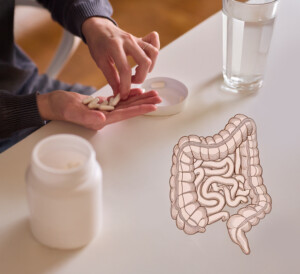
As North Americans embrace the concept of improving digestive wellness naturally, the demand for enzymes, prebiotics and probiotics continues on an upswing.
Digestive health is the fastest growing segment in the United States ingredients market domain, according to a new report released by MarketsandMarkets. In 2010, the total U.S. market for digestive health ingredients was valued at $265.9 million with an annual growth rate of 18.3 percent. The market is expected to grow at a compound annual growth rate (CAGR) of 13.2 percent from 2010-15. The revenue is projected to reach $495.3 million in 2015.
Traditionally, products for gut health have been more popular in Europe than North America, but the trend is changing as North Americans embrace the idea of boosting digestive health through supplements and food and beverages. The main reason for this growth is consumers’ decreasing interest handling their digestive issues with pharmaceuticals.
Consumers are realizing they need more digestive support due to their unhealthy diets with processed foods at the helm.“Diminished activity of enzymes in the digestive tract triggered by erratic diet and lifestyle patterns and the aging process are manifested as gastrointestinal discomfort including bloating, nausea, intestinal cramps, diarrhea and constipation,” said Dr. Lakshmi Prakash, vice president of innovation and development at Sabinsa Corp. (East Windsor, NJ). “Food components are not digested well, leading to under-nutrition, general ill health and increased susceptibility to chronic diseases.”
“In the past 100 years or so, our diet has changed radically,” added Michael Shahani, director of operations at Nebraska Cultures, Inc. (Walnut Creek, CA). “Now, very few people produce their own food, as opposed to 100 or 200 years ago, when most people did.Our processed foods are devoid of healthy bacteria, and in fact, most of us have been educated to believe that all bacteria are ‘bad.’” Shahani also noted that we drink sterilized water, take too many antibiotics (either as drugs or unknowingly in our food), and lead higher-stress lifestyles—all which are factors that contribute to the dearth of good bacteria in our systems.
Enzymes, Probiotics and More
Improper digestion, while scary on the surface, can lead to several other more dangerous problems. Poor digestive health includes a multitude of syndromes, symptoms and diseases. This diversity of causes, as well as significant variability in the severity of symptoms, makes it difficult to diagnose and treat.
“It’s a cascading effect,” said Eric Weaver, chief scientific officer of Proliant Health and Biologicals (Ankeny, IA).“Once the gut becomes compromised, it can lead to a plethora of other problems that can be harder/more costly to treat. The body’s ability to absorb nutrients from diet is paramount for our overall well-being.”
The market dynamics and trends are very different among the three segments, which are prebiotics, probiotics and enzymes, according to the MarketsandMarkets report. Prebiotics and probiotics are growing at doubledigit growth rate as compared to the digestive enzymes, which are experiencing a relatively lower growth rate.
According to Scott Ravech, CEO of Deerland Enzymes (Kennesaw, GA), enzymes and probiotics are known to be “must haves” to restore digestive health. “The basic four enzymes—protease, amylase, lipase and cellulase— which aid in the breakdown of proteins, carbohydrate, lipids/fats and cellulose, are typically used in our blends in varying formulations based on the customer’s proprietary technology.”
Ravech added that over the years, there has been growth in the natural health market both in the consumer and physician distribution channels. “We can attribute the actual product success from many formulas that were marketed with condition-specific approaches and education offered to consumers by authors who have championed digestion.As consumers have found relief with the use of enzymes, they’ve been quick to share their stories.” As an example, a SPINS 2007 report noted that of the 10 top sellers in health food stores/natural supermarkets, at least eight of those contained enzymes. That would seem to indicate that the market is migrating toward a greater acceptance of enzymes in the area of digestive wellness, said Ravech.
“On the consumer side, we see (and many of our customers agree) a trend toward self-education and supplementation— meaning consumers are investing more time to understand and educate themselves on the digestive wellness options available to them,” Ravech added. “In doing so, enzymes have continued to find favor and have grown in popularity with these consumers.Supplement retailers are doing a great job as well by educating the consumer about the benefits of enzyme supplementation.”
The market is also driven by documented probiotic strains such as Lactobacillus LGG, Bifidobacterium BB- 12 and Lactobacillus acidophilus LA-5, said Sune Schmolker, director of commercial development at Chr. Hansen (Horsholm, Denmark). “In the U.S. market, nine out of 10 probiotic products do not state which strain they contain, but just state e.g. ‘Lactobacillus.’ But if you look at the two best-selling probiotic supplements in the U.S.—Culturelle from Amerifit and Align from P&G— they both label which probiotic strain the products contain.”
Peggy Steele, global business director at Danisco Health & Nutrition (Madison, WI), added that Howaru® premium probiotics are a top selling and growing area in the company’s digestive health portfolio. “And it makes sense,” Steele said. “The science behind this product area is strong and getting stronger. As the science has emerged, we are confirming that strain and dose really do matter. Within the Howaru range, our products are positioned for digestive comfort (pain, bloating, gas), transit, GI defense (pathogen challenges, antibiotic therapy) and general digestive health (microflora modulation). This range has some of the best science offered behind probiotics in the world.”
Danisco’s Galacto-oligosaccharide (GOS) is a prebiotic derived from milk, and is considered well established for its prebiotic benefits.
“These beneficial bacteria help us maintain good health, and with the decreasing levels of fiber in our modern diet, this can be very important ingredient for GI wellness,” said Steele.
Herbs and Fiber
Herbs have also been suggested as an alternative method to treating digestive discomfort. Ayush Herbs (Redmond, WA) recommends several herbs in its digestive products that can help ease gut pain. “Because we are what we eat and absorb, improper digestion can lead to a variety of health problems, including chronic constipation, yeast overgrowth and colon cancer,” said Dr. Shailinder Sodhi, president of Ayush Herbs.
“In the case of chronic constipation, we have several products that can help,” he added. “We suggest trying triphala, which is an herbal preparation to tonify the digestive tract. If more support is needed, we suggest our psyllium husk powder, and if that is not enough, try our Easy Lax, which has senna. For intestinal flora imbalance, we suggest our herbal product Intestone with either Probiotic 30B or Probiotic 100B.”
Additionally, fiber ingredients are useful in supporting digestive health by providing bulk; however, fermentation of fiber by intestinal flora can cause flatulence, said Sabinsa’s Prakash. In related research, FenuFibers® was found to be minimally digested in the gastrointestinal tract, which means it is less likely to cause flatulence and bloating, he said.
For consumers, dietary fiber is one of the best recognized digestive health ingredients, said Steele. “In fact, according to New Nutrition Business, it is estimated that 87 percent of all consumers associate dietary fiber with digestive health benefits. The importance of fiber to digestive health has a strong scientific basis and hence is supported by the nutritional and medical communities.Additionally, and perhaps of greater importance, consumers can readily feel the benefit of adding high fiber foods and supplements to their diet.”
Steele recommends Litesse® (polydextrose), which is a leading soluble fiber and a key part of the company’s digestive health offering. “This fiber is unique in that it is slowly and incompletely fermented throughout the colon. Many leading soluble fibers are quickly and completely fermented in the upper portion of the colon, which has immediate and long-term digestive health implications, such as gas production and consumer discomfort.[However], the slow fermentation of Litesse is advantageous, resulting in clear long term and immediate improvement to digestive health.”
Steele added that bowel function (e.g. transit and stool consistency) is improved, and longer-term benefits are associated with reduction in the production of carcinogenic compounds produced and increased levels of beneficial bacteria that keep the colon healthy and strong.
The Best Effect
Dosage is a critical factor when considering the efficacy of a product. Proliant’s Weaver said his company is very particular about suggested dosage (5g daily), and bases recommendations on proven clinical studies done by the company. “Other companies in the industry will show efficacious results in clinical studies, but then when finalized products go to market, they contain a fraction of what was dosed during the study. We feel that these types of tactics are what make consumers wary of believing in supplements.”
In terms of formulas for digestive health, there are examples of both single ingredients and ingredient combinations that have been demonstrated to be effective and have been successful in the marketplace. When dealing with natural probiotics, there are several combinations that have been proven efficient and a plethora of possible mixtures.
The diversity of issues that encompass dietary health requires a diversity of solutions, said Steele. “The market does not appear to be driven by a single ingredient. There are some general categories that have emerged as important like fiber, probiotics and digestive enzymes, but within these categories fall a wide variety of single products or blends studied for benefits. Some of these products have been shown to have a significant impact in improving digestive health, while others have shown some marginal benefits at best,” Steele noted.
Sabinsa’s Prakash offered that combinations such as synbiotics (probiotics plus prebiotics) are a perfect example of effective ingredient combinations.LactoWise (a combination of Lactospore with soluble fenugreek fiber) is a popular example of this combination, he said.
Nebraska Cultures’ Shahani, however, warned that it is best not to put too many bacteria in one combination.“They all compete for the same space and food sources, so a product with many different strains might actually be less effective than a product with two to four hardy strains delivered in significant doses. A single, researched strain such as L. acidophilus DDS-1 may be extremely effective in many cases.”
Trying to please all can prove difficult, so Deerland devised a new strategy.“Many of the formulations we create and manufacture can contain up to 20 ingredients or more, which may include both enzyme and non-enzyme raw materials,” said Ravech. “As a result, it is our belief that off-the-shelf, fixed formulas simply are too limiting in being able to satisfy the diverse needs of our customers.”
To address this diverse set of needs, the company created and recently launched a new service for its customers called YourBlendSM, which was specifically designed to provide customers with a platform to customize their formulations to the specific performance benefit they seek in a dietary supplement, Ravech explained. “By closely collaborating with our customers at the concept stage, we are able to better identify and create a product that is more in line with their definition of an effective enzyme based formulation.”
Digestive Defense
by Rajiv Leventhal | January 1, 2011

![[Extra! Extra!] Fiber Hits the Bakery & Snack Aisle](https://niemagazine.com/wp-content/uploads/2025/03/Fiber-and-Biotics-300x281-1743182465.jpg)