FoodChain ID
504 North Fourth St.
Fairfield, IA 52556
Website: www.foodchainid.com
FoodChain ID, formerly Nutraveris, is a trusted partner for technology, services and human expertise to keep the food and dietary supplement supply chain safe, compliant, sustainable and transparent. FoodChain ID was founded in 1996 and has expanded to serve more than 30,000 clients (food, beverage, ingredient, dietary supplement and cosmetic companies) in more than 100 countries. The company offers experts in the industry in a broad range of fields including: product development; food safety certification; regulatory compliance; product certifications; testing solutions; commodity and ingredient safety, as well as training and consulting.
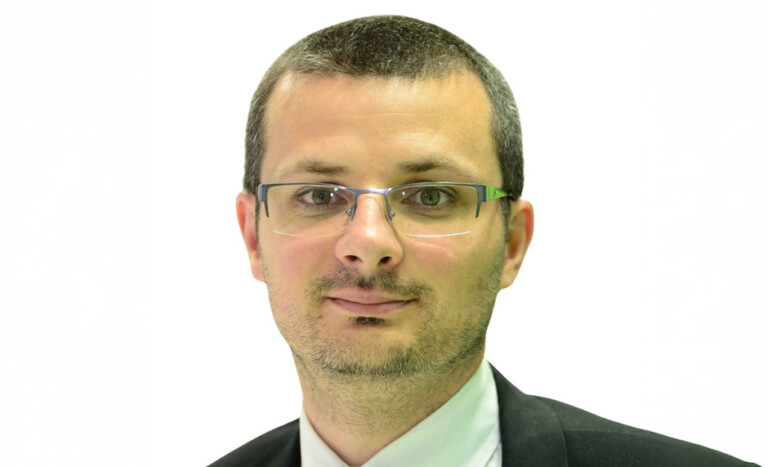
Jérôme Le Bloch is the head of scientific affairs for FoodChain ID. His areas of responsibility include novel foods, claims, food additives and food for special medical purposes (DADFMS) files. Internationally, he also handles NDI/GRAS (new dietary ingredient/generally recognized as safe) for the U.S. market. Le Bloch is a well-known presenter at conferences on innovation in dietary supplements.
NIE: What services does FoodChain ID offer?
Le Bloch: FoodChain ID’s service areas include product development, food safety certification, regulatory compliance, product certification, sustainability services and testing solutions.
Within product development, we offer services that serve food and supplement products.
NIE: What are Supplement R&D Insight and Supplements Compliance? How are they beneficial tools for manufacturers?
Le Bloch: Supplements R&D Insight is a product development solution to simplify supplement creation in the U.S., E.U. and Asia markets. The digital solution saves supplement developers time and resources by facilitating informed development decisions on regulatory ingredient status, scientific substantiation, health claims and product benchmarking.
Supplements Compliance is a solution for supplement regulations and label generation for the E.U. market. The digital solution supports product launches with instant, one-click access to regulatory audit and automated label generation. The solution updates formulas and labels when regulations change or when evaluating launches in additional E.U. countries.
NIE: What considerations should a business understand for a novel food application in the E.U.?
Le Bloch: Novel food within the European Union (E.U.) is defined as food that has not been consumed to a significant degree by humans in the E.U. prior to 1997, when the first regulation on novel food (Reg 258/97) came into force.
Novel food can be a newly developed, innovative food or food produced using new technologies and production processes, as well as food traditionally eaten outside of the E.U. Vitamins, minerals, engineered nanomaterials, insects and foods derived from materials of mineral origin are explicitly included in the definition. The regulation does not apply for food additives, flavorings, enzymes, extraction solvents and GMOs (genetically modified organisms). New food authorization can take two to three years in total. The authorization process is requiring more data compared to the past, leading to more challenging and longer evaluations. However, novel food applications are mandatory for any innovative ingredient. All EFSA (European Food Safety Authority) publications and many E.U. regulations need to be considered, which makes it preferable to work with an expert who has a perfect knowledge of this process.
FoodChain ID supports its clients with novel food applications following the necessary steps:
• Evaluation of the novel food status of the ingredient.
• Preparation, submission and follow-up of consultation process, to avoid a novel food application delay.
• Pre-submission phase with the potential applicant asking for general advice of EFSA.
• Evaluation of the possibility to request a novel food approval, identification of lacking information and support to obtain all data.
• Preparation, submission and follow up of the application until approval.
NIE: Is there anything else you would like to add?
Le Bloch: FoodChain ID can also provide a similar support for food additives and food enzymes in Europe, as well as consultation for health claims. Experts can support companies marketing in the U.S. market with GRAS/NDI applications or support for structure/function claims.
In addition, FoodChain ID provides expertise in the regulatory aspects of supplements, with the possibility to check the compliance of a product for the U.S., E.U. and target countries.