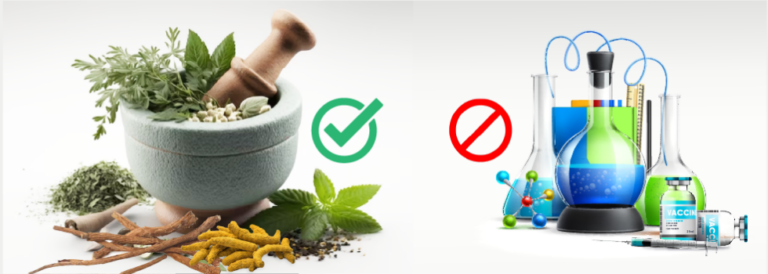
There is a growing trend that is causing concern among many: some manufacturers are urging practitioners to evaluate herbal ingredients using the criteria applied to single-molecule drugs or pharmaceuticals. This is problematic because evaluating botanical ingredients as drugs impairs the primary reason why consumers and natural-remedy practitioners seek out herbal ingredients: they want these ingredients in their natural form as created by Mother Nature harmoniously supporting human health. Natural ingredients have been favored over drugs due to concerns that drugs are often synthetic compounds not found in nature and lack the long-term history of safety and efficacy studies that natural remedies possess.
The industry largely understands this key driver of consumer demand and the scientific rationale for preferring natural ingredients and full-spectrum extracts. When a new botanical category is introduced, it is typically dominated by these whole, full-spectrum ingredients and extracts. However, as the category matures and competition intensifies, there is pressure on new suppliers to boost sales by making exaggerated claims. Unfortunately, these claims often amount to marketing hype that distracts from the industry’s core mission.
One such instance is when manufacturers push practitioners to evaluate herbal ingredients by criteria used for single-molecule drugs, particularly emphasizing the high concentration of specific molecules or chemicals. This focus on concentrated molecules and presenting them as the most crucial aspect is concerning. It manifests in ingredient suppliers promoting their products with superlative marketing claims about the concentration or “potency” levels of these molecules or their “bioavailability.”
This trend is concerning to many because it diverts attention from the core principles that lead people to seek herbal ingredients initially and risks shifting the industry’s focus from its fundamental mission. Here are some reasons why consumers might be cautious about ingredient forms that concentrate on specific molecules:
- Distortion of Natural Essence: Herbal ingredients are valued for their natural composition, with a combination of various naturally-occurring compounds working synergistically. Emphasizing the high concentration of a specific molecule distorts the true essence of these natural remedies, potentially reducing their therapeutic effect.
- Mismatch with Traditional Use: The effectiveness and safety of herbal remedies are often based on their natural composition. Consumers and natural remedy practitioners choose herbal ingredients over synthetic drugs due to concerns about the safety and compatibility of synthesized compounds with the human body. Evaluating botanical ingredients using criteria designed for single-molecule drugs may disregard the traditional knowledge that has guided their use for centuries.
Ashwagandha is a prime example of this kind of marketing confusion and hype created by new ingredient makers seeking market entry. Known scientifically as Withania somnifera, Ashwagandha has been used in traditional medicine for thousands of years. Importantly, only the root of this plant and its extracts have been traditionally used and extensively documented for their wide-ranging efficacy in promoting health and well-being. The root’s unique ratio of bioactive compounds contributes to its diverse health-enhancing properties.
However, as demand for Ashwagandha root supplements has increased, some ingredient manufacturers have resorted to making marketing claims based on inflated levels of certain molecules such as withanolides, extracted from other parts of the plant, such as leaves which are undesirable for several reasons. These manufacturers also claim higher bioavailability of these compounds, which may not even be the primary drivers of the herb’s efficacy. While withanolides may be important phytochemicals found in the root, they are likely just one part of the complex mix that makes Ashwagandha effective. Therefore, a high presence of these molecules in the body may not necessarily lead to greater effectiveness. Moreover, withanolides found in the root are not necessarily the same as the withanolides found in other parts of the plant such as leaves. Inflating specific molecules like withanolides to high levels, especially from the leaves, does not necessarily result in an end product equivalent to the Ashwagandha root that has been used for centuries.
Perhaps due to these concerns, the Government of India recently released an advisory advocating for the use of Ashwagandha roots alone and advising manufacturers to refrain from using Ashwagandha leaves. This advisory likely stems from the lack of long-term safety and efficacy data on the leaves compared to what we have for the roots.
All of this serves as a cautionary note on the importance of preserving natural ingredients in their original form and not concentrating them into specific molecules like drugs. We need to be wary of marketing hype that suggests focusing on high levels of withanolides, especially from non-standard parts of the plant like leaves, will yield the same safety and efficacy as the long-established Ashwagandha root extracts.
These statements have not been evaluated by the Food and Drug Administration. This product is not intended to diagnose, treat, cure or prevent any disease.
Any information provided or opinions made in email advertisements are not necessarily those of VRM Media or its owners. Publisher is not liable for advertiser product claims or representations. Advertisers assume total responsibility for the contents of their advertisements.
![[Extra! Extra!] The Impact American Tariffs Have on Imports of Indian Nutraceuticals](https://niemagazine.com/wp-content/uploads/2026/02/LeadershipForum-280x300-1771953306.jpg)
![[Sponsored Content] India Honors Ashwagandha With Commemorative Postal Stamp](https://niemagazine.com/wp-content/uploads/2025/12/Ashwagandha-Postal-Stamp-1000w-300x273-1766502623.jpg)
![[Sponsored Content] 6 Powerful Reasons To Choose Organic-Certified Ashwagandha](https://niemagazine.com/wp-content/uploads/2025/12/ksm-ashwagandha16550-300x200.jpg)
![[Sponsored Content] KSM-66 and the Marvelous Blueberry](https://niemagazine.com/wp-content/uploads/2025/12/KSM-66-and-Marvelous-Blueberry-300x107.jpg)