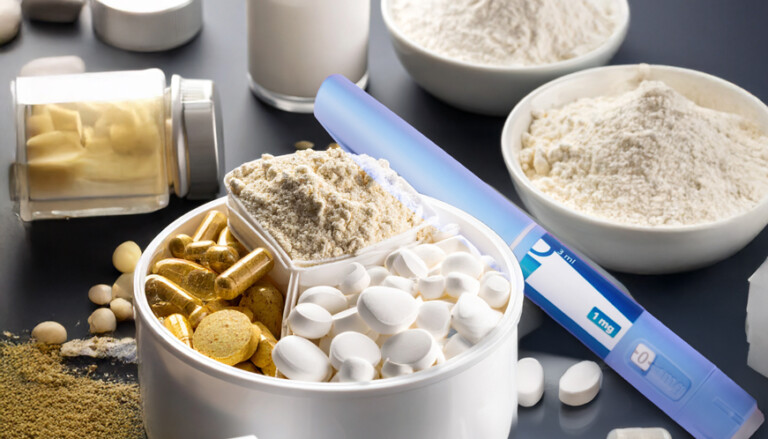
The natural products industry discusses how GLP-1s have reshaped the weight-loss supplements market.
GLP-1 drugs have reshaped the weight management landscape with projections rising from $6 billion in 2023 to potentially $100 billion by 2030, according to Morgan Stanley Research.1
Shil Kothari, president of Gateway Health Alliances (GHA, Fairfield, CA), noted that GLP-1 medications deliver an average weight loss of 15 to 20 percent,2 which had led to a sales projection of more than $125 billion in 2033.3
“In the natural products space,” he said, “we focus on supporting GLP-1 activity by inhibiting the DPP-4 enzyme that breaks down GLP-1—enabling it to remain active in the body longer—and modulating other hormones that regulate appetite and satiety. It’s a more holistic approach that supports metabolic health safely and gently, making it well-suited for long-term use.”
He added recent research has shown that nearly half of U.S. adults are interested in GLP-1 prescriptions for weight loss and as many as 93 million adults meet eligibility criteria for GLP-1 therapy.4 However, pharmaceutical GLP-1 remains costly and inaccessible, averages around $900-$1,300 monthly before insurance,5 and often carries mild to serious side effects.
“Patients have reported various gastrointestinal side effects, including nausea, diarrhea and vomiting. Less common but more serious adverse events can include pancreatitis, gallbladder issues, bowel obstructions or gastroparesis. This has led many consumers to explore natural, research-supported ingredients that work with the body’s own signaling systems,” said Maggie McNamara, vice president of global marketing at Saanroo (Austin, TX).
Effects and Trends on the Natural Products Industry
After several flat years, the U.S. non-meal replacement weight management supplements category grew by 7 percent in 2023 and 9.6 percent in 2024, according to Nutrition Business Journal (NBJ)—largely attributed to the GLP-1 effect.
“Millions of consumers who previously never considered supplements are now looking for ways to optimize results, manage side effects, support metabolism and energy, and/or maintain weight after discontinuing the drugs,” said Harkirat Singh, category manager for sports nutrition and weight management at OmniActive Health Technologies (India/Bridgewater, NJ). “For the natural products industry, GLP-1 drugs haven’t been a disruption—they’ve been a catalyst for innovation, new category formation, and attracting an entirely new consumer base.”
According to Mike Petteruti, president and general manager of Texas-based Chemi Nutra, GLP-1s have created a completely new type of consumer “almost overnight.”
He observed that people are eating less, losing weight more quickly and rediscovering what their “new normal” feels like. He also said what often gets overlooked is when appetite shifts this drastically, daily behavior shifts with it—everything from eating patterns to emotional rhythms.
“That has pushed the industry to think beyond traditional weight-loss support and toward products that help people stay steady, focused, and emotionally grounded as they adjust to these changes,” he explained. “It’s expanded the conversation from purely metabolic support to the broader experience of how people feel and function through the transition.”
According to Dr. Liki von Oppen-Bezalel, business development director at Israel-based TriNutra, consumers can be categorized into two areas—those looking for a natural alternative that can aid in GLP-1 secretion and those who are taking medication and looking for supplements to help with nutritional depletion and negative side effects.
“The demand for GLP-1 alternatives is driving innovation in the natural product industry. As a result, consumers who want the benefits of appetite control, healthier glucose balance and better energy metabolism—but without prescription drugs or side effects—are increasingly looking to natural alternatives. This shift has accelerated demand for stronger science, higher regulatory standards, and closer scrutiny of any ingredient positioned for metabolic support,” Kothari said.
Leslie Lannebere, global marketing manager—health division at France-based Nexira, said the rise of GLP-1 agonists has reshaped the natural products in several ways. She said many GLP-1 drugs cause discomforts such as nausea, digestive irregularities, low energy, nutrient gaps or muscle loss. This has created a new high demand for natural solutions that support weight loss and mitigate side effects.
“Not all consumers qualify for—or wish to use—pharmaceutical GLP-1s. This expands the market for natural ingredients that can promote satiety or help regulate appetite, the natural way,” she said. “As highlighted in our GLP-1 Collection, many individuals regain significant weight after discontinuation. Brands are turning to natural solutions to help sustain healthy habits and metabolic balance.”
Lixin Ding, R&D director at BGG Americas (Irvine, CA), also noted that while GLP-1s reduce the appetite, they also cause side effects, such as muscle loss, nausea and digestive issues. This has created new opportunities for natural products manufacturers to ensure users get proper nutrition and mitigate side effects.
“GLP-1 drugs have created new competition for existing weight-loss products, but natural solutions can offer clinically proven, side effect-free alternatives for a fraction of the cost,” he said. “They’re very appealing for consumers who can’t afford GLP-1 or who may want a gentler option. We’re also seeing that many people look to switch to natural options once they’ve reached or approached their target weight as they look for a cost-effective way to maintain their results.”
Rob Brewster, president of Ingredients by Nature (IBN, Montclair, CA), said the popularity of GLP-1 drugs has accelerated consumer interest in metabolic wellness overall.
“As a result, brands are looking for science-supported, clean-label ingredients that naturally align with areas, such as appetite awareness, balanced nutrition, satiety support and general metabolic resilience. It has raised expectations for transparency, clinical grounding and responsible communication in the supplement space,” he said.
McNamara agreed with Brewster, adding many people are seeking natural ingredients that align with the physiology and many promote comfort, appetite regulation and overall metabolic balance without serious side effects. This has led to an increased demand for clinically researched, mechanism-based ingredients.
“Additionally, it has created a new market for companion products, including the launch of new lines of protein shakes and nutrient-dense frozen meals designed to support the dietary needs of GLP-1 users, such as preserving muscle mass and managing side effects,” she said.
What Consumers Want
Consumers are primarily looking for gentle and stable natural solutions that support healthy weight and metabolic health without harsh side effects.
“When hunger cues quiet down and routines change, people look for support that helps them feel mentally energized, emotionally steady, and motivated day to day,” Petteruti explained. “They also want to feel a sense of internal control while their habits catch up to the changes in their bodies. It’s less about amplifying the medication, and more about helping them navigate the experience of change with clarity and confidence.”
“Ultimately, consumers using GLP-1 products want to see clear results as quickly as possible. They will generally deliver that, but the cost and side effects mean it’s often not viewed as a long-term option. For that reason, many users will eventually look to move onto science-backed natural alternatives,” Ding added.
According to Kothari, consumers are looking for validated ingredients with “clear mechanisms of action, measurable benefits and suitability for long-term daily use.”
“These ingredients must also have formulation flexibility, so they fit popular food, beverage and supplement formats that offer anytime, anywhere convenience. Reliability, transparency and clean-label formulation are also top priorities,” he said.
Singh said consumers are approaching GLP-1 related products in three phases—before, during and after their pharmaceutical journey—and each phase reveals distinct supplement opportunities. Consumers are seeking ongoing, holistic solutions, not just drug-adjacent products.
According to NBJ, 60 percent of potential GLP-1 users would try supplements before starting the drugs, 45 percent are concerned about expense, 42 percent are concerned with side effects and 22 percent are concerned about needing to stay on the drugs indefinitely.
“Most GLP-1 users discontinue within a year. Whether they meet their goals or not, they look for solutions to help maintain weight, support metabolism, or replace the pharmaceutical intervention. Products that offer multi-dimensional efficacy, supporting appetite regulation, metabolism, caloric balance, muscle maintenance and energy are particularly appealing,” Singh said.
von Oppen-Bezalel said current and former users of GLP-1 agonists are seeking support from the natural products industry to addresses nutritional deficiencies and manage adverse side effects.
“This support can include enhancements for muscle mass, gut and microbiome health, as well as benefits for hair and skin, heart health, blood glucose control, weight management and more. When shopping for natural products, consumers are looking for affordable and safe products that effectively complement their health journey,” she said.
Brewster added that consumers are gravitating toward natural solutions that fit into a long-term lifestyle, such as nutrient-dense ingredients, gut-health support, fiber, protein and metabolic wellness formulas that are safe, transparent and sustainable. They’re looking for products that complement healthier habits rather than promise drug-like results.
“For those using pharmaceuticals, many consumers seek additional nutrients to help fill gaps, including vitamins, minerals, muscle-building ingredients, skin and hair support, gut health and more,” McNamara said. “And for those who are stopping use of the medications, many consumers look for naturally sourced ingredients, backed by published clinical research. The health benefits they seek include support for satiety and mindful eating, weight management and digestive support. They want solutions that are easily incorporated into their lifestyle and offer versatile delivery formats.”
GLP-1 Products and Ingredients
As a booming category, manufacturers have a unique opportunity for innovation to create unique products and ingredients to meet consumer demand.
GHA has spent decades developing natural ingredients that support healthy weight and metabolic balance through well-define biological pathways.
“Dyglomera, our patented polyphenol-rich extract from the African spice fruit Dichrostachys glomerata, and CQR-300, our Cissus quadrangularis extract, are among the best studied in the category, supported by more than a dozen peer-reviewed clinical trials involving over 1,700 participants. Both have long been shown to influence satiety, appetite, and glucose metabolism,” Kothari said.
A randomized, double-blind, placebo-controlled study of 248 adults showed participants taking Dyglomera and CQR-300 experienced meaningful weight loss, improved body composition and better metabolic markers across the board.
Carolean is Nexira’s patent-pending, proprietary appetite-control complex designed as a natural solution to the popular GLP-1 trend—one of several ingredients in the GLP-1 Collection ingredient line. It was shown to slow gastric emptying, reduce food intake by an average of 47 percent, increase endogenous GLP-1 secretion two-fold, reduce the hunger hormone ghrelin by 67 percent and modulate neuronal appetite pathways.
“This performance comes from the synergistic combination of carob and nopal, delivering a superior viscosity profile compared with each ingredient used individually,” Lannebere said. “Carolean offers a clinically and mechanistically grounded way to support satiety for consumers looking for: a natural alternative to GLP-1 programs, a supportive solution while on a GLP-1 program [and] a strategy to maintain appetite regulation after discontinuation.”
BGG’s ApplePhenon is a proven, natural solution that can provide long-term benefits for consumers who are focused on metabolic wellness. It is a procyanidin-rich powerhouse from upcycled apples, which has been shown to help with glucose management.
“Following an earlier study with positive results in diabetic mice, a large-sample clinical trial assessed 88 people with fasting plasma glucose levels of 100-125 mg/dL,” Ding explained. “That puts them just below the threshold for diabetes and is often considered an early predictor for type 2. After 12 weeks of supplementing with 600 mg ApplePhenon each day, a glucose tolerance test showed a significant difference between the treatment group and the placebo group in terms of hyperglycemia.”6
Saanroo’s Trpti is an oleoylethanolamide (OEA) ingredient backed by scientific research on appetite-related signaling pathways. OEA is a lipid messenger naturally produced in the small intestine in response to eating.
According to McNamara, Trpti is known for its involvement in signaling related to GLP-1 pathways—interacting with receptors like GPR119 to promote feelings of fullness and contributing to fat metabolism signaling through pathways such as PPAR-α.
“Trpti combines OEA with the delivery technology LipiSperse to overcome OEA’s bioavailability, providing brands a way to incorporate a scientifically supported, physiologically relevant ingredient into products designed for balanced eating and wellness routines,” she said.
von Oppen-Bezalel said one of the common side effects of GLP-1 agonists is hair loss, which can result from factors such as rapid weight loss, nutritional deficiencies and hormonal changes. Topical supplements such as B’utyQuin, a premium, USP-grade black seed oil has been shown to reduce hair loss by 35 percent, increase hair density and support hair health within 28 days.
“In addition, TriNutra’s dietary companion, ThymoQuin, was shown to directly affect metabolic health, such as blood glucose levels, improve the metabolism of fat, enhance mitochondrial function and biogenesis, reduce oxidative stress and overall stress (cortisol levels), and balance the inflammatory response,” she said.
Capsimax is a clinically supported capsaicinoid ingredient from OmniActive. A new clinical study demonstrated that 100 mg of Capsimax significantly increased natural GLP-1 levels by around 13 percent after just seven days of supplementation. The study also showed increased exercise performance (peak power, force, velocity and total reps) and significantly reduced energy expenditure by more than 120 kcal on both Day 1 and Day 7.
“This seventh study adds a new layer of differentiation with GLP-1 support outcomes, an area of massive consumer and brand interest. With experiential thermogenic effects, a low 100 mg dose, non-stim positioning, and benefits beginning as early as Day 1, Capsimax offers formulators a versatile, premium, science-backed solution for today’s most in-demand product categories,” Singh said.
Chemi Nutra doesn’t focus on the GLP-1 pathway itself but focuses on the cognitive and emotional experience that often accompanies transitions.
According to Petteruti, AlphaSize is known for supporting mental clarity and motivation; SerinAid PS promotes steadiness stress resilience and cognitive performance; and Mediator PA supports strength maintenance and physical performance.
IBN does not formulate ingredients to mimic GLP-1 drugs or replace prescription therapies. Instead, the company supplies high-quality, research-driven botanical and citrus ingredients to support the foundations of metabolic health and well-being.
According to Brewster, Eriomin, a multi-patented blend of lemon flavonoids, has four published human clinical trials suggesting it may help support healthy blood glucose levels by increasing GLP-1 levels, supporting its role in insulin secretion, maintaining optimal levels of glucagon, and maintaining blood sugar levels in the normal range.
“Mechanistically, Eriomin both increases GLP-1 production and reduces DPP-4–mediated degradation to help keep GLP levels more stable over time. This dual mechanism of action makes it a standout among competitive ingredients that often only demonstrate GLP-1 release like food,” Brewster explained. “In addition to GLP-1 modulation, Eriomin has been shown to increase adiponectin, reduce C-peptide concentration, and improve fasting glucose, HbA1C and improve insulin resistance. Collectively these data support Eriomin as a powerful natural ally for overall metabolic health and regulation.”
Metabolic Syndrome, Diabetes and Health Concerns
GLP-1 plays a central role in how the body manages glucose, appetite and energy, so it naturally affects several major health concerns.
According to McNamara, GLP-1 pathways interact with various aspects of metabolic function including signals for satiety, digestive timing and glucose-related processes.
“Because these pathways are interconnected, interest has grown in how natural ingredients might support parts of metabolic wellness related to appetite, balanced eating and overall dietary habits,” she said. “While GLP-1 medications are pharmaceutical tools used in specific clinical settings, natural products are being studied for their potential to enhance general metabolic wellness routines.”
Kothari explained when this pathway is activated, the body manages blood sugar more effectively, slows digestion to prevent post-meal spikes and helps reduce appetite and cravings.
“These combined effects support healthier weight, better glucose control, and improvements in metabolic markers linked to cardiovascular health. The biology behind GLP-1s’ impact on appetite and glucose control is only one reason for their popularity. By modulating these pathways, GLP-1s help people succeed where willpower alone often falls short,” he explained.
According to Lannebere, by regulating insulin section, improving glycemic response and slowing gastric emptying, GLP-1 agonists can contribute to improvements in metabolic syndrome parameters (waist circumference, glycemic control, triglycerides, etc.), type 2 diabetes management and cardiometabolic risk.
“The rise of GLP-1s has changed the wellness landscape in a very real way. People aren’t just trying to lose weight—they’re trying to stay connected to themselves while their bodies change fast,” Petteruti said. “That’s why we developed our Emotional Anchoring framework. It gives brands a way to build products that support both the mind and the mood during these transitions, not just the physical markers. We see this as the next frontier in wellness: helping people feel steady, confident, and supported from the inside out.”
“There’s no silver bullet for long-term weight and metabolic health—not even GLP-1s. The body relies on a network of hormones and signals, including leptin, adiponectin, insulin and GLP-1, all working together to regulate appetite, energy balance and glucose control,” Kothari added. NIE
References
1 https://www.morganstanley.com/ideas/obesity-drugs-market-expanded-opportunity, 2024. 2 The Ozempic Effect: Everything You Need to Know About Medical Weight Loss. Columbia University Department of Surgery, 2025.
3 GLP-1 Receptor Agonist Market (2025 – 2030). Grand View Research, 2025.
4 Population-Level Interest in Glucagon-Like Peptide-1 Receptor Agonists for Weight Loss Using Google Trends Statistics in a 12-Month Retrospective Analysis: An Infodemiology and Infoveillance Study. Cureus. 2024 Oct 15;16(10):e71569. doi: 10.7759/cureus.71569 5 High Price of Popular Diabetes Drugs Deprives Low-Income People of Effective Treatment. KFF Health News, May 2024.
6 Shoji, T., Yamada, M., Miura, T., Nagashima, K., Ogura, K., Inagaki, N., Maeda-Yamamoto, M. (2017). “Chronic administration of apple polyphenols ameliorates hyperglycaemia in high-normal and borderline subjects: A randomized, placebo-controlled trial.” Diabetes Research and Clinical Practice 129 (2017) 43-51.
For More Information:
BGG Americas, www.bggworld.com
Chemi Nutra, www.cheminutra.com
Gateway Health Alliances (GHA), www.ghainc.com
Ingredients by Nature (IBN), www.ingredientsbynature.com
Nexira, www.nexira.com
OmniActive Health Technologies, www.omniactives.com
Saanroo, www.saanroo.com
TriNutra, www.trinutra.com



![[Extra! Extra!] BodyBalance for Lean Muscle Support](https://niemagazine.com/wp-content/uploads/2026/07/Weight-Management-300x164.jpg)