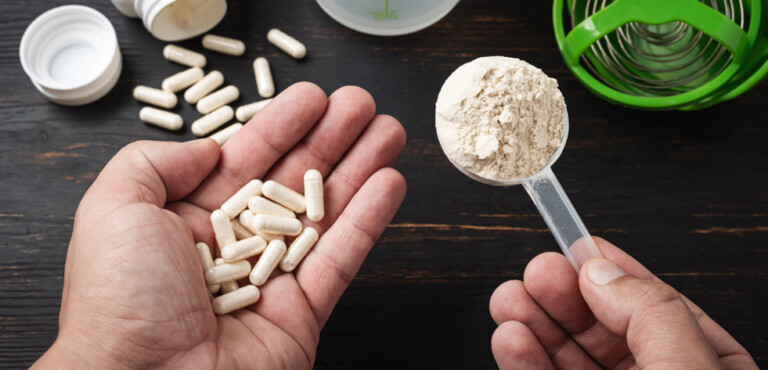
Collagen supplements are a huge trend for aesthetics and joints, while standard proteins handle muscle, but consumers are increasingly using and combining them for broader health, driven by a “beauty and wellness” narrative.
“We’re seeing protein show up in mainstream brands and consumer consumption moments as opposed to the traditional sports and active nutrition brands dominating innovation in protein products,” said Simon Penfold, CCO of Vivici, which is based in Delft, Netherlands.
“On one side, you still have traditional sports and performance users: people focused on strength, recovery and muscle maintenance. On the other, you now have a much broader group using protein—and collagen—for everyday wellness, healthy aging, weight management and appearance (skin, hair, joint health),” Penfold said.
The biggest growth drivers right now are Gen Z and younger Millennials, Penfold noted, who want functional beverages that fit their lifestyle: clear, refreshing, “better-for-you” sodas and waters with real benefits, not just empty calories.
Jordan Miller, vice president, marketing, Nutrition21, an Everwell Health company, based in New Jersey, agreed, “The market for both collagen and protein products is dynamic, with opportunities for innovation propelled by consumer demand for convenient, functional options that support beauty, wellness and active lifestyles.”
Miller noted some finer points, pointing out that collagen and protein supplements are widely used by U.S. consumers, with collagen especially popular among women, particularly those interested in its skin and beauty benefits, but collagen is also marketed for joint health and mobility. In contrast, protein products are consumed broadly across demographics for convenience, muscle health and fitness support.
According to Mintel’s 2024 Ingestible Beauty Report, collagen use is highest among women ages 35-54, whereas men ages 18-34 make up a significant portion of pre- and post-workout protein supplement users, with 52 percent reporting use in the past 12 months.
Another development, Penfold said, “Since many consumers are on a weight-management journey, they are looking for convenient formats like protein shakes, clear protein drinks and compact protein shots that deliver meaningful grams of protein in small but delicious beverages. Women are now buying clear protein waters, functional sodas, collagen + protein RTDs (ready-to-drinks) and compact shots, to cover multiple health needs at once,” Penfold said.
Protein RTD beverages sit at the heart of this shift across consumer groups. The category is growing fast, and the most dynamic sub-segments are clear RTDs, functional sodas and small-format shots, he added.
“In short, protein and collagen are no longer just for a subset of the population,” Penfold said. “They’re becoming daily, lifestyle-driven tools for performance, wellness and healthy aging—and the expectations on taste, format and sustainability are higher than ever. Starbucks making their move into protein is a strong proof-point of the dynamic.”
Collagen Close Up
Regarding collagen specifically, Florencia Moreno Torres, global marketing manager with Rousselot by Darling Ingredients, The Netherlands, said, “We are seeing consumer demand for collagen peptides continue to grow. Previously, collagen was relegated to a very specific segment of the market for skin, hair and nails. However, people are increasingly aware of what we have known for decades: collagen is an undeniably versatile ingredient for everything from enhanced mobility and recovery to gut health and glucose management. Collagen delivers benefits for a wide range of people, whether they run marathons, want to promote healthy aging, or are seeking support in their GLP-1 journey.”
She added, “Applications have also expanded from ready-to-mix powders to more niche offerings, such as collagen coffee, which has taken off recently. It’s an excellent time for innovation. While people are learning more about other benefits, collagen already has built-in awareness, making it the ideal springboard to bring collagen to new audiences while highlighting its efficacy.”
Collagen Ingredients
Mónica Gómez Navarro, marketing manager, branded ingredients, with Bioiberica (Spain) said the company’s Collavant n2 ingredient is a trusted source of native (undenatured) type II collagen, backed by robust scientific evidence, including six clinical studies confirming its efficacy to support joint health and comfort.
“Native type II collagen is collagen in which the protein structure has been preserved. It is usually extracted from chicken cartilage because up to 80 percent of collagen in cartilage is type II,” she explained. “It has a specific immune-mediated mechanism of action called Oral Tolerance, which helps to control the body’s immune response against endogenous type II collagen. This mechanism of action does not require intestinal absorption and targets the joints specifically, supporting long-term joint health.”
Collavant n2 is also the first collagen to become NutraStrong Collagen Verified—a program developed by SGS Nutrasource and endorsed by the Collagen Stewardship Alliance (CSA)—reinforcing its position as a credible, high-quality ingredient for joint health innovation.
Marie Parks, ingredient science specialist with Stratum Nutrition based in Carthage, MO, said the company’s NEM ingredient is its top product in this category. “NEM is a partially hydrolyzed natural eggshell membrane ingredient providing a fast-acting, low-dose collagen solution for joint health. The NEM matrix is predominantly protein and is a natural source of collagen types I, V and X, in addition to sulfur-rich amino acids, and the glycosaminoglycans (GAGs) chondroitin sulfate, dermatan sulfate, keratan sulfate and hyaluronic acid, making it a complete joint health ingredient.”
This award-winning multi-collagen ingredient, NEM has more than 10 published human trials showing its efficacy for joint comfort, stiffness, mobility and cartilage protection, with results within one week and as soon as one day. The clinically studied dose for NEM is a convenient 500 mg, along with a long list of attractive attributes like being Upcycled Certified, as well as sourced and studied in the United States with full traceability. This GMO (genetically modified organism)-free, ovo-vegetarian “multi-collagen” source is NutraStrong Collagen Verified and is produced using only USDA (U.S. Department of Agriculture)-certified eggs.
“While NEM is our flagship ingredient,” Parks said, “OVOLUX, an unhydrolyzed, ultra-low-dose eggshell membrane ingredient, is emerging as a leading beauty-from-within ‘multi-collagen’ solution for supporting hair, skin, and nail health offering brands science-backed, environmentally friendly ways to address joint and cosmetic concerns. Each year, Stratum Nutrition’s commitment to sustainability prevents two million pounds of discarded eggshells from unnecessarily ending up in landfills so that people not only feel good in their bodies and minds.”
Another well-researched ingredient, noted Shelby Linville, associate director, global product marketing at Lonza Capsugel (Morristown, NJ) is the company’s UC-II undenatured type II collagen ingredient that sets the stage for breakthrough innovations in the joint health market.
“It is the most researched brand of undenatured type II collagen, backed by two decades of research and more than 20 studies, including 11 human clinical trials,” Linville said.
Offering science-backed efficacy in healthy adults from as young as 20 years of age, UC-II undenatured type II collagen is clinically shown to improve joint flexibility and comfort. UC-II undenatured type II collagen has a unique mechanism of action, Linville said, which triggers the immune system to help support the body’s natural cartilage repair process and promotes building of new cartilage in a small dose of just 40 mg per day.
In a recent randomized, double-blind, placebo-controlled clinical trial, healthy and active participants aged 20-55 years received supplementation with 40 mg UC‑II undenatured type II collagen for six months. Researchers found that UC‑II undenatured type II increased knee range of motion (ROM) flexion (flexibility) by 3.23 degrees—which was 15 times more than placebo—and knee ROM extension compared to baseline by 2.21 degrees. On average, people lose one degree of knee flexion every 10 years, so this result translates to a rejuvenation of joint function by a decade.
According to Miller, although Nutrition21 does not manufacture collagen products, it does offer Lustriva, a one-of-a-kind ingredient for beauty within benefits, which is a patented blend of bonded arginine silicate and magnesium biotinate. Lustriva supports hair and skin health and can be used in finished product formulations that contain collagen. Lustriva has been shown to promote existing hair growth, support fuller, thicker looking hair, and reduce the appearance of fine lines and facial wrinkles.
Protein Ingredients
At Vivici, the flagship ingredient is Vivitein BLG (beta-lactoglobulin), a whey protein produced by precision fermentation.
According to Penfold, Vivitein BLG is:
• 90 percent pure in beta-lactoglobulin,
• Nutritionally powerful with superior protein quality and a high concentration of BCAA’s and leucine, delivering the critical amino acids needed for muscle growth, recovery and metabolic support.
• Offers impressive functionality, with high solubility, heat stability, clarity and low viscosity contribution.
• Lifestyle-aligned—lactose-free, cholesterol-free, and suitable for vegan and flexitarian-friendly brands, produced with a much lower environmental footprint than conventional whey.
“Thanks to these properties,” Penfold said, “Vivitein BLG is ideal for crystal-clear protein waters, functional sodas, high-protein shots, teas, and other RTDs were traditional whey or plant protein struggle with clarity, taste or mouthfeel. We’ve also reached critical regulatory milestones: we announced self-affirmed GRAS (generally recognized as safe) for Vivitein BLG and have received a ‘no questions’ letter from the U.S. Food and Drug Administration.”
Miller added that Nutrition21’s MyoVera is a patented muscle and strength optimizer that promotes muscle growth and improves strength by enhancing muscle’s ability to use protein efficiently. A clinically studied ingredient containing two powerful forms of chromium, MyoVera supports amino acid uptake into muscles and amplifies muscle protein synthesis—enabling the body to get the most out of every gram of protein consumed.
Because this ingredient produces a stronger muscle-building response, when used in a formulation, it delivers muscle and strength benefits using less protein—offering a cost effective, reliable formulation solution.
Ingredient Innovations
As for product formulators, with Vivitein BLG, brands can:
• Deliver very high protein convenient, on-the-go shots that deliver powerful protein in a great tasting, no-fuss way, while maintaining low viscosity and stability—something that is extremely challenging with conventional whey or plant proteins.
• Create crystal-clear, refreshing RTDs—waters, sodas, teas—formulation flexibility whilst delivery nutritionally powerful protein with no turbidity. This breaks away from the old model of thick, milky shakes.
Options are endless to deliver the “New Standard of Protein” in a range of applications, that solves what we call the Protein Trilemma: Protein quality: optimal amino acid profile—high BCAA and leucine.
Sensorials: low viscosity, refreshing mouthfeel, clarity and broad flavor possibilities. Lifestyle: lactose-free, flexitarian or vegan-friendly positioning and lower environmental footprint.
“Alongside BLG, Vivitein LF (lactoferrin) is the second protein we are bringing to market. It’s a fermentation-derived bioactive whey protein designed to support sustained vitality in busy women, improve gut health for proactive wellness seekers and unlock recovery and performance for athletes closely aligned with emerging demand in women’s health and performance wellness,” Penfold said.
At Rousselot, Moreno Torres noted that Peptan collagen peptides are backed by research in multiple published pre-clinical and clinical studies for skin, mobility, recovery after exercise, and more. “Our scientific team continuously works to expand the body of scientific knowledge and explore new areas of health for collagen products.”
Published results support the benefits around:
• Skin and hair beauty
• Bone and joint health
• Sports recovery
• Active lifestyle support
• Healthy aging
• Gut comfort
• Improved sleep quality
“Beyond Peptan, we’ve also launched a new ingredient at the forefront of collagen research. Nextida GC is a breakthrough specific collagen peptide composition, which triggers the body’s own naturally occurring GLP-1 to promote glucose management.”
According to Lonza’s Linzell, “Thanks to the low-dose functionality of UC-II undenatured type II collagen, it can be easily formulated into a wide variety of convenient supplement formats, like capsules and gummies, as well as functional foods and beverages. This versatility enables brands to develop standout products tailored to a range of consumers—from aging adults to fitness-focused millennials.”
A Daily Boost
Many consumers now use collagen and protein ingredients as “habitual health” additions—simple, daily boosts that fit easily into existing routines, said Angie Rimel, marketing communications manager, North America, GELITA, with U.S. headquarters in Sioux City, IA.
GELITA’s solution for habitual health applications is its portfolio of Bioactive Collagen Peptides (BCP) that are clinically studied and shown to target specific connective-tissue cells, stimulating collagen production and delivering measurable physiological benefits.
“What makes BCP especially well-suited for daily-use products is the combination of efficacy and efficiency,” Rimel said. “The targeted bioactivity means benefits are achieved with small, easy-to-incorporate doses. For example, a beverage formulated to support joint health requires only a 5-gram daily serving of FORTIGEL BCP to deliver proven results. This low inclusion rate gives formulators flexibility without impacting taste, texture, or overall product experience.”
She added that because BCP ingredients are neutral in flavor, highly soluble, and compatible with a wide range of applications—from RTDs and stick packs to bars, gummies and everyday beverages—they fit seamlessly into consumers’ routines. Their versatility allows brands to create convenient, enjoyable functional products that support long-term wellness and make habitual health easy.
Research Shows a Variety of Benefits
In a double blind, placebo-controlled crossover study of 16 healthy individuals, Rousselot’s Nextida GC yielded a statistically significant increase in GLP-1 when taken at 10 g 30 minutes before a meal. When results were isolated for the prediabetic subgroup, 5 g also yielded a statistically significant increase. These findings show promise for lower dosage levels in individuals with imbalanced glucose metabolism. Overall, this innovative collagen ingredient lowered post-meal glucose spikes by an average of 42 percent.
Penfold said, “Our Research and Innovation team is a highly skilled group of scientists that can support brands across applications such as clear RTDs, high-protein shots, sodas and teas. They can help you push the limits on:
• Protein concentration
• Stability under different processing conditions (heat treatment, cold-fill, HPP etc.)
• Flavor systems and masking
• Formulation optimization for different consumer groups.
“Our research program for health claims is focused on Vivitein LF, and its role assisting the body’s own systems to repair, restore and maintain equilibrium,” Penfold said. “From fortifying gut health, to providing sustained vitality throughout the day, to speeding up muscle recovery, lactoferrin has the ability to address some of the most pressing needs of the modern health and wellness consumer.”
Whey protein is often known as an optimal supplement for muscle growth and recovery. But the addition of Nutrition21’s MyoVera to protein helps unlock additional benefits and impact for consumers.
In an eight-week clinical study, participants consuming 2 g of MyoVera with 15 g of whey protein (WP) produced significantly better results than those consuming 30 g of WP alone. Results showed that MyoVera + 15 g WP significantly increased muscle endurance in squat reps to failure, increased strength by an additional 20 lbs. in squat one-rep max, increased vertical jump height, and more than doubled the increase in vertical jump power. These results translate into benefits everyday active consumers can relate to. MyoVera can help muscles carry more weight, help muscles keep going for longer in daily activities, and help power muscles so consumers feel stronger.
When Developing a Product
When developing protein products, Penfold has decisive recommendations. “Solve the Protein Trilemma from Day 1. Consumers no longer accept trade-offs—they want quality protein sources with an optimal BCAA and leucine content. Great taste and texture (no protein taste, chalkiness or astringency) and products that align with their lifestyle and values (lactose-free, low sugar, flexitarian-friendly, sustainability forward).
Also, Penfold said, “Don’t trade one pillar for the others—design for all three. Formulation realism but explore innovative formats. Protein beverages and products are being re-invented, from shots to sodas. It can all be achieved if you have the best protein for the job, a protein that delivers solubility, clarity, and optimal viscosity.
“Picking the right protein—and the right processing—will make or break product performance,” Penfold said. “This is exactly where we support customers: we don’t just hand over an ingredient and the specification; we work with them from prototype to pilot trial to commercial scale, making sure the product works technically and commercially.”
Products do come under scrutiny—most recently was plant based that contained contaminants. What should manufacturers keep in mind with choosing and using these ingredients and how should safety be conveyed to consumers?
“It is important to look at the truth behind the numbers,” Penfold noted. “There will always be a difference between plant proteins and dairy based proteins as plants naturally absorb minerals from the soil. There is also a range of ingredients within a product (outside of the protein) that can contribute to contaminants, such as flavors or even water supply. High quality ingredient suppliers test for contaminants and will ensure these meet the specifications before released to customers.”
In conclusion, Parks added, “The collagen and protein categories are evolving and growing quickly, and consumers are seeking products grounded in strong science, transparency and sustainable sourcing. Brands that prioritize clinically supported ingredients and clear communication will be best positioned to earn long-term trust.” NIE
For More Information:
Bioiberica, www.bioiberica.com
Gelita, www.gelita.com
Lonza, www.lonza.com
Nutrition21, www.nutrition21.com
Rousselot, www.darlingii.com
Stratum Nutrition, www.stratumnutrition.com
Vivici, www.vivici.com


![[Extra! Extra!] Veracity Launches Protein Powder Containing MyoVera](https://niemagazine.com/wp-content/uploads/2026/05/Muscle-Strength-300x273-1780000352.jpg)
![[Extra! Extra!] The Upcycling Process for NEM and Ovolux](https://niemagazine.com/wp-content/uploads/2026/03/UpcycledIngredients-294x300-1774892611.jpg)