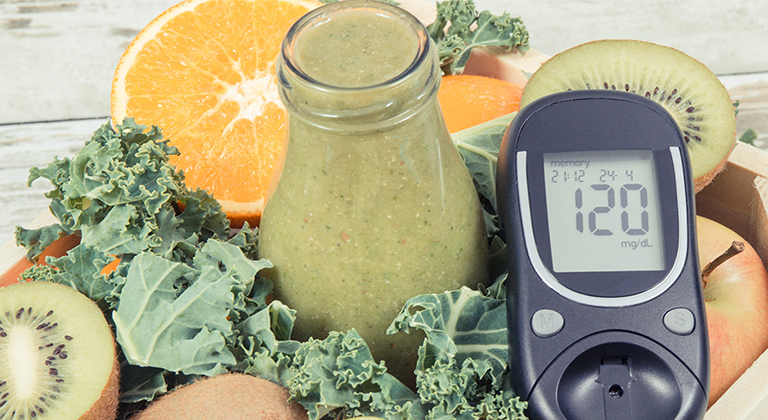
It wasn’t that long ago that blood glucose was a number most people thought about once a year, if that. A value that showed up on your annual labs, and your doctor never mentioned it unless it flagged a problem. Now, more people are wearing it on their arms and watching it on their phone as a proactive measure. That’s an important shift, an advancement in and of itself, because glucose is no longer just a diabetes number. It is becoming a day-to-day signal for metabolic health, and the market is starting to stand up and pay attention, learning that clinical credibility is worth more than clinical-sounding language.
The CDC (Centers for Disease Control and Prevention) says 115.2 million American adults have prediabetes, and more than eight in 10 don’t know it.1 That alone explains some of the attention. I believe the other force is GLP-1. Once a little-known hormone, it is now part of everyday conversation because of the drugs that mimic it. That has been a good thing in some ways, but it has also created a lot of confusion. For ingredient companies, the challenge is to educate without overreaching.
As a third-generation ingredients guy, I’ve spent my life in this world, and I have seen that this is where a lot of companies go wrong. They rush to borrow the language of the moment instead of earning it. When GLP-1 first became a market story, berberine quickly got labeled by some in the media as “Nature’s Ozempic.” In our opinion, that claim was unsupported and unfortunate for the industry. We drew a hard line away from that kind of hype, and as our ingredients are acceptable for foods and supplements, we do not make claims to prevent, cure or treat disease.
We Are Not Nature’s Ozempic, and We Do Not Formulate Ingredients to Mimic GLP-1 Drugs
Making that clear and making that matter is the work, because the market is more skeptical now. Regulators and retailers are paying attention. Consumers are paying attention. Being science-forward is no longer a differentiator by itself. Look across the serious, clinically backed ingredient houses, the ones that have been at this for decades, and you’ll find they all say a version of the same thing. Nature and science. Clinically studied. Backed by research. The words are nearly identical from one company to the next, and they no longer separate the credible from the hype, because everyone uses them. Science-forward isn’t the differentiator anymore. You could say it’s the cover charge.
Why the Bar Moved
The science behind glucose is growing, and quickly. Studies have linked poorer glucose control to higher cardiovascular risk,2 and prediabetes has been associated with worse brain health, including cognitive decline and vascular dementia.3 That means the category is moving upstream into long-term healthspan, which is a much bigger conversation than a diabetes metric. It also changes what counts as a useful ingredient story. “Antioxidant” does not carry a product. Neither does a vague promise to support GLP-1.
The bar is simple to say and harder to clear: a mechanism you can name, human data you can cite, and a dose that survives into the finished product. Those three things might be the real advance in this category. The winning formula is not louder claims. It’s real proof. If the proof doesn’t survive formulation, the story shouldn’t survive either.
Mechanism You Can Name
There’s a significant gap in GLP-1 education, and the market has to confront it. For the average consumer, GLP-1 has become shorthand for a pharmaceutical product. We understand it differently: GLP-1 is a hormone the body already makes when you eat, and the drugs mimic it. That’s why we draw a hard line. We do not formulate ingredients to imitate GLP-1 drugs. We work with the body’s own biology, and it’s our job to explain how our products work, invest in the science, and position our product correctly.
For decades, this industry sold citrus flavonoids short by flattening them into “antioxidants” and calling it a day. My grandfather, Marshall L. Brewster, was already past that thinking decades ago, when he championed these compounds as “Vitamin P” and went around the country teaching people the ABCs of nutrition. But the shorthand stuck for a long time after him. The truth is that every citrus has different flavonoids, and each flavonoid does different work. The value was always in what they actually do, not in a label that was too simple to be useful.
From my perspective, the real advance is that we can now name the pathways an ingredient works through, rather than hiding behind a catch-all term that has little useful meaning.
Human Data You Can Cite
That is the standard we have tried to meet with Eriomin, our standardized lemon-flavonoid blend. It has been studied in four human clinical trials,4-7 and the reason we kept running studies on the same endpoints was to show that the results repeated. Plenty of ingredients can say they support glucose or GLP-1. Fewer can point to repeated human data and mean it.
The fourth study, published in Frontiers in Nutrition, examined Eriomin alongside metformin therapy and found improved glycemic and metabolic markers, with no adverse interactions.7 That matters because a lot of people paying attention to their glucose are already taking something else. The question is not whether an ingredient replaces a medication. The question is whether it can sit next to one as a studied companion.
That is a very different standard from the old supplement playbook. It is not enough to point at a pathway and stop. If the science is real, it should hold up in people. If it has been run more than once, even better.
A Dose That Survives
But proof is only as good as the finished product. A study dose only matters if it survives the final formulation.
And that survival is increasingly a formulation problem, not just a sourcing one. Getting a clinically studied dose into a format people will actually use, a bitter citrus flavonoid into a palatable gummy, and a sensitive active through processing without losing what made it work is its own kind of science. We do that work in-house because the easiest place to lose a clinical result is somewhere between the study and the shelf. You can see that in the market now. Eriomin is the lemon-flavonoid blend at the center of Force Factor’s Super GLP-1 line—soft chews and capsules sold at major retailers—which meant carrying the studied dose intact into formats people will actually reach for, not just onto a spec sheet.
Clinically backed has to mean that the studied dose actually makes it into what you ship. When it doesn’t, that’s where good science gets turned into bad marketing—and the market won’t accept that anymore.
I’d say the same thing to any formulator: if the study ran at a dose, honor the dose. If you change the dose, don’t pretend nothing changed. That is how you keep the science honest and the story believable.
How Tech Plays a Role
I mentioned it in the open, but it’s worth a deeper dive. Advancements in blood glucose and metabolic health are moving faster, not just due to more compelling published studies but also because of advancements in consumer-friendly technology. Continuous glucose monitors were once for people managing diabetes. Now they are available over the counter at your local drug store8 and are worn by people who just want a deeper understanding of their bodies. That has helped normalize the conversation, but with that trend came a new problem: a number on a screen is not the same as knowing what to do with it.
If they use that insight wisely, that problem is also an opportunity for ingredient brands. Not by piling on more claims. Not by acting like every reading is a crisis. The better move is to explain the mechanism in easy-to-understand language and make the science equally easy to find. People can handle a lot more truth than most marketers give them credit for.
The companies that thrive in this market will be the ones that help people make sense of the data instead of just chasing the data. There is a difference.
We’ve Seen This Before
My grandfather, Marshall L. Brewster, brought us into this industry in 1932, working on citrus, alfalfa, and tomato science, and in the decades that followed he championed these compounds as “Vitamin P” and taught people the ABCs of nutrition.9 He believed the American diet was short on the flavonoids people needed, and he was ahead of his time in saying so. My father, Gregory Brewster, a biochemist, carried it forward with a different gift. He brought the scientific rigor. In 1972, he pioneered freeze-dried probiotic cultures—back when gut health was barely discussed—and he taught me that real science and quality manufacturing are what make any of this credible. The names in science changed over the years, and the science matured. The standard the family held to did not.
One more thing my father taught me, and it has held up through every trend I’ve watched come and go: business is all about relationships. Science is what earns the relationship, and honesty is what keeps it.
That’s the work now: name the mechanism, back it with human data, and keep the studied dose intact in the formula that hits the shelves. That’s the standard my grandfather and father helped set, and it still applies. NIE
References:
1 Centers for Disease Control and Prevention. National Diabetes Statistics Report. U.S. Dept. of Health and Human Services; updated January 2026. (115.2 million U.S. adults with prediabetes; more than 8 in 10 unaware.) cdc.gov/diabetes.
2 Poznyak AV, Litvinova L, Poggio P, Sukhorukov VN, Orekhov AN. Effect of glucose levels on cardiovascular risk. Cells. 2022;11(19):3034. doi:10.3390/cells11193034 https://pmc.ncbi.nlm.nih.gov/articles/PMC9562876/.
3 Garfield V, Farmaki A-E, Eastwood SV, et al. HbA1c and brain health across the entire glycaemic spectrum. Diabetes Obes Metab. 2021;23:1140–1149. doi:10.1111/dom.14321 www.ucl.ac.uk/news/2021/feb/prediabetes-may-be-linked-worse-brain-health.
4 Ribeiro CB, Ramos FM, Manthey JA, Cesar TB. Effectiveness of Eriomin® in managing hyperglycemia and reversal of prediabetes condition: a double-blind, randomized, controlled study. Phytother Res. 2019;33(7):1921–1933. doi:10.1002/ptr.6386 (NCT03215043).
5 Cesar TB, Ramos FMM, Ribeiro CB. Nutraceutical eriocitrin (Eriomin) reduces hyperglycemia by increasing glucagon-like peptide 1 and downregulates systemic inflammation: a crossover-randomized clinical trial. J Med Food. 2022;25(11):1050–1058. doi:10.1089/jmf.2021.0181 (NCT03928249).
6 Ramos FM, et al. Lemon flavonoids nutraceutical (Eriomin®) attenuates prediabetes intestinal dysbiosis: a double-blind randomized controlled trial. Food Sci Nutr. 2023;11:7283–7295. doi:10.1002/fsn3.3654 (NCT03925909).
7 Cesar TB, et al. Citrus flavonoid supplement enhances glycemic and metabolic control in prediabetic patients on metformin: a randomized controlled trial. Front Nutr. 2025;12:1639901. doi:10.3389/fnut.2025.1639901 (NCT06005142).
8 Constantino AK. Abbott launches its first over-the-counter continuous glucose monitor in the U.S. CNBC, September 5, 2024.
9 “Vitamin P” (citrus flavonoids), named in the 1930s; the term was later discontinued and the compounds reclassified within the polyphenol/flavonoid family. Background: “Flavonoid,” reference literature.
Rob Brewster is the president of California-based Ingredients by Nature. As a third-generation ingredient manufacturer for the natural products industry, Brewster is proud to be part of the health and wellness world. He followed in his grandfather’s and father’s footsteps, helping their company Brewster Foods grow since he joined in the 1990s and then partnering with Syntech to form Ingredients by Nature, a world leader in citrus bioflavonoids and extracts. As president, Brewster invests heavily in citrus flavonoid science for condition-specific applications and holistic wellness. For more information, visit IngredientsbyNature.com.


![[Sponsored Content] Empowering Global Nutraceutical Brands: Inside Sirio Nutrition California’s End-to-End Capabilities](https://niemagazine.com/wp-content/uploads/2026/08/siro-logo-300x83.png)

![[Extra! Extra!] VitaQuest Offers Best Practices for Probiotic Formulations](https://niemagazine.com/wp-content/uploads/2026/07/Product-Formulation-300x164.jpg)