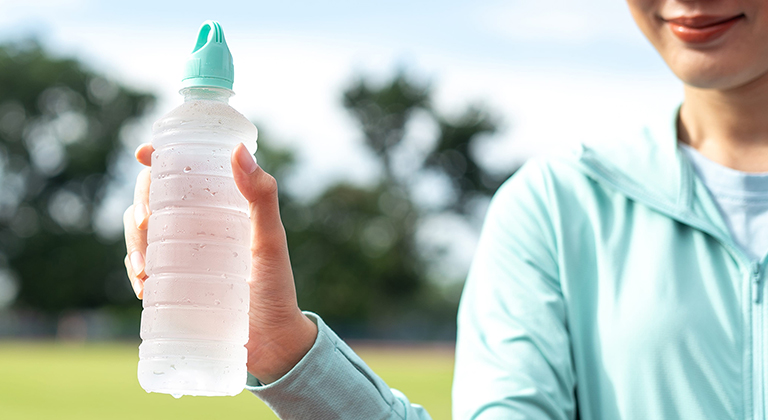
The popularity of electrolyte products has shifted them from specialized athletic recovery tools into everyday wellness essentials.
Paramita Mondal, senior export executive with Eskag Pharma Pvt Ltd/West Bengal Chemical Industries Limited in Kolkata, West Bengal, India, noted that the global electrolyte category is expanding briskly. She pointed to Grand View Research, 2026; Fact.MR, 2026; and Fortune Business Insights, 2026, which stated that electrolyte powder alone is estimated near $6.6-8.7 billion in 2025, projected to grow at roughly 8–9 percent CAGR through the early 2030s, while broader electrolyte drinks are estimated in the $40-plus billion range globally. Growth is no longer confined to athletes—usage has broadened to everyday wellness consumers, older adults, people recovering from illness, and those in hot climates, with Asia-Pacific (including India) tipped as the fastest-growing region due to rising incomes and fitness culture.
“The user base has broadened accordingly,” said Shaheen Majeed, global CEO and managing director, Sabinsa (East Windsor, NJ). “Athletes and fitness enthusiasts remain the foundation, but Millennials and Gen Z consumers, office workers, older adults and even parents managing children’s hydration now make up a meaningful share of demand. What used to be a recovery drink on the sidelines is now a daily ritual, closer to how people think about a multivitamin.”
The Evidence-based Natural Ingredients
According to Majeed, “The core electrolytes remain sodium, potassium, magnesium, calcium and chloride, and the research on their physiological roles is well established: fluid balance across cell membranes, nerve signaling and muscle contraction and recovery.” He noted a 2025 University of Pittsburgh clinical trial published in Nutrients, which found that a low-sugar electrolyte beverage significantly improved hydration markers compared to water alone, including a lower cumulative urine output and a meaningfully higher beverage hydration index, and that this held true even compared to a rapidly consumed alternative. The findings notably showed that Beverage 1 is superior to water alone at improving hydration when it is ingested at similar rates, and that metered ingestion improved hydration compared to the ingestion of the comparator beverage all at once. That is a useful data point for formulators: how a product is consumed matters almost as much as what is in it.”
In addition, a separate 2025 randomized crossover trial out of China’s Institute of Food and Nutrition Development compared water, juice, tea, a carbonated beverage, and an electrolyte drink before exercise. The electrolyte drink group showed the smallest reduction in plasma volume, with significant differences compared to the carbonated, tea and juice groups, and it was the only group that maintained serum sodium and chloride levels without a significant post-exercise drop. Interestingly, plain water still scored best for subjective thirst relief, a reminder that how hydrated someone feels and how hydrated they are can diverge.
“Coconut water is another well-studied natural source,” Majeed said. “It has long been described as a natural isotonic sports drink because it delivers meaningfully higher potassium and magnesium than conventional sports drinks with less sugar, and published research has documented its use as a rehydrating agent in cases of fluid loss. At Sabinsa, our Cococin ingredient is a freeze-dried, GRAS (generally recognized as safe)-affirmed coconut water solid that reflects this same nutrient profile in a stable powder form suitable for beverages, capsules and food applications.”
Other Ingredient Ideas
There are many ingredients to consider when formulating hydration products. “Beyond the core mineral set,” Majeed said, “we are seeing formulators layer in trace minerals like boron and iron for broader mineral support, B vitamins and vitamin C for an energy or immunity angle, and natural caffeine sources such as green tea extract for a functional lift. Adaptogens and collagen are starting to appear in hydration-plus formats as brands chase the ‘multi-tasking beverage’ consumer who wants one product to do several jobs.
“Creatine is an interesting one to watch. It has traditionally lived in the strength training aisle, but some brands are now positioning it inside daily hydration blends, which tells you how far the definition of ‘hydration’ has stretched,” Majeed said. “Natural plant-based waters (coconut, aloe, watermelon) are also increasingly formulated or labeled specifically for their hydration benefit rather than simply as juice.”
Mondal added that these ingredients also have good potential as sources for electrolyte products:
• Potassium citrate/bicarbonate (used in ORS-style formulations to correct acidosis from fluid loss)
• Himalayan or unrefined sea salt (trace minerals alongside sodium chloride)
• Pickle brine-derived sodium (used in some sports-recovery products; high in sodium but low in potassium/magnesium, so often paired with other minerals for balance)
• Calcium and phosphate (secondary electrolytes relevant to bone and cellular function)
• Plant-based minerals and adaptogens, increasingly used in “clean label” formulations
• Trace mineral blends (zinc, manganese, iodine) marketed in mineral-drop products
What’s Trending
The biggest shift is the move from performance framing to daily wellness framing, according to Majeed. “Sodium levels in new daily-use products tend to run much lower than performance formulas, sugar is largely disappearing, and magnesium is showing up more consistently. Format innovation is a close second: powders are seeing very strong growth, and newer entrants like hydration gummies and dissolvable tablets or cubes are carving out real share, even as effervescent tablets and capsules decline.
“Social media is accelerating all of this,” he noted. “Consumer search interest in hydration and related terms has grown substantially, with concerns like bloating and low energy driving people to electrolytes as a wellness fix rather than a post-workout necessity. Flavor is following suit too. Classic citrus and fruit blends still anchor the category, but tropical, lemonade and even cocktail-inspired flavors are growing fast off a small base.”
Mondal agreed, adding, “Manufacturers are moving toward clean-label, sugar-reduced and plant-based formulations; personalized hydration (tailored to sweat rate/activity); functional add-ons such as immune support, collagen and caffeine; and sustainable packaging like recyclable stick packs. Ready-to-drink formats still dominate volume, but powders/tablets are gaining share for their dosing flexibility and shelf life (Fact.MR, 2026; Future Market Insights, 2026; Verified Market Reports, 2026).”
Tips for Product Developers and Consumers
For developers, the priority is matching the formulation to the actual use case, said Majeed. “A daily wellness product does not need performance-level sodium, and consumers are increasingly savvy enough to notice when it does. Balanced, transparent formulations that avoid overloading any single mineral, paired with clean-label sourcing and clear substantiation, are what separate credible brands from the crowd. If you are using a novel or natural ingredient, back it with real data and make sure your claims are structured appropriately under DSHEA (Dietary Supplement Health and Education Act of 1994) guidelines.
“For consumers, the simplest advice is to match the product to your day. Someone sitting at a desk does not need the same sodium load as someone training outdoors in the heat. Check the sugar content, look for third-party certifications where relevant, and remember that more is not automatically better when it comes to minerals like sodium.”
There are other considerations for consumers. Mondal said, “More fluid is not automatically better. Exercise-Associated Hyponatremia (EAH) consensus guidelines emphasize that overdrinking—not insufficient sodium—is the primary driver of dangerously low blood sodium in endurance athletes; drinking to thirst, rather than on a fixed schedule, is now the recommended approach (3rd International EAH Consensus Development Conference, summarized in Frontiers in Medicine, 2017; Hew-Butler et al.).
“Consumers with kidney disease, hypertension or heart conditions should check sodium/potassium content and consult a physician before regular use of high-mineral products (e.g., excess potassium from concentrated sources can be risky for those with impaired kidney function).”
Additional Tips for Hydration Health
According to Majeed, “Hydration works best as a habit rather than a reaction. Waiting until you feel thirsty means you are already behind. Building in natural food sources, whether that is coconut water, fruits or vegetables with high water content, is a good complement to any supplement routine.
“It is also worth paying attention to your total daily mineral intake across food and supplements, particularly sodium and potassium, especially for anyone managing an existing health condition. And as always, anyone with specific health concerns should talk to a health care provider before making significant changes to their electrolyte intake.”
Majeed pointed out that practical insight from recent hydration research is that how you drink matters, not just what you drink. “The University of Pittsburgh trial found that a metered, small-sips-throughout-the-day approach to an electrolyte beverage outperformed a rapid, all-at-once bolus for sustaining hydration over six hours. For consumers, that translates to a simple habit: sip consistently through the day rather than chugging a large volume all at once, especially if the goal is sustained daily hydration rather than a quick post-workout fix.” NIE
For More Information:
Eskag Pharma, www.eskag.co.in
Sabinsa, www.sabinsa.com
![[Extra! Extra!] Glanbia Nutritionals’ 2025 Nutrition Trends for Active Adults Report](https://niemagazine.com/wp-content/uploads/2025/09/Active-Nutrition-300x258-1759165937.jpg)