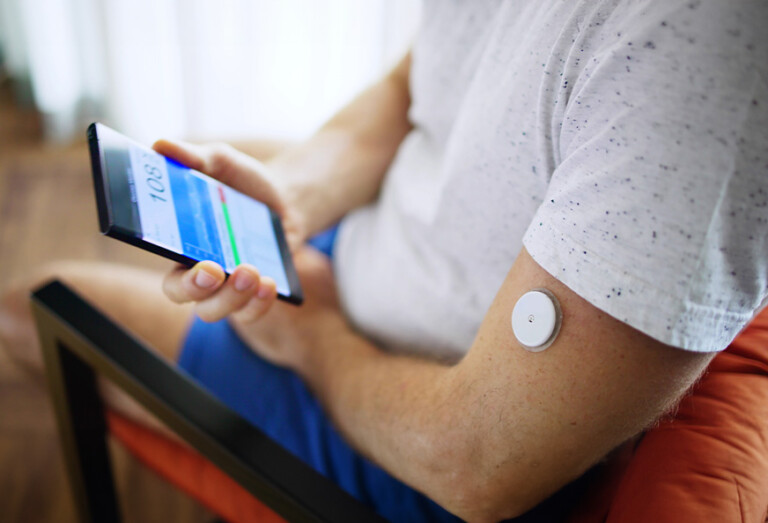
Take a stroll with me into the future: everyone has access to a continuous glucose monitor (CGM). The CGM app will not only provide data on blood glucose levels and the foods causing blood spikes but will also monitor GLP-1 levels. Taking this a step further, now imagine that in addition to these critical data points, the app offers personalized information on dietary, lifestyle and nutritional needs in collaboration with integrative practitioners, dietitians, retailers and dietary supplement brands.
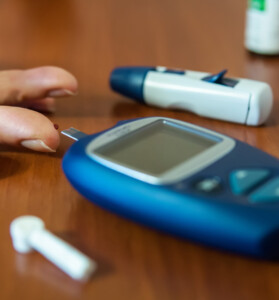
As it turns out, we’re not so far away from this future. The FDA (U.S. Food and Drug Administration) recently cleared marketing for the first over-the-counter CGM, The Dexcom Stelo Glucose Biosensor.1 According to Stelo.com and Drug Business News, this device is scheduled to launch this year.2,3 The device targets those with type 2 diabetes, but it’s also for individuals looking to understand better how their diet and physical activity affect their blood glucose levels. Over-the-counter CGMs also can determine undiagnosed diabetes and prediabetes, potentially becoming one of the biggest game changers for blood glucose management and overall health and well-being.
Increased Investment in Blood Glucose Monitoring Tech
Consumers crave personalized data regarding their diet, exercise, and well-being. Unlike ever before, wearables, such as smartwatches, sleep trackers and others, provide consumers autonomy over their health.4 They can track, monitor and improve with real-time data. This personalization trend is carrying over into the CGM market, as well. Grand View Research estimates the CGM market to be worth $7.51 billion by 2030. It is estimated to grow at a stunning compound annual growth rate (CAGR) of 7.1 percent from 2024 to 2030.5,6
Beyond the appetite for data, CGMs have the potential to lessen the burden of prediabetes and diabetes on our health care system. Diabetes is one of the most prevalent and expensive chronic conditions in the U.S. It accounts for $327 billion (that’s every one in four health care dollars).7 More than 30 million people in the U.S. are affected by type 2 diabetes, and close to 100 million American adults, one in every three people, have prediabetes.8,9
While CGMs empower individuals to measure their blood glucose levels, their ability to go beyond surface-level data to make a long-lasting and effective change is currently limited. But what if there was a technology that, in addition to blood glucose monitoring, also tracked hormone levels for the hormone GLP-1?
The GLP-1 & Blood Glucose Connection
Most adults in the United States are familiar with the term GLP-1, thanks to the meteoric rise of GLP-1 drugs.10 Glucagon-like peptide 1, better known as GLP-1, is a hormone that the small intestine makes when we eat food. GLP-1’s ability to trigger insulin release, block glucagon secretion, slow digestion and increase satiety makes it one of the most critical hormones in helping manage healthy blood glucose levels.11
While all foods trigger GLP-1 production, the challenge is how quickly GLP-1 degrades in the body with certain foods. It can be a matter of minutes with simple carbohydrates such as white bread.12 However, foods rich in flavonoids, soluble fiber, healthy fats and lean protein trigger GLP-1 production long after a meal.13
Why Testing GLP-1 Could Be The Key
Current over-the-counter and prescribed testing solutions for blood glucose management only measure blood glucose levels. However, given GLP-1’s role in glucose regulation, a ground-breaking solution would be to measure GLP-1 levels one, two and three hours after a meal. To take this idea one step further, it would warn the consumer when their levels have dropped. If this technology existed, this solution could then provide the consumer with dietary or supplementation recommendations to help prolong or boost their GLP-1 levels.
While GLP-1 testing as part of routine blood work or continuous glucose monitoring would be the ultimate futuristic solution, it is currently limited to research labs.14 Today, testing for GLP-1 levels requires sophisticated equipment and specialized lab methods. Additionally, it is quite a bit more expensive than your routine cholesterol or glucose test, making it out of reach for many individuals who would benefit from this testing and monitoring.
Boosting GLP-1 Levels Naturally
First and foremost, the natural products industry must stop comparing the effects of natural solutions that boost GLP-1 levels to those of GLP-1 agonist drugs. GLP-1 receptor agonists are molecules that bind to GLP-1 receptors on the surface of cells and trigger a response in the cell that can increase the production and secretion of GLP-1 into the circulation. Unlike GLP-1 receptor agonists, which mimic the GLP-1 peptide hormone, natural solutions work differently to increase the GLP-1 levels in the body.
Take, for example, a patented, lemon-based branded ingredient, Eriomin. Eriomin is a standardized, clinically studied ingredient composed primarily of high-potency flavonoids such as Eriocitrin. Three human clinical trials have shown that the flavonoids in Eriomin have the potential to stimulate intestinal cells that trigger GLP-1 production. Supplementation with Eriomin has been shown to boost GLP-1 concentrations by 15-22 percent compared to placebo.15-17
More research is needed to understand the mechanism of action behind flavonoids better. However, initial cell culture studies have shown that certain flavonoids stimulate the release of GLP-1 by activating the intracellular enzyme Protein Kinase A (PKA) and cAMP. cAMP is a messenger that relays signals from cell surface receptors to internal targets. Part of the chemical structure of flavonoids, identified as the catechol group (3’4’) in the B ring of the molecule, is capable of activating cAMP, which stimulates the PKA enzyme, increasing the release of GLP-1. Like other flavonoids, eriocitrin (key extract in Eriomin) contains this catechol group, suggesting that this may be responsible for stimulating the production of GLP-1 in intestinal cells.
Unlike other GLP-1 boosters, Eriomin’s blend of flavonoids goes beyond boosting GLP-1 levels and provides a unique, multiple-functional, integrated approach to blood glucose management. The flavonoids in Eriomin work together to address the cyclical interaction of blood glucose levels with insulin sensitivity, inflammation and oxidative stress.15-17
What Does Success Look Like?
Brands and retailers need to look no further than Holland & Barrett’s recent partnership and rollout of in-store DNA testing.18 The retailer hopes to give consumers better genetic insights into their skin and sleep health. Similar to this rollout, I imagine in the coming year’s successful health and wellness brands will partner with CGM companies and retailers, such as CVS, Walgreens, Vitamin Shoppe and others to offer GLP-1 testing for blood glucose management and pairing that with expert nutrition and supplementation advice from dietitians and nutritionist, be it in person or via a mobile app.
Accessibility of at-home or quick in-store tests will allow consumers to get more access to their health and tailor wellness solutions to their specific needs. Brands, retailers and companies who can sort through the complexities of providing such turnkey solutions stand to benefit significantly from this wave of growth in personalized nutrition.19 NIE
References:
1 (2024, March 5). FDA Clears First Over-the-Counter Continuous Glucose Monitor. U.S. Food & Drug Administration. Retrieved August 25, 2024, from https://www.fda.gov/news-events/press-announcements/fda-clears-first-over-counter-continuous-glucose-monitor.
2 Whooley, S. (2024, June 23). Dexcom CEO explains plans for Stelo CGM, G7 and beyond. Drug Delivery Business News. Retrieved August 25, 2024, from www.drugdeliverybusiness.com/dexcom-ceo-plans-stelo-g7-cgm/.
3 (n.d.). Introducing Stelo: The first FDA-cleared glucose biosensor available without a prescription. Stelo by Dexcom. Retrieved August 25, 2024, from www.stelo.com/coming-soon.
4 Haslam, O. (2024, June 5). The rise of self-diagnostics: ‘The future of nutrition is hyper-personalized.’ NutraIngredients Europe. Retrieved August 25, 2024, from www.nutraingredients.com/Article/2024/06/05/The-rise-of-self-diagnostics-The-future-of-nutrition-is-hyper-personalized.
5 (n.d.). Continuous Glucose Monitoring Devices Market Size, Share, & Trends Analysis Report By Component (Transmitters, Sensors, Receivers), By End-use (Hospitals, Homecare), By Connectivity, By Region and Segment Forecasts, 2024 – 2030. Grand View Research. Retrieved August 25, 2024, from www.grandviewresearch.com/industry-analysis/continuous-glucose-monitoring-market.
6 Gatlin, A. (2024, April 12). Why Wall Street Got Even More Excited About The Glucose Monitor — And How Dexcom, Abbott Labs Stand To Benefit. Investor’s Business Daily. Retrieved August 25, 2024, from www.investors.com/news/technology/dexcom-dxcm-stock-abbott-abt-continuous-glucose-monitor-cgm/.
7 American Diabetes Association. (2018). Economic Costs of Diabetes in the U.S. in 2017. Diabetes Care, 41(5), 917–928. https://doi.org/10.2337/dci18-0007.
8 (2024, May 15). National Diabetes Statistics Report. CDC Diabetes. Retrieved August 25, 2024, from www.cdc.gov/diabetes/php/data-research/index.html.
9 (2024, May 15). Prediabetes – Your Chance to Prevent Type 2 Diabetes. CDC Diabetes. Retrieved August 25, 2024, from www.cdc.gov/diabetes/prevention-type-2/prediabetes-prevent-type-2.html. 10 Montero, A., Sparks, G., Presiado, M., & Hamel, L. (2024, May 10). KFF Health Tracking Poll May 2024: The Public’s Use and Views of GLP-1 Drugs. KFF. Retrieved August 25, 2024, from www.kff.org/health-costs/poll-finding/kff-health-tracking-poll-may-2024-the-publics-use-and-views-of-glp-1-drugs/.
11 (n.d.). GLP-1 Agonists. Cleveland Clinic. Retrieved August 25, 2024, from https://my.clevelandclinic.org/health/treatments/13901-glp-1-agonists.
12 Doucleff, M. (2023, October 30). Less snacking, more satisfaction: Some foods boost levels of an Ozempic-like hormone. NPR. Retrieved August 25, 2024, from www.npr.org/sections/health-shots/2023/10/30/1208883691/diet-ozempic-wegovy-weight-loss-fiber-glp-1-diabetes-barley.
13 Rowe, N., MD (2024, March 1). 9 Foods and Supplements that Increase GLP-1 Naturally. GoodRx Health. Retrieved August 25, 2024, from www.goodrx.com/conditions/weight-loss/how-to-increase-glp-1-naturally.
14 (n.d.). Total GLP-1 ELISA. Mercodia. Retrieved August 25, 2024, from www.mercodia.com/products/total-glp-1-elisa/.
15 Ribeiro, C. B., Ramos, F. M., Manthey, J. A., & Cesar, T. B. (2019). Effectiveness of Eriomin® in managing hyperglycemia and reversal of prediabetes condition: A double-blind, randomized, controlled study. Phytotherapy research: PTR, 33(7), 1921–1933. https://doi.org/10.1002/ptr.6386.
16 Cesar, T. B., Ramos, F. M. M., & Ribeiro, C. B. (2022). Nutraceutical Eriocitrin (Eriomin®) Reduces Hyperglycemia by Increasing Glucagon-Like Peptide 1 and Downregulates Systemic Inflammation: A Crossover-Randomized Clinical Trial. Journal of Medicinal Food, 25(11), 1050–1058. https://doi.org/10.1089/jmf.2021.0181.
17 Ramos, F. M. M., Ribeiro, C. B., Cesar, T. B., Milenkovic, D., Cabral, L., Noronha, M. F., & Sivieri, K. (2023). Lemon flavonoids nutraceutical (Eriomin®) attenuates prediabetes intestinal dysbiosis: A double-blind randomized controlled trial. Food Science & Nutrition, 00, 1–13. https://doi.org/10.1002/fsn3.3654.
18 (2024, August 15). World’s first retail 20-minute Express DNA Test in exclusive trial at selected Holland & Barrett UK stores. Holland & Barrett. Retrieved August 25, 2024, from https://corporate.hollandandbarrett.com/news/15-08-2024/.
19 Future Market Insights Global and Consulting Pvt. Ltd. (2024, April 15). Personalized Nutrition Market Projected to grow from a size of US$ 3,435.20 million in 2024 to US$ 5,122.10 million by 2034, at a CAGR of 4.1% | Future Market Insights, Inc. Yahoo! Finance. Retrieved August 25, 2024, from https://finance.yahoo.com/news/personalized-nutrition-market-projected-grow-003000799.html.
Rob Brewster is the president of California-based Ingredients by Nature. As a third-generation ingredient manufacturer for the natural products industry, Brewster is proud to be part of the health and wellness world. He followed in his grandfather’s and father’s footsteps, helping their company Brewster Foods grow since he joined in the 1990s and then partnering with Syntech to form Ingredients by Nature, a world leader in citrus bioflavonoids and extracts. As president, Brewster invests heavily in citrus flavonoid science for condition-specific applications and holistic wellness. For more information, visit IngredientsbyNature.com.
![[Extra! Extra!] ADM Releases Insights from Anti-Obesity Medication Survey](https://niemagazine.com/wp-content/uploads/2026/01/GLP-1-290x300-1768582121.jpg)
![[Sponsored Content] Support the Body’s Natural Production of GLP-1 with Trpti™](https://niemagazine.com/wp-content/uploads/2025/10/Saanroo-Logo-300x289-1761661129.jpg)