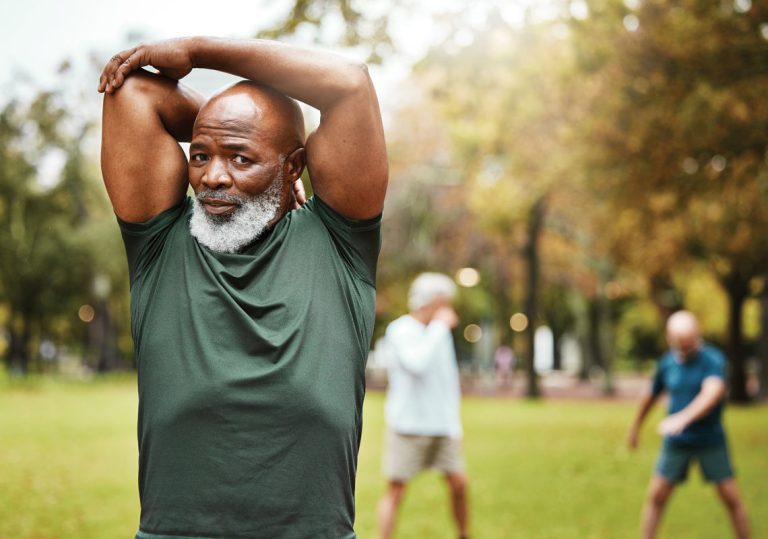
Men have come out of fear-restraints to seek—and use—supplements that support their health.
There’s nothing toxic about catering to the masculine body and mind. Men, especially those who are firmly in middle-age now (Millennials) are a ripe consumer base for supplements as well as functional beverages that help them be their best, most robust selves, which includes taking care of their reproductive and urinary tract health.
Maggie McNamara, marketing director, Gencor, Texas, has observed that the men’s supplement aisled have grown more comprehensive than in previous years as brands are diving headfirst into creating effective supplements geared to those with XY chromosomes.
While testosterone boosters for sexual support and muscle growth and strength are still some of the most common products, she is seeing men’s interest shifting to supplements that support well-being categories, notably mood and sleep support, cognitive function, energy, immune health and healthy aging products, including cosmetic ingredients that help hair and skin.
Annie Eng, CEO and founder of HP Ingredients, Florida, observed that the men’s health category is a blend of overall health support (such as ingredients that comprise an optimal multi, as well as ingredients for improved sexual performance, satisfaction and male fertility. “Nutrition Business Journal’s (NBJ) 2022 Condition Specific Report noted that the men’s general health market is projected to be 55 percent larger in 2025 than it was in 2019, suggesting that men are more assertive and proactive than ever to support their health and well-being. They feel they deserve to feel great, and they do. Brands that support this mindset will do very well.”
In agreement is Andrea Zangara, head of scientific communication and medical affairs, EUROMED S.A., Spain, who said that the focus of men’s health supplements seems to have shifted from specific issues (like muscle gain or sexual health) to a more holistic approach. “This could include supplements aimed at overall wellness, mental health, weight management, longevity, athletic performance, muscle growth and recovery. It is important to note, within this context, that testosterone deficiency is common in men with obesity,” she said.
Indeed, expanded Tracey Seipel, ND, CEO, Seipel Group Pty Ltd, Australia, the men’s health supplement sector has moved from cardiovascular support, prostate health, fertility and muscle growth/maintenance to general healthcare and fitness, protein and nutritional intake, healthy weight and blood sugar control, skin care, mental health, erectile dysfunction—now openly discussed)—and active lifestyle nutrition and performance. For example, men now seek a more targeted approach for LUTS (lower urinary tract symptoms) rather than just focusing only on basic prostate-supporting formulations.
“The men’s health supplement category is now firmly established,” she underscored.
Concerns and awareness about de novo synthesis of dihydrotestosterone (DHT), the hormone dually responsible for hair loss and prostate growth, are also driving the men’s supplement market.
Zangara commented, “Hair health is a big deal for men, playing a key role in their self-image and confidence. The bad guy? Male pattern baldness, caused by a mix of genetics and DHT. Interestingly, DHT isn’t just the bad guy when it comes to hair loss, it’s also implicated in prostate issues.
She added that this led to the development of supplements that inhibit DHT production in the body. These DHT blockers are marketed to support both prostate health and hair growth, potentially alleviating symptoms of an enlarged prostate and slowing hair loss progression. The market for these products is large and growing, appealing to a rapidly growing segment: middle-aged (Millennial) and older (Generation X) men. “Therefore, products that can effectively address both these concerns in a single formulation may find a significant customer base,” she suggested.
The men’s health category is also getting boosters from athletes and actors. Seipel observed that in the past few years there are more male celebrities discussing their own health issues such as weight, mental health, memory issues and bladder control. “This raises awareness of men’s health issues which has contributed to the increased acceptance of men in general discussing their own health issues and the subsequent need for supplements specific for men’s health care. The industry has grown with social change.”
The Dividing Line
While it has been generally understood that there hasn’t been too much difference between Boomers and Gen Xers in many areas, there are more clear lines of delineation and wider gaps between Millennials (born between 1981 and 1994) and Gen Xers (1965-1980).
According to an article by analyst Francesca Smith from Mintel (A spotlight on male mental health: how can brands help?” Nov. 1, 2022) young men 18-24 are more fixated on body image and relationships. When they reach their latter 20s, they begin to focus more on income and this remains the most significant cause of anxiety through their mid-60s. Millennial men, according to the research, are anxious about work/careers while those over 65 are much more concerned about physical health and wellness.
“Millennial men appear to be more concerned with financial health and express their primary anxieties as being related to security and work,” underscored Shavon Jackson-Michel, ND, director of medical & scientific affairs, DolCas Biotech, New Jersey. This contrasts with the stresses of Gen X men whose primary insecurities focus on physical health.”
She added that understanding the physical health factors that motivate men as they age, such as prostate health, sexual dysfunction and cardiovascular health, is crucial for both marketing and formulation strategies.
“Millennial men were brought up in an age of technological advancement, not only from an electronic standpoint but also scientific advancements,” observed Mark Walin, senior vice president business development and marketing, Virginia-based BIO-CAT. Their acceptance of new technologies has allowed access to faster and greater understanding of new products.
In general, he pointed out, Generation X men have remained focused on what has worked for them for years, including supplements. Millennial men (and the Millennial generation in general) are more willing to accept and try something new.
In one area, Millennial men and Gen X men seem to be on par—media consumption and social media usage are comparable in both groups of men, according to Dave Mohebpour, R&D scientist, Glanbia Nutritionals (Chicago, IL).
He explained, “However, where their usage differs is in the platforms they access. Gen X men are more active on websites that would be considered mainstream (e.g., YouTube, Facebook), whereas Millennials listen to more podcasts and are more interested in the social media presence of supplement brands. In general, this difference leads to Millennial men knowing, expecting, and seeking more cutting-edge and trendy supplements, whereas Gen X men would be less likely to experiment with supplements.”
In Seipel’s viewpoint, Gen X men tend to have more rigid structures around masculinity and what is acceptable to discuss and consume. They are more likely to keep their softer, more feminine side to themselves and project a more masculine persona. Millennial men, conversely, have fewer such barriers and are more open to new options, with less adherence to more limiting stereotypes. Millennials seem more comfortable in openly discussing their health and looking after their health.
“Millennials can talk about and openly take supplements for issues that Gen X may find embarrassing or socially unacceptable to discuss, such as mental health, skin care and bladder control, all of which are important for male health care.”
For example, overactive bladder (OAB) affects approximately 18 percent of all adults over the age of 18 years, men and women equally. The hallmark symptom is urinary urgency. Increased day urinary frequency is common, as is nocturia, getting up at night to urinate. “GenX and older men would tend to blame their prostate for nocturia (and it may be involved) but research shows half the time, nocturia is due to OAB. Which helps explain younger men with urinary issues when they are unlikely to have prostate issues,” she explained.
According to Zangara, Millennial men tend be better educated about dietary supplements and are more aware of the scientific evidence and quality standards of supplements, and therefore are more likely to seek out reliable sources of information and guidance, particularly online, before choosing a supplement.
Millennials are also more likely to purchase supplements that support their personal goals and well-being as 32 percent of Millennial men live in a household with their own children, compared with 41 percent of Gen X men when they were the same age, she pointed out. They are also more likely to buy supplements online, as social media influencers, online reviews and health and wellness websites have a significant influence on their purchasing decisions.
Another key difference is that Millennial men are more likely to support brands that show commitment to environmental and social causes than their Gen X counterparts. Millennials have a more proactive and preventive attitude toward health, seeking to maintain a balanced lifestyle to prevent diseases rather than cure them. Gen X has traditionally been more reactive in their approach to health, seeking supplements to address specific health concerns. “With a greater focus on preventive health, even younger men may be taking prostate health supplements as a preemptive measure, leading to an expanded customer base,” she stated.
The ABCs and T for XY
There are quite a few ingredients that can help your team formulate and market to today’s middle-aged and older-but-still-robustly-youthful males. Minnesota-based Bioenergy Life Science, Inc. (BLS), offers RiaGev-M, an ingredient specifically targeting men’s health, that is a patented blend of Bioenergy Ribose and nicotinamide (vitamin B3). According to Marianne McDonagh, vice president of sales, RiaGev-M significantly lowers cortisol levels. “Two human clinical studies have shown that by lowering cortisol levels in men, RiaGev-M helps improve libido, testosterone levels, and overall energy and general well-being,” she said.
Tongkat ali has long been used for supporting male sexual health through promoting healthy testosterone production and suppressing excessive cortisol release. LJ100 from HP Ingredients has multiple human clinical studies demonstrating improved energy and stamina, as well as improved sexual intercourse parameters through helping to ensure favorable testosterone and cortisol balance, according to Eng.
Studies show that in older men (aged 50 to 70), 12 weeks of 100 mg and 200 mg LJ100 daily increased serum total testosterone and DHEA levels, and reduced fatigue. Another six-month study showed that in men with ADAM (androgen deficiency of aging males), LJ100 supplementation with fitness training improved total testosterone levels and erectile function. Another study of 32 younger men found that 600 mg LJ100 supplementation daily raised testosterone after two weeks.
Dolcas Biotech’s Fortiquin is a clinically researched, five-ingredient blend of botanicals and nutrients to support male sexual stamina. “The blended composition is standardized to important, clinical compounds (20 percent saponins and 1.5 percent total flavonoids), so every batch is the same and the science of taking it is simple,” described Jackson-Michel.
She reported that in a human study, one 450 mg capsule of Fortiquin taken twice per day improved sexual health by three to five times that of placebo (more than four to eight weeks of use) in healthy men aged 18-45 who experienced reduced duration of sexual activity. “The ayurvedic medicine-inspired formulation informs the support of multiple organs/systems of the body that collectively contribute to healthier sexual performance, as studied, but is suggestive of additional benefit in exercise performance and stress support,” she explained.
Gencor’s Testofen, a patented fenugreek extract, has been shown to increase testosterone, boost libido, improve muscle strength and mass, and aid in exercise recovery and boost energy, according to McNamara. Gencor’s Tesnor, a proprietary blend of cocoa bean and pomegranate peel, is shown through in-vitro testing to increase in-cell testosterone production and inhibit aromatase activity. “It also demonstrated its ability to aid in muscle strength and growth in young males,” she commented.
Furosap Plus from Chereso, India, is a blend of proprietary extracts from Trigonella foenum-graecum L. (Furosap) and Curculigo orchioides (RhizomK) to support healthy testosterone levels. A 12-week randomized double-blind placebo-controlled study was conducted to evaluate the effect of supplementing with Furosap Plus testosterone levels and sexual health as shown in International Index for Erectile Function questionnaire (IIEF) scores and serum prolactin levels. According to the researchers, the supplement increased free testosterone by nearly 73 percent, sperm count by nearly 35 percent, frequency of sexual intercourse by 39 percent, reflex erection by 40 percent and overall performance by 33 percent.
PepForm Citrulline Peptide, from Glanbia Nutritionals is one of several ingredients for men’s health. According to Mohebpour, citrulline is an amino acid that is converted to L-arginine, a precursor for nitric oxide synthesis. Nitric oxide acts as a vasodilator that helps to support blood flow, which is crucial for healthy erections.
For support of prostate structure and function, saw palmetto remains the top herbal supplement for men who want to support their prostate health.
According to Zangara, Euromed’s Prosterol saw palmetto extract has been used extensively to support the prostate health for men concerned about benign prostatic hyperplasia (BPH) and hair loss; it is approved as a drug in Europe. In-vitro models show high level of inhibitory activity on the 5-a reductase enzyme at a low concentration, as compared to a reference pharmaceutical substance, a biological mechanism implicated in hair loss and prostate health. Prosterol has also been investigated in clinical studies including hundreds of participants. “For example, a 12-week randomized, double-blind, placebo-controlled trial published in 2020 showed a significant reduction in symptoms related to urination compared to placebo, indicating improvement in the main symptoms of BPH,” she reported.
Another widely known herb for prostate support is pygeum. A clinical trial has demonstrated that Euromed’s Prunera, a Pygeum africanum bark extract, may improve symptoms of BPH an indication confirmed in pygeum monographs (ESCOP 2020), Zangara said. “This extract showcases anti-inflammatory properties (as shown in a study prepared for submission) and contains beneficial compounds like beta-sitosterol which may also aid in hair loss prevention,” she explained.
Seipel Group’s men’s health ingredient is Urox is a patented blend three-herbal extract blend of the Japanese/Chinese Lindera aggregata, horsetail (Equisetum arvense) and the ayurvedic Cratevox (Crateva nurvala). “The Cratevox and horsetail in Urox support a healthy prostate but it is the additional benefits for bladder control that make Urox an outstanding ingredient for men’s health,” commented Seipel. “Urox has a threefold effect to: strengthen bladder and pelvic floor muscles, support healthy collagen and connective tissues, and promote a healthy nerve response in the bladder.”
She noted that published randomized, placebo-controlled research shows Urox improves symptoms of overactive bladder in men, including halving of nocturia, 64 percent reduction in urinary urgency and a return to normal day frequency by eight weeks of use. “Urox works faster than other formulations for bladder control with results starting from two weeks,” she said.
Gencor’s AgeProst is an extract of Ageratum conyzoides shown to support prostate health and improve bladder control for improved quality of life.
And, as a side note—men interested in pumping up their testosterone levels and enhancing their physiques often turn to protein powders. According to Walin, BIO-CAT’s proprietary ingredient, OPTIZIOME P3 HYDROLYZER, enhances protein performance by releasing more nutrition from a protein shake, allowing men to achieve recommended higher protein intake. “This is especially important for men entering their fifth decade when digestive enzyme production begins to naturally decline, therefore reducing the bioavailability of protein,” he explained. “Utilizing OPTIZIOME P3 HYDROLYZE with dietary protein supplements and meals can enhance protein digestion and release of amino acids—the building blocks of muscle proteins.”
Conclusion
According to NBJ’s 2022 Condition Specific Report, the lion’s share of supplements used by men were multivitamins (69.6 percent), therefore, creating multi-adjacent products with male-health-specific ingredients may be a potent attraction for men. NIE
For More Information:
BIO-CAT, www.bio-cat.com
Bioenergy Life Science, Inc., www.bioenergylifescience.com
Chereso, www.chereso.net
DolCas Biotech, LLC, www.dolcas-biotech.com
EUROMED S.A., www.euromedgroup.com
Gencor, www.gencorpacific.com
Glanbia Nutritionals, www.glanbianutritionals.com
HP Ingredients, www.hpingredients.com
Seipel Group Pty Ltd., www.seipelgroup.com
![[Extra! Extra!] Immunometabolism](https://niemagazine.com/wp-content/uploads/2026/08/ImmuneHealth-featuredimage-300x164.jpg)
![[Extra! Extra!] Sleep Science Is Expanding Beyond Sedation](https://niemagazine.com/wp-content/uploads/2026/03/RelaxationSleep-284x300-1774892574.jpg)
![[Sponsored Video] HerbTV Explores the Evidence Behind Tongkat Ali (LJ100®) for Hormonal Health and Healthy Aging](https://niemagazine.com/wp-content/uploads/2025/11/vre-nie-npr-2025-11-video-hp-ingredients-300x169.jpg)