The functional food revolution has changed the way that consumers today eat, as more brands are innovating products with tailored and specific functional benefits, like immune, digestive or heart health. Thirty percent of consumers now eat functional foods at least once a week, and research shows that 85 percent of consumers globally consider food to be their preferred consumption format for health-enhancing ingredients.1 Furthermore, more than half of consumers believe foods can provide the same or better benefits than non-prescription medications.2 As the move to enrich products ranging from nutritional bars to yogurts and even baked goods with functional ingredients continues to gain momentum, there are key considerations related to sugar content and overall healthfulness that manufacturers must not overlook.
Make Sure “Functional Foods” Are Healthy
In the grand scheme of things, consumers are migrating toward functional foods because they want to be healthier. This means a couple of important things for product manufacturers.
The product should deliver an effective serving of the ingredient based on scientific studies.
Some products rely strongly on a health halo or will “fairy dust” an ingredient, meaning there is not enough to provide the benefit. For example, many studies on health benefits of turmeric provide at least 200 mg of curcumin, the active ingredient in turmeric, per day. A “functional food” delivering only 50 mg of curcumin likely isn’t enough to deliver the health benefit a consumer would expect.
Functional Ingredients can provide “permissible indulgence”
Functional foods should easily fit into a healthy diet. Adding the health benefits of a functional ingredient to an everyday food or beverage product allows for consumers to add a bit of “healthy indulgence” to their diet and lifestyle. Consumers proactively seek the added health benefits of functional foods as a means to take control of their diet and health. Given this, it’s important for manufacturers to align product offerings accordingly. The functionality provided by a health-enhancing ingredient, such as a probiotic or immune health ingredient, are typically best suited to products that are already positioned to be somewhat healthy or “better-for-you.”
Once again, if consumers are expecting a product to be healthy for them, manufacturers have a responsibility to make sure this is true! Adding health benefits to a product like a sugar-laden soda would negate the desired benefits, but fortifying a better-for-you reduced-sugar beverage with added benefits is much more appealing to today’s consumers.
A Focus on Sugar
It seems like half of the news articles we see in the food and beverage industry are about reduced-sugar product launches or market insights about consumers wanting less sugar. For formulators, these types of articles can often cause more questions than answers: “How do I actually reduce sugar? How much should I reduce sugar by, and what sweeteners should I use?”
“Which Sweetener Should I Use?”
This is usually the main question any time sugar reduction comes up. The first step is to know what type of consumer you are targeting. People are almost evenly split into the following groups (Food & Health Survey 2017, International Food Information Council):
• Prefer low-calorie sweeteners because they want to reduce sugar intake as low as possible
• Avoid low-calorie sweeteners because they prefer the taste of sugar or are nervous about health implications of consuming low-calorie sweeteners
Once this is known, you can narrow down the solutions available. Kerry recently conducted a consumer research study, titled Sensibly Sweet, to better understand attitudes toward sweeteners of 760 American consumers. When it comes to sweetener choice, the study showed honey and sugar were by far the most preferred sweeteners, with maple syrup, stevia and agave following behind. This answers the question, “What sweetener on the label appeals most to consumers?” For caloric sweeteners, honey or sugar are preferred, while for low-calorie sweeteners, stevia is preferred.
The least preferred sweeteners were erythritol, acesulfame K, monk fruit, sorbitol and xylitol—basically, any sweetener that has a difficult to pronounce name. Monk fruit stands out because consumers perceived it as a natural sweetener, but it was still not preferred.
Choosing a Preferred Sweetener is Not Enough
An important callout, though, is that you should still be reducing sugar no matter which sweetener is used. Even though consumers perceive some sweeteners as more healthy than others, in most cases this is not true. There can be minor differences in sweeteners like honey, maple syrup, sugar and high fructose corn syrup, but these are often negligible compared to the impact of consuming high amounts of sugar itself.
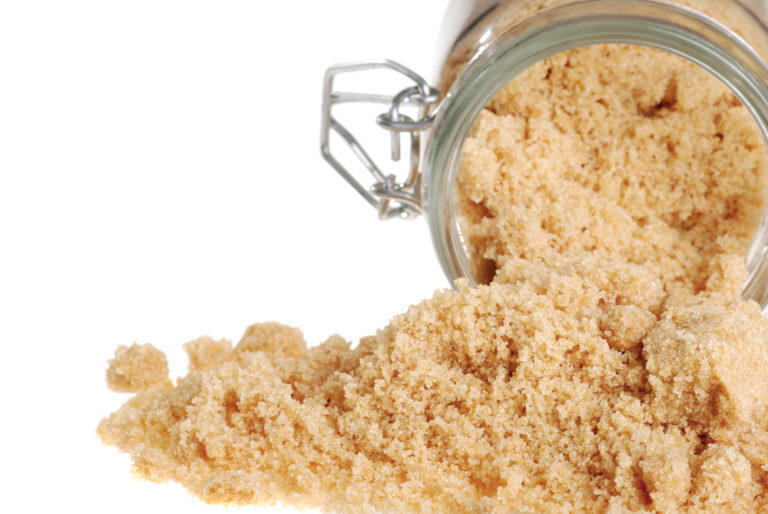
Using low-calorie sweeteners makes sugar reduction easier, but there is a challenge when creating a product for consumers who don’t want low-calorie sweeteners in their product. The main problem to solve is “How can I reduce sugar without sacrificing taste?” One solution is to use flavor modulators, which can help boost the sweet taste and mouthfeel of a reduced-sugar product without using low-calorie sweeteners. Kerry offers a natural flavor solution called TasteSense, which can help manufacturers enhance the taste profile in low sugar products and aid in sugar reduction by up to 30 percent in applications without sacrificing sweetness or mouthfeel. Another solution is to use “value-added” sweeteners, like fruit or vegetable juices and purees, which still provide sugar but are also providing beneficial nutrients of the named fruit at the same time. This can help consumers accept the trade-off of having a higher sugar product.
“What is the Goal for Sugar Content?”
There are no formal guidelines for how much sugar products should contain, but we can use a few different sources as guidelines. First, we can look at dietary recommendations for added sugars. Both the World Health Organization and the USDA (U.S. Department of Agriculture) Dietary Guidelines recommend we consume less than 10 percent of our total calories from added sugar. This is equivalent to 200 calories, on average, or 50 grams of added sugar for the whole day. A can of cola may contain 35 grams of added sugar, for reference.
Getting sugar content of products into the single digits is a good start. Reducing sugar to 0 to 9 grams has been the practice for breakfast cereals for a long time, partly because it is a requirement to have low sugar content to advertise certain products to children. On the other hand, sugar taxes are emerging in countries around the world, which encourages reducing sugar content as low as possible.
Due to many consumers wanting to avoid low-calorie sweeteners, many companies are coming out with low sweetness beverages that have 5 to 10 grams of sugar rather than 30-plus grams. There are also restaurants offering customizable sweetness for beverages, so consumers can choose how much sugar they are getting. There’s no “right way” to target sugar reduction, but instead there are a lot of creative solutions to reduce the amount of sugar people are getting in their diet.
“How Do I Tell if A Sugar Is ‘Added’ vs. Natural?”
Dietary recommendations, food labeling, and sugar taxes often target added sugars, but the definition of an added sugar differs across the globe. The World Health Organization, European Food Safety Authority, and U.S. Food & Drug Administration (FDA) all word their description of added sugars slightly differently. Generally, though, added sugar refers to any sugar, typically mono- or disacchardies, not naturally occurring in a food or added to a food for sweetening or flavor purposes. This section is not meant to be a formal guidance, but rather to show some key points about added sugar.
Check out the article, “Tips to Determine if a Sugar Should be Labeled ‘Added’ or ‘Naturally Occurring”’ on the Kerry Health and Nutrition Institute website for a more detailed dive into this topic.
Sugar presents itself in many guises on food labels (e.g. dextrose, lactose, molasses, invert sugar, fructose, glucose, maltose, saccharose, glucose-fructose syrup).
Naturally occurring sugars are natural sugars present in fruits and vegetables (fructose) and dairy products (lactose). However, the sugars in fruits and vegetables (and their juice concentrates) have provided quite a bit of confusion with regard to labeling added sugars on the nutrition facts label when they are added to other foods, such as using fruit juice to sweeten a snack bar.
Here are some examples of where the sugar from these sources may or may not be considered added sugar, according to the FDA:
May appear as “added sugar” on a nutrition label:
Juice concentrates that are used to sweeten other foods are considered added sugars and thus need to be included in the new nutrition facts category.
If a fruit or vegetable has been processed so that it no longer contains all of the components of the whole fruit that is typically eaten—the pulp, for example—and the sugars have been concentrated, then those sugars need to be included in the added-sugar portion of the nutrition panel (such as adding raspberry puree to a snack bar).
If sugars are in excess of what would be expected from an ingredient made from 100 percent fruits or vegetables, those sugars must be declared as added sugars.
May not appear as “added sugar” on a nutrition label:
Fruit or vegetable juice concentrates used toward the total juice percentage in a juice (for products claiming to contain fruit or vegetable juice). For example, a blend of fruit and vegetable juice concentrates to create a 100 percent juice beverage.
Sugar Has Functional Roles in Food That Must be Considered
When reducing sugar, taste and sweetness aren’t the only consideration. This infographic shows what challenges sugar reduction poses for different applications. For most product categories, best practice will be to combine several solutions to maintain flavor and functional properties.
Summary
In the end, the secret to success when reducing sugars in functional foods and beverages is knowing the type of consumer a product is being made for, choosing the appropriate sugar reduction strategy, and, above all, making sure a product is meeting consumer expectations of both health and taste. NIE
References:
1 Global Data, Global Consumer Surveys 2014; Q4 2017.
2 GlobalData, Global Consumer Survey, Q3 2016.
Nathan Pratt, PhD, RD, completed his doctoral studies at the University of Illinois at Urbana-Champaign, where his research focused on weight management, nutrition labeling, and consumer behavior. He is a member of Kerry’s nutrition science team and is responsible for managing content on the Kerry Health and Nutrition Institute and supporting Kerry’s internal and external scientific communications.

![[Extra! Extra!] New Study Finds Link Between Gut Microbiome and Heart Health](https://niemagazine.com/wp-content/uploads/2026/01/HeartHealth-300x298-1768582147.jpg)