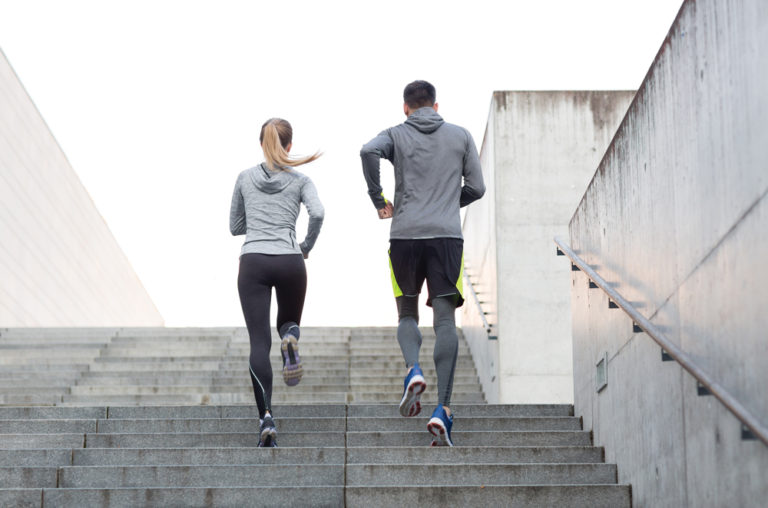
It is well known that exercise has a positive relationship with overall human health, likely as a consequence of our evolutionary history where athletic endurance was a competitive edge over other species.1 As present-day elite athletes strive to push the limits of human physiology, scientists have undertaken research to understand the effects of exercise on various body systems.
Numerous studies have now demonstrated the benefits of regular, moderate intensity exercise for both physical and mental health, and many of these studies have specifically focused on the reciprocal effects of exercise on the immune system. This topic has been a focus of study for over 30 years, but due to the complexity of the immune system, and the difficulty in studying the immune system in humans, the effects of exercise are still not fully understood.
Research in this area has both evaluated the relationship of the incidence of acute illness to exercise and characterized the consequences of strenuous exercise on aspects of the immune system such as circulating blood cell numbers, anti-pathogen cell functions and levels of secreted chemical messengers (cytokines) as a way to understand what effects exercise has on the immune system. This research was conducted with the ultimate goal of generating a detailed understanding of the response of the human body to exercise in order to optimize exercise regimens for training efficiency and health benefits and to minimize any negative effects that exercise may exert on the body.
Infection Risk and Exercise
In the late 1980s and early 1990s, the question of whether exercise exerts a measurable effect on the immune system was primarily investigated by observing the incidence of upper respiratory tract infection (URTI) in elite athletes (i.e., marathon runners) after a competition. The data reported from these studies appeared to show a heightened risk of experiencing a URTI after the event. In some studies, the degree of exercise stress also appeared to exert an effect on immune system function as runners with faster completion times or higher training volumes were reported to be at an even higher risk for a URTI. On the flip side of this work, it was recognized later that a sedentary lifestyle—meaning one that lacks exercise—is a risk factor for a range of physical and mental health conditions.
Ultimately, the understanding of the relationship between exercise and the risk of experiencing a URTI has been summarized in a generalized paradigm referred to as the “J-shaped curve.”2
At extremely low exercise volumes (sedentary lifestyle), the risk of contracting a URTI is considered to be average as this group is generally used as controls in any population-based study. Moderate regular exercise in the middle of the curve is associated with reduction in risk of contracting a URTI. The right-hand side of the curve depicts very high intensity, and volume of exercise and is associated with an above average risk of contracting a URTI. The increased risk of infection in this category is hypothesized to be the result of an “open window” that occurs immediately after exercise and lasts up to 72 hours. The open window is a period during which the changes observed in measurable constituents of the immune system (i.e., circulating numbers and functional properties of cells and cytokine levels in blood) are interpreted to mean that immune system function has been negatively affected, “opening a window” or letting the guard down for pathogens to establish infection.
Results from these studies with elite athletes have unfortunately resulted in a sports science myth that even in a general population after intense exercise, an individual is immunocompromised for a period of time. This is unfortunate because, as previously mentioned, there is a physiologic need for exercise1,3 and a compromised immune system is a highly unlikely consequence of moderate exercise at the frequency and intensity at which most physically active individuals participate. As a fuller picture of the reasons for an increased risk of URTI after mass participation athletic events emerges, the open window hypothesis and J-curve are being reevaluated and revised.4
It is more likely that other factors known to impact the immune system such as nutrition, sleep quality/quantity, and psychological stress are affected in a mass participation athletic event and contribute to increased self-reporting of URTIs after a race. Additionally, air travel5 and close physical proximity to a large number of people participating in an event6 are documented factors that increase the risk of contracting a URTI. These factors are likely of greater influence than the high intensity or volume exercise during the event. Importantly, recent studies appear to show a relationship between greater physical activity and lower risk of URTI.7-9 While the intense exercise itself may not increase the risk of a URTI, many of these other factors can and the outcome is the same—increased reporting of URTI after a competition. Therefore, pursuing strategies such as proper nutrition and adequate sleep to maintain immune system health are generally advised to avoid missing training or competition.
Effects of Exercise on Constituents of the Immune System
Immediately after beginning strenuous exercise, a large number of white blood cells with enhanced cytotoxic properties are released into the bloodstream. This mobilization of cells is a response to increased levels of stress hormones, such as norepinephrine, epinephrine, adrenaline and cortisol, that also are released into the bloodstream as a result of the neuronal response to exercise.3 The number of white blood cells in circulation remains elevated until immediately after the exercise bout is finished when the number of circulating cells temporarily drops below the pre-exercise level. Previously, this drop had been thought to be due to the death of the recently released cells and interpreted as the immune system leaving the gate open for intruders.
Recent work in animal models has demonstrated that these cells are not dying but are being sent out of circulation and into the tissues and mucosal surfaces (those surfaces that physically encounter the outside environment). This movement is now thought of as a mechanism to increase the surveillance of the body by the immune system. This has been described as a “barracks/boulevard/battlefield” pattern. Immune cells that have been stationed at the ready in the “barracks” (the natural immune cell reservoirs such as the spleen, liver, bone marrow) are rapidly deployed through the “boulevards” (blood and lymphatic vessels) to the “battlefields” of mucosal and barrier surfaces (i.e. gastrointestinal tract, skin, oral and nasal surfaces) where first contact with pathogens is most likely to occur.3 In humans, it is technically and ethically difficult to sample cells that have been sent into the tissues, but studies in animal models have reported that these are the cells with heightened anti-pathogen activity while those remaining in circulation are predominantly a less mature population of cells that does not yet possess full defensive activity. These observations support interpreting the consequences of changes to immune system constituents during and immediately after exercise as being protective rather than harmful for the body.
Effect of the Immune System on Exercise Recovery
It is also important to acknowledge the role that the immune system plays in exercise recovery. To date, far less research has been completed on how changes in immune function affect recovery from exercise. It is known that damage to muscle fibers during exercise initiates a cascade of events that results first in a local inflammatory response, followed by the release of proteins into circulation and within the muscle itself.10 This results in delayed onset muscle soreness (DOMS), a common result of a strenuous workout. Although a first impulse when experiencing DOMS is often to lessen the symptoms by dampening this immune-mediated inflammation, this is not advisable.
The immune system-mediated inflammatory response serves as a critical trigger of repair processes (also immune-mediated) that heal damaged muscle tissue and ultimately resolve the inflammation. Since the inflammatory and repair responses are functionally linked through the immune system, affecting one side of the process (through anti-inflammatory drug use or cold therapy) will necessarily affect the other and could result in a slower and less robust recovery. Mouse models with engineered immune deficiencies have provided pre-clinical evidence that this is indeed the case, although these results need to be experimentally confirmed in humans.
Stepping back to take a bigger picture view of the effect of the immune system on exercise participation, there is an additional aspect to consider. Individuals who are sick with acute (or chronic) illness are less likely to participate in exercise. The functional consequence of missed days of training can result in decreased performance at an athletic event, or possibly loss of momentum/motivation for those who are newly engaged in an exercise program. Maintaining a healthy immune system to support physical health can mean the difference between keeping up a training schedule and decreased performance due to missed days of training.
This is where performance nutrition plays a key role for athletes and their health, and should ultimately focus on keeping the immune system functioning properly. While many nutritional supplements have been touted to improve recovery from intense exercise, few have been supported by clinical research demonstrating efficacy. Wellmune, a proprietary baker’s yeast beta glucan, has been shown to support the immune health of athletes. Multiple clinical studies with marathoners, cyclists and other athletes demonstrate that Wellmune helps athletes stay healthy during and after intense exercise, allowing for harder and longer training. In a clinical study with marathon runners, participants taking Wellmune experienced a 40 percent reduction in URTI symptoms.11 Studies with both recreational and elite athletes showed that participants taking Wellmune had less prolonged decreases in immune system parameters than typically is observed following high-intensity exercise.11,12 A study also reported that participants taking Wellmune increased vigor and mental clarity while reducing fatigue, tension, confusion and URTI symptoms in marathon runners.13
It is clear that maintaining a healthy immune system is achieved through paying attention to multiple aspects of daily life such as a proper nutrition including a healthy diet, reducing stress, getting adequate sleep, hygiene (hand washing, etc.) and maintaining a regular moderate exercise routine. It is also true that a healthy immune system helps support healthy habits of exercise and appropriate recovery after exercise. Supporting the immune system with efficacious, natural and safe ingredients, like Wellmune, is a powerful way to support overall wellness. Continued research on the effect of exercise on the immune system will deepen our understanding and generate new mechanistic insights and methods for efficacy validation that manufacturers can leverage when creating novel solutions to help keep athletes healthy. NIE
References:
1 “Run for Your Life.” Nature (2012) 487:295-296.
2 “Exercise, Upper Respiratory Tract Infection, and the Immune System.” Medicine and Science in Sports and Exercise (1994) 26:128-139.
3 “Effects of Stress on Immune Function: the Good, the Gad, and the Beautiful.” Immunological Research (2014) 58:192-210.
4 “Debunking the Myth of Exercise-Induced Immune Suppression: Redefining the Impact of Exercise on Immunological Health Across the Lifespan.” Frontiers in Immunology (2018) 9:1-21.
5 “Training-Related and Competition-Related Risk Factors for Respiratory Tract and Gastrointestinal Infections in Elite Cross-Country Skiers.” British Journal of Sports Medicine (2016) 50:809-815.
6 “Hajj-Associated Acute Respiratory Infections Among Hajjis from Riyadh.” East Mediterranean Health Journal (2006) 12:300-309.
7 “Physical Activity, Stress, and Self-Reported Upper Respiratory Tract Infection.” Medicine and Science in Sports and Exercise (2011) 43:272-279.
8 “Training-Related Risk of Common Illnesses in Elite Swimmers Over a 4-yr Period.” Medicine and Science in Sports and Exercise (2015) 47:698-707.
9 “”Health and Exercise-Related Medical Issues among 1,212 Ultramarathon Runners: Baseline Findings from the Ultarunners Longitudinal TRAcking (ULTRA) Study.” PLoS One (2014) 9:e83867.
10 “Insights into the Molecular Etiology of Exercise-Induced Inflammation: Opportunities for Optimizing Performance.” Journal of Inflammation Research (2016) 9:175-186.
11“Baker’s Yeast Beta Glucan Supplementation Increases Salivary IgA and Decreases Cold/Flu Symptomatic Days After Intense Exercise.” Journal of Dietary Supplements (2013) 10:171-183.
12 “Baker’s Yeast ß-glucan Supplementation Increases Monocytes and Cytokines Post-Exercise: Implications for Infection Risk?” British Journal of Nutrition (2013) 109:478-486.
13 “Effect of Beta 1,3/1,6 Glucan on Upper Respiratory Tract Infection Symptoms and Mood State in Marathon Athletes.” Journal of Sports Science and Medicine (2009) 8:509-515.
Sonja Nodland, PhD completed her doctoral research at the University of Minnesota focusing her research on answering questions about basic human immunology and cancer biology. She has worked with the Wellmune ingredient for the past eight years. Currently, in her role as R&D lead for Wellmune at Kerry her responsibilities include managing a research program focused on demonstrating Wellmune’s efficacy and mechanism of action on the human immune system.

![[Extra! Extra!] Immunometabolism](https://niemagazine.com/wp-content/uploads/2026/08/ImmuneHealth-featuredimage-300x164.jpg)

![[Extra! Extra!] 6 Unique Muscle and Strength Ingredients From Gencor](https://niemagazine.com/wp-content/uploads/2025/07/Muscle-and-Strength-300x281-1753881870.jpg)