Active nutrition ingredients go beyond the physical.
Active nutrition ingredients are rapidly growing in popularity among consumers, and have even crossed over into other health categories. While these ingredients have long focused on physical endurance and exercise performance, emerging active nutrition ingredients are now being applied for mental and emotional health as well as everyday wellness. These ingredients are also seeing a sharp rise in clean label trends, with transparency taking center stage. While mainstream ingredients like proteins and collagen are continuing to dominate the market, a new generation of emerging ingredients with scientific backing is on the rise. Pre- and post-workout are also coming into focus, with active nutrition ingredients focusing on workout preparation and workout recovery. Here are just some of the emerging trends in the (very active) active nutrition market.
Active Nutrition Ingredients Go Scientific
Active nutrition products are increasingly diverse, but one common theme behind the various ingredients on the market is scientific validation. Euromed Scientific Marketing Specialist Silvia Mont in Spain said that while mainstream ingredients like protein and collagen remain essential, the most exciting news in sports nutrition is the rise of a new generation of science-backed ingredients. Mont noted that consumers are now demanding natural and effective solutions that not only support performance and recovery, but also offer a range of additional benefits.
According to Mont, plant-based proteins, collagen for joint health and bioactive botanicals supporting muscle development, endurance and recovery are all on the rise. Mont noted that Euromed’s branded extracts like Spisar, Pomanox and CuberUp are all examples of how natural, scientifically validated ingredients are being integrated into sports nutrition.
Annie Eng, chief executive officer of HP Ingredients in Bradenton, FL, said that sports nutrition ingredients today are all about pre-workout preparation and post-workout recovery. Eng noted that these ingredients can help consumers extend workouts and protect mobility. HP Ingredients recently launched its branded N.O.Max ingredient, a patent-pending blend of L-citrulline and flavonoids from Citrus bergamia Risso extract. Eng noted that this blend increases the production of endothelial nitric oxide, which improves vasodilation and blood flow, leading to better cardiorespiratory fitness. Furthermore, Eng noted, this ingredient provides antioxidant protection to reduce the harmful effects of free radicals in stressful situations like sustained and repeated physical activity.
Powders Remain King; RTDs on the Rise
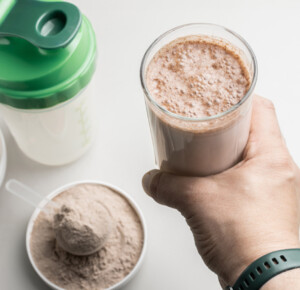
Active nutrition ingredients are seeing emerging innovations in delivery systems, with more convenient formats gaining popularity among consumers. Mont noted that powders, ready-to-drink (RTD) beverages, gummies and shots are all on the upswing, with innovations in bioavailability, taste and stacking multiple actives driving growth.
Angie Rimel is the North American product promotions manager for Gelita in Sioux City, IA. Rimel noted that while powder still dominates the sports nutrition market as a result of its versatility, convenience and ability to deliver high-protein formulations at scale, there has been a recent rise in RTD launches; in fact, Rimel said, ready-to-drink formulations growth is outpacing the rest of the sports performance category. RTDs, Rimel noted, meet consumer demand for on-the-go convenience, great taste and clean-label transparency, making them especially appealing to the broader active lifestyle audience.
“Emerging delivery formats are also gaining traction,” Rimel said. “Functional gummies and chews are becoming more common in sports nutrition, offering quick energy or recovery support in a format that feels approachable and snack-like. Shots and liquid concentrates are positioned for rapid absorption, particularly in pre-workout or endurance contexts. Combination products that blend carbohydrates, electrolytes and protein are creating all-in-one solutions tailored to specific athletic requirements, bridging performance, recovery and personalization. Finally, advances in encapsulation and ingredient technologies are enabling new sustained-release systems, helping with energy stability and reducing side effects like sugar crashes.”
Rajat Shah is the co-founder of Nutriventia in India. Shah noted that sports nutrition products are moving beyond powders, with delivery systems becoming as critical as the ingredients themselves. Shah said that by 2030, the sports nutrition market will see the rise of consumer-friendly delivery formats like gummies and direct-compression tablets. As gummies in particular grow in popularity, Shah explained that delivery technology will become more important.
“This is where Nutriventia’s Enhanced Delivery for Greater Efficiency, or E.D.G.E., platform stands apart,” Shah noted. “Gummy-ready sustained-release technology is a prime example. Traditionally, gummy manufacturing has forced brands to add high overages of actives due to heat instability, and sustained-release profiles were nearly impossible to achieve. Nutriventia’s breakthrough allows for one-a-day sustained-release actives to remain fully functional in gummies, maintaining both potency and precision release without overages.”
Shah pointed to Nutriventia’s Melotime, a branded sustained-release melatonin, as an example of how sustained-release gummies can play a role in exercise recovery. Melotime, Shah said, enables sleep continuity for up to seven hours and promotes optimized overnight recovery, even as a gummy.
While diverse delivery systems are more convenient and enjoyable for consumers, Dominik Mattern, vice president of science, business development, and marketing for Balchem in Montvale, NJ, said it’s important for ingredients to be able to stand up to complex processing. Mattern noted that Balchem’s Creatine MagnaPower ingredient leverages the protective power of chelated magnesium bisglycinate to improve stability and bioavailability while still delivering synergistic benefits, such as anabolic signaling and increased muscle power.
Botanicals and Nootropics Gain Interest
While the active nutrition market has historically focused on legacy ingredients like protein and creatine, emerging ingredients are coming from the world of botanicals. What’s more, these ingredients serve a dual purpose: Exercise supplement plus nootropic booster. Lorena Carboni is the senior product manager and scientific communications expert for Gnosis by Lesaffre in Lille, France, with U.S. headquarters in Milwaukee, WI. Carboni said that the active nutrition ingredients space is being reshaped by two converging trends: Firstly, adaptogens and botanicals are seeing increased demand, not only for stress, but also for performance and recovery. She pointed to ingredients like ashwagandha, ginseng and salidroside as next-generation bioactives for physically active consumers.
The second major trend impacting active nutrition, according to Carboni, is the fact that cognitive performance is now a widely recognized part of the athletic equation. Nootropics, Carboni explained, are now finding their way into pre-workout supplements, hydration formulas and post-exercise blends.
“A good example is salidroside, the most active compound found in Rhodiola rosea,” she noted. “Based on the strength of proprietary, peer-reviewed study results, our ingredient, Landkind Pure Salidroside, recently achieved allowable structure-function claims covering four benefits that athletes and active consumers consider critical: Oxygen uptake, exercise performance, muscle support and mood and stress response.”
Carboni said that as a recognized adaptogen, more general structure-function claims were established for salidroside, including claims that the ingredient helps modulate the body’s response to physical activity.
Meanwhile, Mattern said that the modern sports market has evolved to include brain-boosting nootropics like choline, creatine and adaptogens that help fitness enthusiasts keep their heads in the game. Performance, he explained, is now a dynamic mix of physical and mental well-being:
“After all, your brain plays a huge role in hitting those exercise highs. With the body-mind connection in the spotlight, ingredients like choline are coming to the forefront. Choline is an essential nutrient that helps the body make acetylcholine, a neurotransmitter in the brain which contributes to facilitating cognitive functions such as memory, mood and muscle control.”
New Research Confirms Benefits
As more diverse ingredients enter the active nutrition arena, emerging research is validating their exercise-related benefits. One study recently conducted by Balchem at the University of North Texas examined the effects of methylsulfonylmethane (MSM) on exercise recovery. This study, published in Nutrients in May 2025, enrolled healthy experienced runners to receive either 1 gram per day of MSM, or a placebo, for 30 days prior to a 21.1 km running event. Blood samples were taken prior to the event, as well as at two hours and four hours after the event, in order to measure the expression of 700 mRNAs associated with generalized immune response.
The study found 29 mRNAs in four different immune response pathways that responded to MSM at two hours and/or four hours. The study authors concluded that MSM may help support muscle recovery by improving macrophage response to exercise, speed up recovery and restore damaged muscle tissue, support innate immune responsiveness to DAMP, and improve resistance to oxidative stress after exercise.1
“Results of the study showed that MSM supplementation modulated the expression of exercise recovery markers—including those associated with innate immune response, inflammation, oxidative stress and muscle recovery,” Mattern explained. “We wanted to take a closer look at the specific immune pathways impacted by MSM, and not only did we deepen our understanding, but these findings also demonstrated the ingredient’s post-exercise recovery benefits at an unprecedented low dose. This opens the door to greater formulation flexibility for sports nutrition brands to develop innovative, convenient and—most importantly—effective solutions.”
Other research is showing that herbal and botanical ingredients can also support exercise performance in older adults. Mont noted that in a recent study, Euromed’s branded Spisar spinach extract was shown to improve muscle mass and efficiency in adults over 50 when combined with athletic training. Meanwhile, Euromed’s branded Pomanox pomegranate extract was found to improve endurance and time-to-exhaustion in cyclists after only two weeks. Finally, Mont said, Euromed’s CuberUp cucumber extract demonstrated pain reduction and improved mobility as soon as one week after starting administration.
“These science-backed, standardized extracts show benefits that extend beyond performance, potentiating other biological actions that work in perfect synergy with traditional ingredients for more complete outcomes,” Mont explained. “These results show how botanicals can complement established categories like protein and collagen.”
Another recently launched ingredient has demonstrated substantial athletic benefits in multiple studies. GELITA launched its branded PeptENDURE, a performance-enhancing protein for endurance sports, in 2024 on the back of several studies that showed promising results. A 2023 clinical trial examined the effects of PeptENDURE on measures of athletic performance and body composition in 55 predominantly sedentary male participants. The study subjects were randomly assigned to receive either 15 grams of PeptENDURE per day, or a matching placebo, for 12 weeks. All subjects engaged in a concurrent training intervention consisting of 30 minutes each of resistance and endurance training three times per week for 12 weeks. At the start and end of the study, eccentric muscle damage was induced via 150 drop jumps. The study authors measured the subjects’ maximum voluntary contraction, rate of force development, peak RFD, countermovement jump height and muscle soreness before exercise, immediately after exercise and 24- and 48 hours post-exercise.
Furthermore, the subjects were assessed for body composition, including fat mass, fat-free mass, body cell mass and extracellular mass at rest, both before and after the 12-week intervention.
A three-way mixed ANOVA analysis showed statistically significant improvements in the PeptENDURE group across measures including maximum voluntary contraction, rate of force development, peak RFD and countermovement jump height. The study found that collagen peptide administration had no effect on muscle soreness or on body composition. The study authors concluded that combining specific collagen peptide supplementation with concurrent training significantly improves markers of recovery.2
Other clinical research is supporting the role of adaptogens as exercise performance ingredients. Carboni noted that LANDKIND’s branded Pure Salidroside is supported by the first peer-reviewed clinical study of its kind validating salidroside’s effects on athletic performance. The study, published in the Journal of the International Society of Sports Nutrition, examined the effects of salidroside on oxygen uptake, exercise performance, muscle support and recovery, and stress response.
The study in question examined the effects of salidroside administration (60 mg/day for 16 days) compared to placebo on peak oxygen uptake, intermittent time to exhaustion, and local muscular endurance assessments, in addition to mood state evaluations. Blood samples were analyzed for markers of muscle damage including erythropoietin, myoglobin, creatine kinase-MM and C-reactive protein.
This study found that salidroside supplementation increased overall percent predicted oxygen uptake during high-intensity intermittent exercise. Biomarkers of muscle damage were found to have increased in the placebo group 24 hours following exercise, but not in the salidroside group. The study authors concluded that salidroside supplementation may enhance oxygen utilization and mitigate exercise-induced muscle damage and fatigue.3
“This is a big step in moving adaptogens from the fringes of the sports category into the spotlight as credible performance enhancers,” Carboni said. “For formulators, it opens new opportunities to create natural, cognitive-physical hybrid products that cater to the growing demand for holistic performance.”
Active Nutrition Market Primed for Expansion
Shah noted that the future of sports nutrition will see the niche evolve beyond single-benefit solutions like muscle-building or energy spikes and into comprehensive, multi-dimensional ecosystems of performance and recovery. Today’s athletes and consumers, Shah explained, demand products that deliver synergistic support across energy, focus, stress resilience, recovery, sleep and inflammation management—all critical pillars for sustaining athletic success.
With more manufacturers investing in scientific development initiatives and well-designed studies, emerging active nutrition ingredients are gaining more validation than ever before. Delivery systems are continuing to diversify, although powders remain dominant. Newer ingredients on the market are trending toward botanical solutions that also combine nootropic benefits, recognizing the connection between mind and body. As active nutrition ingredients keep leaping forward, expect these trends to only grow. NIE
References:
1 McFarlin BK et al. “Using the rise and fall of oxidative stress and inflammation post-exercise to evaluate the effect of methylsulfonylmethane supplementation on immune response mRNA.” Nutrients, vol. 17 no. 11 (May 2025): 1761.
2 Bischof K et al. “Influence of specific collagen peptides and 12-week concurrent training on recovery-related biomechanical characteristics following exercise-induced muscle damage – A randomized controlled trial.” Frontiers in Nutrition, vol. 10 no. 1266056 (November 2023). Published online November 16, 2023.
3 Schwarz NA et al. “Salidroside and exercise performance in healthy active young adults – an exploratory, randomized, double-blind, placebo-controlled study.” Journal of the International Society of Sports Nutrition, vol. 21 no. 1 (2024): 2433744.
For More Information:
Balchem, www.balchem.com
Euromed, https://euromedgroup.com
Gelita, www.gelita.com/en
Gnosis, https://gnosisbylesaffre.com
HP Ingredients, https://hpingredients.com
Nutriventia, https://www.nutriventia.com
![[Extra! Extra!] CSI: Botanicals—The Botanical Authentication Toolbox](https://niemagazine.com/wp-content/uploads/2026/10/HerbsBotanicals-featuredimage-300x164.jpg)
![[Extra! Extra!] Impacts on Sports Nutrition Manufacturers According to Rajat Shah](https://niemagazine.com/wp-content/uploads/2026/10/ActiveNutrition-featuredimage-300x164.jpg)