New trends in the antioxidant market continue to expand this ever-growing category
According to Euromonitor, the antioxidant market for 2009 was in the billions of dollars; statistics showed the global supplements market was worth $9.18 billion.
Euromonitor also reported that growth is expected to continue for antioxidant- rich foods such as pomegranate juice and green tea.
But, in 2010, antioxidants faced a minor setback. “The European Food Safety Authority (EFSA) refused to approve several health claims regarding the benefits of antioxidants,” said Matt Phillips, president and CEO of Cyvex Nutrition (Irvine, CA). “However, the lack of EFSA approval has not affected consumers who are already educated and continue to demand antioxidants.
Even without supplements, it has long been proven that consuming nutrientrich fruits and vegetables on a regular basis contributes to a healthier, longer life. Antioxidants in the form of supplements create an additive positive effect on human health by increasing the amount of active components, such as anthocyanins or polyphenols, in a person’s diet.”
The lack of antioxidant-rich foods in their diets is increasingly drawing consumers to antioxidant supplements. The market is a very steadily performing one,” said Mitch Skop, senior director of new product development for Pharmachem Laboratories Inc.(Kearny, NJ). “People, for the most part, just don’t eat enough raw fruits or vegetables. And thanks to major media, an increasing number of consumers know it, and also are assured that if they just can’t eat enough from the produce department every day, they can get their antioxidants in dietary supplements and functional beverages. This is showing up in sales numbers from many brand marketers.”
The Superfruits
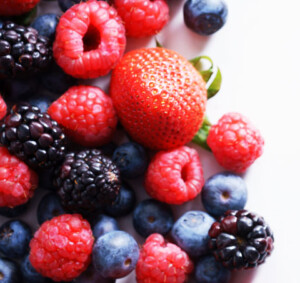
Very popular antioxidant ingredients on the market are superfruits because they tend to have a high-nutritional value, high-antioxidant capacity and high-consumer appeal.
“Superfruits are incredibly popular because they provide whole food benefits to antioxidant product manufacturers,” explained Mariana Linsley, marketing director for NP Nutra (Rancho Dominguez, CA). “While it may be possible to isolate a specific phytonutrient, a multitude of studies emphasize that in foods, the whole is greater than the sum of its parts. Scientists are recognizing that nature put these particular micronutrients together in one package for a reason. They appear to have a supportive relationship, supplying their benefits in harmony. Superfruits give products a synergestic antioxidant boost. Within the nutraceutical industry, superfruits are defined by their high nutritional and antioxidant content in comparison to other fruits.” In recent years, exotic superfruits such as açai and pomegranate have dominated the market. According to Linseley, pomegranate products may have reached the point of saturation in the market, while açai still tends to do very well because it is has not been out in the market as long. “Açai continues to dominate much of the market share while pomegranate has dropped away from its strong position. It’s always exciting to see açai research because it is still such a novel ingredient and comparatively new to market. A recent Tufts University study found that açai extracts may enhance the ‘neuronal housekeeping function’ and potentially protect the brain as we age.”
NP Nutra recently introduced AçaiVida™. According to Linsley, AçaiVida was designed with exceptional water solubility. NP Nutra’s research and development team also discovered a unique technology to lower some of the oil content that is normally present in açai powders, thus doing away with clumping issues other açai juice powders may have.
Exotic superfruits that have been rapidly gaining momentum include goji berries and mangosteen. Others, such as the maqui berry, are just now emerging onto the antioxidant market. “Maqui berries are being studied by scientists in Chile and have shown some very promising results in terms of antioxidant activity,” said Linsley. “Maqui berries have astonishing levels of antioxidants, including anthocyanins, delphinidin, malvidin, petunidin, cumarins, triterpenes, flavonoids, and cyanidin. According to scientists, the harsh climate of central and southern Chile, together with recent high solar radiation (50 percent increase in the last 30 years), have increased the anthocyanins in the fruits and berries that are grown in that region.”
However, some believe that there is not enough substance behind the hype of these exotic superfruits and feel that antioxidant-bearing fruit grown locally in the U.S. will stand the test of time.
“Oftentimes, exotic superfruits explode on the market and receive heightened media and consumer attention,”
admitted Phillips. “Once the hype fades, however, so too does demand for that superfruit. In contrast, established, well-studied and less exotic sources that have been proven effective for a long period of time. These include grape extracts, lingonberries or blueberries, which seem to have longer staying power as continual research is conducted to determine their specific health benefits.”
Linsley agreed, “Aside from the allure of more exotic fruits, it’s important to recognize that home-grown superfruits like cranberry and blueberry are yielding research that is every bit as exciting.”
Black Produce, Bioflavonoids and Color Blending
Another trend emerging in the antioxidant market is the rise of “black produce.” Dark-pigmented produce such as black currant and blackberries are packed with antioxidants and offer a number of health benefits. Cyvex offers two black produce ingredients, European Black Currant and the recently launched Super C3G black rice extract. “The dark pigment has a high content of anthocyanins, which several studies have shown to possess significant health benefits, including heart health and vision improvement,” stated Phillips.
“Another important class of plant pigment compounds are bioflavonoids, which are also a rich source of anthocyanins and polyphenols, essential to human nutrition and health,” continued Phillips. BioVin, Cyvex’s flagship bioflavonoid a full spectrum grape extract, provides powerful antioxidant benefits.
Along with black produce, the colorblending trend is gaining momentum. Color blending combines more than one antioxidant to allow for a more comprehensive antioxidant content. “A great trend is color blending: more supplements are combining reds, blues/purples and greens, which concentrate the various antioxidants from those colored food groups into easy-totake formulas (powdered supplements, capsules, even fortified/functional beverages),” said Skop. “The next step would be to combine all of the colors for broad-spectrum antioxidant intake.”
Glutathione
While superfruits are a major source of antioxidants, glutathione is the human body’s natural antioxidant. Not as commonly known, glutathione is a critical part of the body’s detoxification system. “It is difficult to differential antioxidants from one another, which is why we utilize the phrase ‘The Morning Antioxidant’ with glutathione, the master of all antioxidants,” said Karen Todd, director of marketing for Kyowa Hakko USA (New York, NY). “Glutathione levels are lowest in the morning and should be replenished everyday.”
Glutathione awareness has been building with both health care professionals and natural consumers.
Sentria®, Kyowa Hakko’s most successful antioxidant ingredient, offers antioxidant support by providing reduced glutathione (GSH). According to Todd, GSH is a unique antioxidant that can be absorbed intact, which the human intestine appears to be able to absorb with a transport system specific to GHS.
Functional Foods and Beverages
Functional foods and beverages are still the delivery method of choice with interest growing. “We’re seeing more interest in getting antioxidants via functional foods and beverages, in addition to traditional vitamins and supplements,” said Skop. “Thanks in large part to some marketers blasting commercials during daytime TV, green tea for slimming/weight loss is gaining tons of traction.”
Pharmachem Laboratories’ newest ingredient is Teavigo™, a green tea extract that is universally appealing to both dietary supplements and functional food manufacturers due to its versatility of use and its high concentration of potent antioxidants, especially epigallocatechin gallate (EGCG).
“Teavigo is extracted through a proprietary process ensuring that it is potent and pure, with a minimum of 90 percent EGCG to maximize healthful benefits,” stated Skop. “Over the past two decades, numerous research studies have evaluated the effects of green tea, and specifically EGCG, on human health.
This body of scientific evidence shows that EGCG supports cardiovascular health, and aids weight loss by boosting metabolism and fat oxidation. Additional studies have indicated that EGCG plays a role in oral health, by reducing the incidence of caries and plaque, and counteracting periodontal disease.”
Challenges, Research and Success
The antioxidant market, just like any other, faces a number of challenges, but there are some obstacles magnified by such a broad category. Doing enough research to prove the effectiveness of the ingredient is a large concern for suppliers. “Part of the challenge inherent in this category—not in others—is that antioxidants are so hugely encompassing,” stated Skop. “The natural world offers several thousand of consumable ‘antioxidants’ that safely scavenge a host of free radicals in the human body, preventing them from oxidizing and thus damaging organs and cells. The first challenge is to identify the fruit/vegetable’s unique antioxidant that is present in high amounts, such as EGCG in green tea, proanthocyanins in cranberry, punicaligin in pomegranate, etc. Our strategy is to invest in studies demonstrating efficacy and safety; and to publicize those studies to both trade and consumer audiences. We think it is crucial to have science that supports the efficacy and safety of an ingredient—it is the only way to create real credibility. This is especially important for specialty ingredients than traditional vitamins and minerals with an established track record for antioxidant activity. The research also provides a platform for the communicating the demonstrated benefits of an ingredient.”
To achieve continued success in the market, suppliers must go above and beyond to not only find the newest trends, but to offer well-researched ingredients that manufacturers can utilize to market to consumers. “Simply offering an antioxidant is not enough,” said Skop. “Either offer a blend that has high enough potency for ‘antioxidant protection’ or target the condition-specific. The brand marketer also needs to build a brand distinction and identity to take advantage of consumer loyalty. Manufacturers should look for ingredients with a research track record ideally where the ingredient supplier has already invested in brand building.”
“For an ingredient to have long-term success and gain general consumer acceptance, there has to be commitment through continued use, along with a wealth of established and ongoing supporting information substantiating the health claims,” added Phillips.
Trends may come and go, but an ingredient that works will stick around for the long haul. Ingredient suppliers must remember that marketing and good press is only half the battle. If an ingredient works, the product will live up to the hype instead of fading into the background when it does not live up to expectations.
“As an ingredient supplier, we have to understand the ingredient as well as the market for the ingredient,” concluded Phillips. “If you have an ingredient that has a ‘good story’ behind it—and by ‘good story’ I mean credible scientific evidence—than it is easier for a manufacturer to convey this same story to consumers. If we are successful at educating our customers, they, too, will be successful with consumers.”
To achieve continued success in the market, suppliers must go above and beyond to not only find the newest trends, but to offer well-researched ingredients that manufacturers can utilize to market to consumers.
The Power Of Antioxidants
by Shari Barbanel | April 1, 2011

![[Extra! Extra!] AI and Functional Food Ingredient Discovery](https://niemagazine.com/wp-content/uploads/2025/05/Ingredients-for-Food-Beverages-300x296-1748618975.jpg)